

Key Takeaways
- Master Planning Support Services accelerate smarter decision-making, protecting ROI from day one.
- Data-backed master plans and feasibility studies eliminate guesswork, unlocking optimal densities, yields, and phasing strategies.
- BIM, VDC, and GIS–enabled workflows create a connected digital ecosystem that flows seamlessly into design and construction.
- Coordinated site and infrastructure planning reduces redesign costs and prevents on-site surprises.
- DGTRA provides investor-ready planning solutions that align architecture, infrastructure, and program goals to strengthen long-term asset value.
Unlocking ROI with Master Planning Support Services
Real estate and infrastructure projects face increasing pressure, tight margins, cautious capital, and rising expectations for performance. In this environment, early planning decisions directly influence IRR.
Master Planning Support Services transform planning from a sketch exercise into a strategic, ROI-driven engine. By combining feasibility analytics, capacity testing, infrastructure validation, and digital coordination, these services allow teams to:
- Test multiple scenarios
- Optimize land use and density
- Refine phasing strategies
- Validate infrastructure capacity
- Understand capital implications early
A strong master plan ensures:
- Efficient land utilization
- Optimized product mix
- Infrastructure cost control
- Faster regulatory approvals
- Predictable long-term development
For organizations managing multiple projects, this becomes a core investment strategy—helping leaders select the right projects, sequence them wisely, and make decisions backed by data, not intuition.
What Are Master Planning Support Services?
Master Planning Support Services bring structure, clarity, and digital intelligence to the earliest and most crucial phase of development. Instead of one static layout, teams receive coordinated, data-driven scenarios backed by feasibility logic and engineering constraints. Key components include:
1.Strategic Planning & Visioning
- Visioning, growth strategy, and market alignment
- Early feasibility and financial benchmarking
2.Site & Context Intelligence
- GIS-based site analysis and constraints mapping
- Environmental, zoning, climate, and infrastructure assessments
3.Land Use, Density & Mobility Planning
- Zoning, density allocation, and concept layouts
- Road hierarchy, mobility planning, parking strategy
4.Infrastructure & Engineering Alignment
- Water, sewer, stormwater, power, and ICT planning
- Finalizing utility routing, capacities, and levels
- Fixing base levels and grading strategy
- BIM, VDC, and GIS integration
5.Feasibility, Sustainability & Phasing
- Yield, FAR, and land-use feasibility
- Environmental and ESG alignment
- Phase-wise rollout tied to demand, cash flow, and infrastructure logic
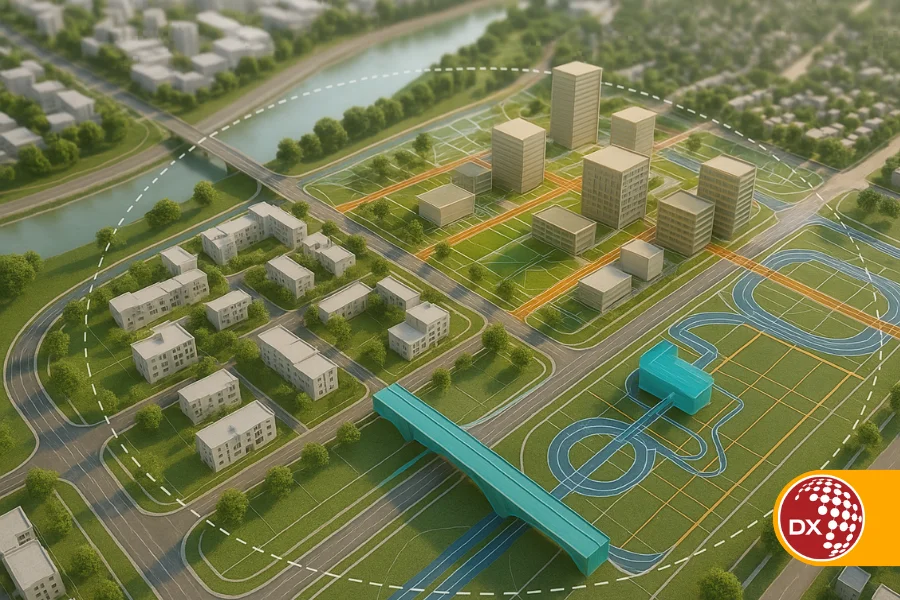
Benefits of Master Planning Support Services
When implemented strategically, Master Planning Support Services deliver clear, measurable value across financial performance, design coordination, stakeholder alignment, and long-term project resilience. Here’s how they elevate large-scale developments:
1.Higher Financial Clarity
- Early FAR, density, and yield analysis strengthens revenue models.
- Feasibility studies validate assumptions long before they influence investment decisions.
2.Reduced Development Risks
- Clear visibility of site conditions, utility levels, and grading prevents costly redesigns.
- BIM-enabled planning identifies conflicts early and supports smoother approvals.
3.Less Rework and Redesign
- Integrated building and infrastructure planning minimizes late-stage changes.
- BIM-led coordination reduces redesign cycles and associated delays.
4.Faster Approvals and Stronger Stakeholder Buy-In
- 3D visuals and scenario models simplify communication with authorities and investors.
- Evidence-based narratives accelerate approvals.
5.Optimized Land and Infrastructure Utilization
- Intelligent planning prevents oversizing roads and utilities, reducing capex.
- Infrastructure corridors support phased development without rework.
6.High Market Viability
- Smart zoning, mobility planning, and product-mix strategies improve absorption and pricing.
7.Smooth Execution Across Phases
- Coordinated phasing strategies align demand, cash flow, and construction capacity.
8.Future-Proof and Sustainable Development
- Sustainability, resilience, and lifecycle thinking are embedded from the start.
DGTRA’s Master Planning Support Services in Action
At DGTRA, Master Planning Support is a strategic digital partnership, aligning planning, design, and delivery into a unified workflow. Every decision made at concept stage remains coordinated through construction and asset handover.
1.Data-Driven Ground-Up Understanding:
Comprehensive studies—GIS, topography, utilities, hydrology, zoning, climate, market insights—set a realistic foundation.
2.Smart 3D Site Models & Scenario Planning
Intelligent models linked to live data enable rapid option testing with overlays for zoning, setbacks, and environmental constraints.
3.Integrated Urban, Traffic & Infrastructure Planning
Urban planning, traffic analysis, and utilities/infrastructure modeling are unified, ensuring technical buildability.
4.End-to-End Infrastructure Strategy
DGTRA finalizes:
- Base levels and road levels
- Utility levels and invert levels
- Routing and capacity for water, sewer, stormwater, power, ICT, and reuse water
5.BIM & VDC-Enabled Coordination
Planning scenarios flow directly into BIM and VDC models used for clash detection and construction sequencing.
6.QTO & Cost Impact Integration
Changes in density or land use instantly update quantities and cost implications.
7.Digital Twins for Lifecycle Outcomes
Digital Twins support long-term operations, maintenance, ESG tracking, and asset management.
8.Scalable Digital Staffing for High Workload Periods
DGTRA supports teams during peak workloads across portfolios, not just single projects.
9.Advanced Phasing & Rollout Strategies
Phasing plans balance cash flow, demand triggers, and infrastructure sequencing.
Our Deliverables That Drive your Success include:
- Coordinated Master Plans
- Zoning & Land Use Plans
- Road Levels & Grading Logic
- Utilities Routing & Capacity Strategy
- 3D Massing Models
- Feasibility & Phasing Reports
- Investor & Authority-Ready Presentations
Why Master Planning Support Services Matter
Global research confirms what many in the industry already feel: preconstruction excellence directly drives profitability and reduces risk.
- A 2022 study by McKinsey & Company that reviewed over 500 capital projects worldwide found that, on average, cost overruns were about 79% relative to the original estimates, and schedule delays averaged 52%. McKinsey & Company
- For projects where stakeholders prioritized “preconstruction excellence”—strong front-end planning, value engineering, and precise scope definition—McKinsey reports a typical uplift in Net Present Value (NPV) of 20% or more compared to less-diligent counterparts. McKinsey & Company
- Meanwhile, research from Autodesk shows that extending building information modeling (BIM) workflows beyond just design can dramatically reduce on-site errors, rework, and delays. BIM becomes a central data backbone that helps teams stay aligned from planning through construction and operations. Autodesk
What Comes Next in This Series
This series will demonstrate how ISO 19650 transforms scattered project data into a structured, high-value information asset.
In the next article — “ISO 19650 Explained — A Clear, Strategic Guide for Busy AECO Leaders” — we break down the standard in simple, strategic terms, clarifying how it works and why it is essential for predictable digital delivery.
For teams looking to strengthen BIM maturity and governance, remember the core principle:
“Get the information right, and everything else follows.”
What this means for your projects: By embedding robust master planning and BIM-enabled preconstruction workflows from the start, developers, EPC firms, and public agencies can:
- Avoid costly overruns and schedule slippages — which historically averaged nearly 80% extra cost and 50%+ delay, according to McKinsey data.
- Unlock more value upfront — standardized, data-driven planning can deliver 20%+ additional NPV, improving returns even before construction begins.
- Ensure buildability, coordination and fewer field errors — BIM-driven planning improves collaboration, clash detection, and clarity across design, construction, and operations phases.
As cities densify and infrastructure demands grow, the cost and risk of a flawed master plan rise drastically. Under such conditions, investing in data-rich, digitally enabled Master Planning Support Services isn’t a luxury; it’s a strategic necessity.
DGTRA: Your Partner for Smarter, High-ROI Master Planning
Master Planning Support Services give owners and developers a clear, data-backed view of value, risk, and buildability. By integrating feasibility analytics, digital design intelligence, and long-term infrastructure strategy, they reduce rework, accelerate decisions, and strengthen returns.
DGTRA ensures every planning decision flows seamlessly into BIM, VDC, QTO, and Digital Twin workflows—creating a connected, coordinated, and buildable master plan from day one. Our approach helps you:
- Test and refine scenarios with speed
- Secure approvals with confidence
- Deliver multi-phase projects with clarity
- Strengthen investor trust and long-term asset value
If you’re ready to elevate early-stage planning, reduce uncertainty, and protect ROI, DGTRA is here to support your next project with proven, data-driven expertise.
Contact us to get started: https://www.dgtra.com/contact/
By testing multiple land-use, density, and phasing scenarios through BIM and VDC workflows, and connecting them to QTO and cost controls for early financial clarity.
DGTRA aligns density, product mix, absorption, and feasibility with yield, parking, infrastructure cost, and regulatory demands.
Yes. We ensure planning outputs seamlessly integrate into BIM/VDC models for coordination and construction sequencing.
By unifying building design, infrastructure engineering, utilities, grading, mobility, and Digital Twins into a single coordinated system.
They simulate operations, energy use, occupancy, and lifecycle performance to inform asset planning and phasing.