The Future of Construction: Paperless Workflows The Architecture, Engineering, and Construction (AEC) industry is undergoing a significant transformation, driven by the adoption of innovative technologies. Paperless construction documentation, facilitated by platforms like Common Data Environments (CDEs), represents a cornerstone of this modernization. CDEs offer a multitude of benefits, including: Enhanced Efficiency: Streamlined document management and collaboration eliminate the need for physical documents, saving time and resources. Cost Reduction: Paperless workflows minimize printing and distribution expenses, leading to overall project cost savings. Improved Sustainability: By reducing reliance on paper, CDEs contribute to a more environmentally friendly construction process. Regulatory Compliance: CDEs facilitate the secure storage and tracking of documents, ensuring adherence to relevant regulations. At DGTRA, we are committed to staying at the forefront of the AEC industry. Our Director Sunil Joshi recently explored a paperless drawings review system at the New York Build Expo 2024. This visit underscores our dedication to implementing cutting-edge solutions that enhance project delivery and contribute to a more sustainable future. We are confident that paperless construction documentation represents the future of the AEC industry. By embracing these innovative technologies, we can work towards a more efficient, cost-effective, and environmentally responsible built environment. This technology effectively conveys the key points from the original content in a professional and business-like manner. It highlights the advantages of paperless construction documentation and emphasizes your company’s commitment to progress and sustainability.
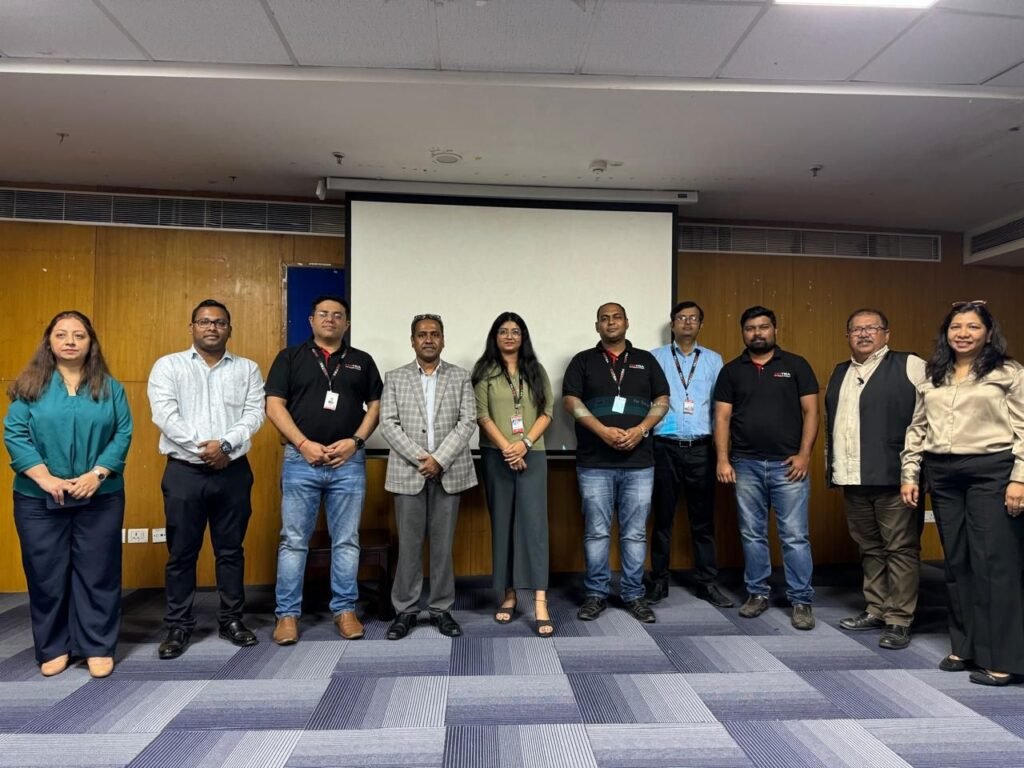
Building the Future: DGTRA’s BIM Bootcamp Recap at RICS, Amity University.
DGTRA is proud to announce the successful completion of our BIM Workshop & Understanding the Digital Disruption Bootcamp at RICS, Amity University, Mumbai! This intensive program equipped students with the knowledge and hands-on experience needed to thrive in the ever-evolving world of Building Information Modeling (BIM). Investing in Your Future: At DGTRA, we understand the importance of fostering the next generation of BIM professionals. Our bootcamps offer students a competitive edge by providing: Industry-standard training: Learn the latest BIM concepts, workflows, and best practices directly from DGTRA’s experienced team. Hands-on experience: Gain practical skills using the industry’s leading BIM tools – Revit, Navisworks, Enscape, BIM360, and ACC. Enhanced employability: Distinguish yourself with a proven understanding of BIM and its applications in the construction industry. What the Students Learned: The bootcamp covered a comprehensive range of BIM topics, including: 3D Modeling Fundamentals: Master the basics of creating and manipulating 3D models, collaborating with 2D drawings for a seamless workflow. Integrated Design & Construction (IDC): Learn how to incorporate MEP systems (HVAC, electrical, plumbing) and identify & resolve clashes for optimal project coordination. 4D & 5D BIM: Gain insights into scheduling, work package creation, quantity take-offs, and creating budgets for efficient project management. 6D Facility Management: Explore building performance simulation, energy analysis, and building management strategies for sustainable practices. Collaborative Workflows: Understand the importance of communication and collaboration among stakeholders using BIM platforms. Construction Documentation & Presentations: Learn to generate detailed construction documents, conduct virtual walkthroughs, and create impactful presentations. Introduction to Future of BIM: Get a glimpse into the exciting world of 8D (safety), 9D (lean construction), and 10D (industrialization) applications of BIM. AR/VR Experience: The bootcamp offered an optional session for students to explore the potential of Augmented Reality (AR) and Virtual Reality (VR) in BIM workflows. The Response: The bootcamp received an overwhelmingly positive response from students. They appreciated the practical approach, interactive sessions, and the opportunity to learn from industry experts. We are confident that this knowledge will empower them to pursue successful careers in BIM and contribute to the future of construction. Looking to take your BIM skills to the next level? Stay tuned for upcoming DGTRA bootcamps and training programs! How Can DGTRA Help You? DGTRA offers a wide range of BIM services to help businesses of all sizes integrate BIM into their workflows. We can assist with: BIM Implementation: Developing a strategic BIM plan and selecting the right software. BIM Modeling & Coordination: Creating high-quality 3D models and managing project information. Clash Detection & Resolution: Identifying and resolving conflicts between project disciplines. 4D & 5D BIM Services: Developing construction schedules and cost estimates. BIM Training & Support: Equipping your team with the skills and knowledge they need. Ready to take your construction projects to the next level? Contact DGTRA today to discuss your BIM needs! Click here to know more
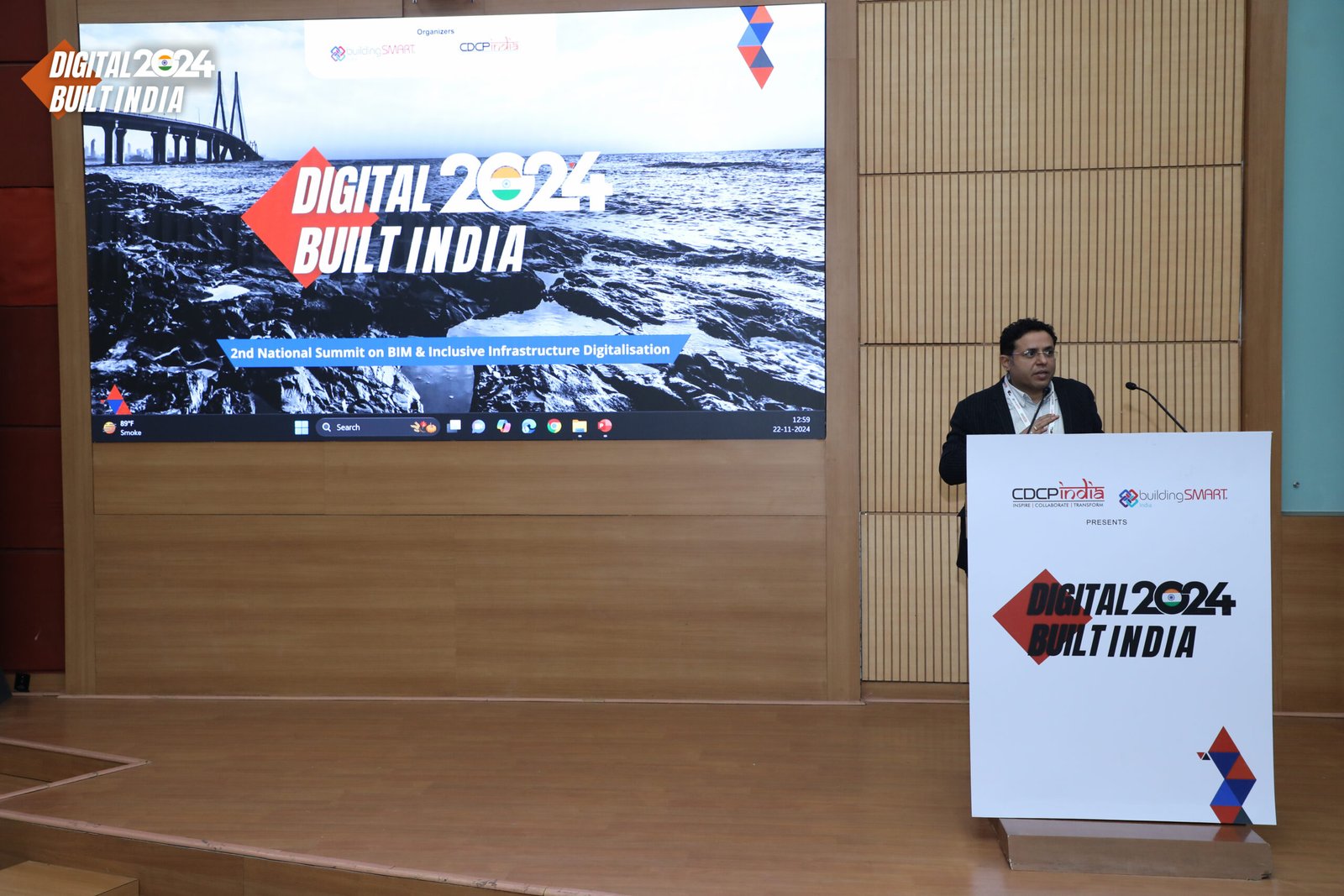
Our Founder-Director &CEO Mr. Sunil Joshi moderating the discussion for “Embracing Change: Why Built Environment Must Increase Digitalization” at Digicon in Mumbai.
Our Founder-Director &CEO Mr. Sunil Joshi moderating the discussion for “Embracing Change: Why Built Environment Must Increase Digitalization” at Digicon in Mumbai.

Mr. Viren Thakur, one of our BIM experts represented DGTRA in the Integrate & Innovate Digital Construction Workshop in Dubai.
In the Construction Industry today, Building Information Modelling (BIM) is revolutionizing the way projects are designed, planned, and executed. As the adoption of BIM continues to grow, so too will the opportunities to automate and optimize construction processes, leading to safer, more cost-effective, and sustainable built environments. Awareness regarding automation and interoperability within BIM is essential for driving industry-wide transformation. DGTRA is proud to be associated with one such event, “Integrate & Innovate Digital Construction Workshop” which took place in Downtown Dubai last week. Mr. Viren Thakur represented as one of the BIM Expert from DGTRA at the event which was co-organized by CADD Emirates & Autodesk. This workshop witnessed excellent presentation from CCtech Team with live examples of ACC/BIM360 Integrations & Automations. Click here to read more

DGTRA Shines as Bronze Sponsor at BIM Coordinators Summit 2024, Showcasing B360 Secure and Exploring the Future of Digital Construction.
On September 11-12, Viren Thakur, Rajeev Patni, Purvi Sharma and Sunil Joshi on behalf of DGTRA had the privilege of attending the BIM Coordinators Summit 2024 as a Bronze Sponsor for the Event. The event brought together brilliant minds from across the AECO industry, providing a platform for thought-provoking discussions on the latest trends in Building Information Modeling (BIM). The BIM Coordinators Summit 2024 highlighted the growing synergy between BIM, AI, reality capture, and VR. This convergence of technologies is driving a new era of digital construction, marked by increased efficiency, innovation, and collaboration. As we move forward, staying informed about these advancements and integrating them into our workflows will be essential for leveraging their full potential. The future of construction is not just about adopting new tools but about harmonizing these tools to create more effective, accurate, and sustainable building practices. The summit was a testament to the vibrant and evolving landscape of the AECO Firms. By embracing these emerging technologies, we are not only enhancing how we build but also setting new standards for excellence and efficiency in the field. The sessions ranged from ISO 19650 compliance strategies to the impact of AI on BIM, sustainable design, and digital twins. Key topics, including cost management, risk mitigation, and advanced technologies like cloud computing, reality capture, and pyRevit, were explored. Industry leaders shared their expertise, offering actionable insights into BIM’s evolving role in construction and design. The sessions on value-driven cost management, overcoming BIM implementation challenges, and human-centric digital transformation were particularly impactful. The presentation on “Retrofit Risk” shed light on the complexities of modern construction, while discussions on “Strategic Tailoring” showcased how BIM can optimize workflows in AECO projects. Engaging panel discussions brought diverse perspectives from leaders in construction, design, operations, and data governance, emphasizing BIM’s potential in shaping future practices. DGTRA also had the opportunity to showcase our new Product: D360 Secure App to the visitors of our Booth. The visit was an eye opener for many who are working on Autodesk Construction Cloud / BIM360. They realized the importance of the Permission Management feature on ACC/BIM360 and how much of their data was still being shared with former consultants, vendors, and employees. Seeing everything on the D360 Secure dashboard made it easy for them to secure their project data and quickly address any issues with access. In Summary, the summit fostered a collaborative and innovative environment, leaving attendees with new perspectives and practical solutions for their projects. It was clear that the future of the construction industry lies in the continued adoption of advanced technologies and strategic innovation. Click here to read more

An article published by Ishan & Sunil from our team on The Critical Role of the 4Cs in Successful Firm-Wide BIM Implementation in the BIM Coordinators Summit magazine.
We are glad to share an article published by Ishan & Sunil from our team in the BIM Coordinators Summit magazine. This is a thought-provoking article that delves into a critical topic for the construction industry: successful BIM implementation. The article introduces the innovative “4C” framework—Clarity, Culture, Cost, and Cloud—as a powerful approach to overcoming common challenges and ensuring a successful BIM implementation. Discover how clarity helps align BIM with business goals, how a collaborative culture can drive success, how cost-efficiency and value-driven decisions elevate projects, and how cloud technology enhances scalability and innovation. This framework could be the key to transforming construction firms and leading them into a new era of efficiency and innovation. Curious to learn more? Check out the full article and see how the 4Cs can revolutionize your next project! Click here to read more

A Comparative Analysis of Industry Foundation Classes (IFC) and Universal Scene Description (USD)
Introduction Interoperability and data exchange are critical in digital workflows across industries. In the AEC (Architecture, Engineering, and Construction) sector, Industry Foundation Classes (IFC) serve as the backbone for structured BIM (Building Information Modeling) data exchange. Meanwhile, Universal Scene Description (USD), developed by Pixar, is emerging as a powerful tool for real-time collaboration and visualization, extending beyond its original media and entertainment applications. This article explores the purpose, use cases, integration, and future impact of IFC and USD, highlighting their complementary roles in advancing digital transformation in construction. What Are IFC and USD? Industry Foundation Classes (IFC) Purpose: An open, neutral file format developed by buildingSMART International for seamless BIM data exchange across software platforms. Primary Use: Captures building geometry, materials, construction elements, spatial relationships, and metadata for collaboration among architects, engineers, contractors, and facility managers. Industry: Primarily used in AEC for project coordination, compliance, and lifecycle management. Limitations: Designed for static BIM workflows, making it less suited for real-time applications like animation and simulation. Universal Scene Description (USD) Purpose: An open-source format developed by Pixar Animation Studios to manage complex 3D scenes, now widely adopted for real-time visualization and collaboration. Primary Use: Handles 3D geometry, shading, animations, and physics, facilitating dynamic data management for gaming, virtual production, and increasingly, AEC visualization. Industry: Originally for media and gaming, now expanding into AEC for applications like real-time rendering and immersive simulations. Strengths: Supports versioning, layering, and modular scene descriptions, making it ideal for collaborative and interactive workflows. Integration Between BIM Software IFC Integration: Acts as a universal translatorfor BIM tools like Revit, ArchiCAD, Tekla, and Navisworks. Primarily used for data exchangein projects requiring adherence to international standards. Challenges:Variability in software interpretations can cause data loss or inconsistencies during imports/exports. USD Integration: Increasingly adopted for visualization pipelinesin BIM tools like Revit, Rhino, and Blender. Enables seamless transfer of 3D models for real-time rendering and animations(e.g., using Omniverse, Unreal Engine). Focus:Prioritizes high-fidelity visuals and real-time collaboration rather than detailed construction data. Comparative analysis- Current trends IFC Trends: Advancing toward IFC 5, with enhanced geometry, attributes, and real-time collaboration capabilities. Increasing standardization pressurein public procurement and international projects. Integration with cloud-based BIM platforms(e.g., Autodesk Construction Cloud, BIM 360). AI-driven quality checks and validation using IFC data for compliance and clash detection. USD Trends: Rapid adoption in AEC for digital twins, virtual reality (VR), and augmented reality (AR) workflows. Growing integration with AI-driven design and visualization platforms. Platforms like NVIDIA Omniverse bridge BIM tools (e.g., Revit) with rendering engines (e.g., Unreal, Blender)via USD. Future Outlook: IFC vs. USD for Integration IFC:Ideal for structured BIM data exchange, ensuring interoperability for design, documentation, and compliance. USD: Excels in real-time visualization, simulations, and animations, enhancing collaboration across design and construction disciplines. Synergy: The combination of IFC and USD is driving a connected digital ecosystem, where BIM data flows seamlessly between structured documentation and immersive visualization platforms. Conclusion USD is no longer limited to rendering—it is reshaping real-time collaboration in design and visualization workflows. While IFC remains the industry standard for BIM data exchange, USD is revolutionizing dynamic, multi-disciplinary interaction in AEC. Together, these formats are paving the way for a digitally connected construction industry. At DGTRA, we help industry leaders harness the power of IFC for robust BIM workflows while exploring USD’s evolving role in real-time visualization. By leveraging cutting-edge BIM and digital solutions, we empower stakeholders to enhance collaboration, streamline workflows, and drive efficiency in an increasingly connected industry.

Permissions and Access Control in Construction Management Platforms
Effective permissions and access control are crucial in construction project management to ensure data security, streamline collaboration, and maintain project integrity. This article delves into how permissions and access control are managed across five prominent platforms: Autodesk Construction Cloud, Trimble Viewpoint, Aconex, ProjectWise: Bentley, and Bluebeam. Additionally, we highlight DGTRA, a leading digital transformation consultant, known for assisting clients in selecting the right Common Data Environment (CDE) for their organizations. Autodesk Construction Cloud Autodesk Construction Cloud (ACC) offers a centralized administration module that allows enterprises to control user permissions efficiently. With a single login supported by Autodesk ID, users can access various tools within the platform. Permissions can be configured for users, roles, and companies, ensuring the right individuals have appropriate access. Pros Centralized Control: Efficient management of user permissions. Granular Permissions: Customizable settings for users, roles, and companies. User-Friendly Management: Simple interface for editing member information. Cons Complexity for Large Teams: Managing numerous users can be time-consuming. Learning Curve: New users may require training to navigate permission settings. Viewpoint Viewpoint provides robust access control features tailored for construction project management. Administrators can define user roles and permissions to ensure that team members have appropriate access to project data. Pros Role-Based Access: Ensures clear definition of user roles. Compliance Support: Helps maintain data security. Cons Limited Granularity: Customization options may be restrictive. User Interface: Some users may find it less intuitive. Aconex Aconex, an Oracle Construction and Engineering platform, offers a comprehensive permissions framework that supports project-wide collaboration while maintaining strict access controls. Pros Comprehensive Access Control: Ensures protection of confidential information. Audit Trails: Enhances transparency and accountability. Cons Complex Setup: Initial configuration can be challenging. Performance Issues: Some users report slow performance on large projects. Bentley ProjectWise Bentley ProjectWise employs an object security hierarchy where folder and document permissions can be set in the ProjectWise Administrator. Pros Hierarchical Permissions: Ensures consistent settings inheritance. Scalability: Ideal for large projects with multiple teams. Cons Complex Administration: Requires specialized training. User Interface: Some find it outdated and difficult to use. Nemetschek Bluebeam Bluebeam Revu provides customizable user permissions to control access to documents and data. Pros Granular Control: Detailed permission settings for various levels. Integration with SharePoint: Enhances document management capabilities. Cons Complexity: Extensive customization options may be overwhelming. Performance: Issues with handling large documents. DGTRA: Leading Digital Transformation Consultants DGTRA is a technology consulting and solutions company that enables clients to enhance their project and business efficiency by eliminating isolated, discrete, and disconnected data environments. They act as a system integration and consulting partner to several large real estate, construction, infrastructure, and manufacturing companies across India, the US, the UK, the Middle East, and Australia.

A Detailed Comparison of Speckle and Autodesk Construction Cloud (ACC): Open-Source vs Proprietary Solutions for AECO Professionals
The Architecture, Engineering, and Construction (AEC) industry is rapidly embracing digital transformation to streamline workflows, enhance collaboration, and improve project delivery. As firms adopt various BIM (Building Information Modeling) and project management tools, two platforms stand out: Speckle and Autodesk Construction Cloud (ACC). While both aim to solve data management and project coordination challenges, they differ significantly in their approach, features, and user experiences. This article compares Speckle’s open-source platform (Open-source software (OSS) is software with source code that is freely available for anyone to view, modify, and distribute) and ACC’s proprietary system, providing insights for AECO professionals to better understand their core functionalities and decide which platform best suits their needs. Origins and Development Speckle: Open-Source Flexibility for the AEC Industry Speckle was developed as an open-source BIM solution designed to tackle the interoperability challenges in the AEC industry. Its community-driven model encourages customizable integration with over 25 AEC tools, creating a flexible data exchange framework. Speckle’s emphasis on open-source technology allows users to adapt and expand the platform according to their specific project needs, promoting collaborative workflows across diverse applications. As a result, it is an ideal choice for teams seeking open-source construction platforms that support data interoperability and seamless collaboration. Autodesk Construction Cloud (ACC): A Robust Proprietary Software Suite for Comprehensive Project Management In contrast, Autodesk Construction Cloud (ACC) is a commercial platform developed by Autodesk, a leader in CAD and BIM solutions. ACC integrates tools such as BIM 360, PlanGrid, Assemble, and BuildingConnected, offering a unified ecosystem for construction management. This platform’s subscription-based model ensures seamless workflows across design, planning, construction, and operations phases, making it a comprehensive solution for larger, more complex projects. While ACC excels in providing a standardized, robust infrastructure, its proprietary nature limits the level of customizabilitythat open-source solutions like Speckle can offer. Core Features and Capabilities User Perspectives: Open-Source vs Subscription-Based Speckle: The Advantage of Open-Source Collaboration Users of Speckle appreciate its open-source flexibility and customizability, which allow them to maintain their preferred workflows while benefiting from real-time data sharing. With over 25 AEC tool integrations, Speckle’s users find it invaluable for interoperable data exchange across different platforms. However, community-driven development may sometimes result in slower feature rollouts and less polished user support compared to commercial platforms. Technical expertise is often required to fully leverage its potential, which can be a barrier for teams unfamiliar with open-source technology. Autodesk Construction Cloud: A Comprehensive, Commercial Solution ACC is widely recognized for its comprehensive BIM tools, making it an attractive option for large firms that require a centralized platform with robust data management and analytics. It integrates seamlessly with Autodesk tools, which makes it a go-to choice for firms already using Autodesk software. However, the platform’s subscription-based pricing and reliance on a proprietary ecosystem can be limiting for smaller teams or those seeking more budget-friendly or flexible solutions. While user-friendly, some find the extensive feature set overwhelming, particularly in the initial stages of adoption. Performance and Efficiency: Choosing the Right Platform for Your Needs Speckle: Lightweight and Efficient for Seamless Data Exchange Speckle’s lightweight architecture makes it efficient for real-time data exchange, especially when collaborating across diverse AEC tools. Its ability to manage complex models and collaborate in real-time without significant delays makes it an attractive choice for teams working with interoperable data. However, because it relies on community contributions, feature updates can sometimes be slower, and the documentationmay not be as comprehensive as commercial platforms like ACC. Autodesk Construction Cloud: Scalable and Reliable for Large-Scale Projects ACC’s cloud-based infrastructure is designed to support large-scale projects with extensive data requirements. Its robust performance is especially beneficial for managing multiple construction phases across geographically distributed teams. Regular updates and enhancements ensure consistent performance, but integration with non-Autodesk tools can present challenges, making interoperabilityless seamless for teams that rely on software from multiple vendors. Future-Proofing Potential: Open-Source Flexibility vs Proprietary Innovation Speckle: Open-Source and Future-Ready for Emerging Technologies As the AEC industry continues to prioritize interoperability and open standards, Speckle’s open-source nature positions it as a highly adaptable and future-proof solution. It’s well-suited to integrate with emerging technologies such as digital twins, AI-driven solutions, and generative design, ensuring that it remains at the forefront of construction innovation. Open-source platforms like Speckle are increasingly viewed as essential for teams looking to implement digital transformation strategies and stay ahead of the curve. Autodesk Construction Cloud: Staying Competitive within a Proprietary Ecosystem ACC’s future-proofing lies in Autodesk’s ongoing investment in AI, machine learning, and predictive analytics. These capabilities ensure that ACC remains a dominant force in construction management. However, its proprietary model may limit its ability to fully embrace open-source standards or interoperable platforms as the industry moves towards more collaborative ecosystems. For teams focused on customizability and open collaboration, ACC may fall short as open-source technologies continue to evolve. Conclusion: Choosing the Right Platform for Your AECO Team Speckle and Autodesk Construction Cloud offer powerful solutions for AECO professionals, but the choice ultimately depends on your team’s needs. Speckle’s open-source flexibility is perfect for teams prioritizing customization and collaboration, while Autodesk Construction Cloud’s robust ecosystem excels in managing large-scale projects with end-to-end tools. When choosing, consider team size, project complexity, budget, and whether you need an open-source platform for data integration or a proprietary system for streamlined workflows. At DGTRA, we help teams navigate these options, blending flexibility with structured implementation to enhance collaboration and optimize project execution. References Speckle Systems. “Open-Source Data Collaboration for AEC.” Official Documentation. Autodesk. “Autodesk Construction Cloud Overview and Features.” Official Product Page. BuildingSMART International. “The Future of Interoperability in Construction.” Industry White Papers on AEC Digital Transformation and Data Standards. Credits Credits to Autodesk Construction Cloud and Speckle for the information and images used in this comparison.

Empowering Real Estate Growth: DGTRA’s Transformative BIM Session at CREDAI Nashik Metro
DGTRA was proud to partner with Credai Nashik Metro to deliver an insightful BIM session at their 5th General Body Meeting on December 27th. This inspiring event brought the real estate community together to explore innovation and growth. Our BIM experts, Akshay and Akash, led a session sharing valuable insights on BIM which were warmly applauded by Krunal (the President) and Gaurav (the Hon. Secretary), who felicitated them for their contributions. Click here to read more