For capital asset owners, the most dangerous document on a project is a green status report.
Investment committees, developers, and agency heads manage millions based on monthly reporting binders. They review Earned Value Management metrics and smooth S-curves. They receive assurances that the critical path is secure.
Yet behind this administrative curtain, jobsite reality tells a different story. Spatial trade conflicts compound. Procurement delays grow. Uncoordinated design revisions stall site progress.
When those hidden issues hit physical execution, the schedule turns red overnight. The owner absorbs the holding costs, delayed revenue, and unbudgeted capital calls.
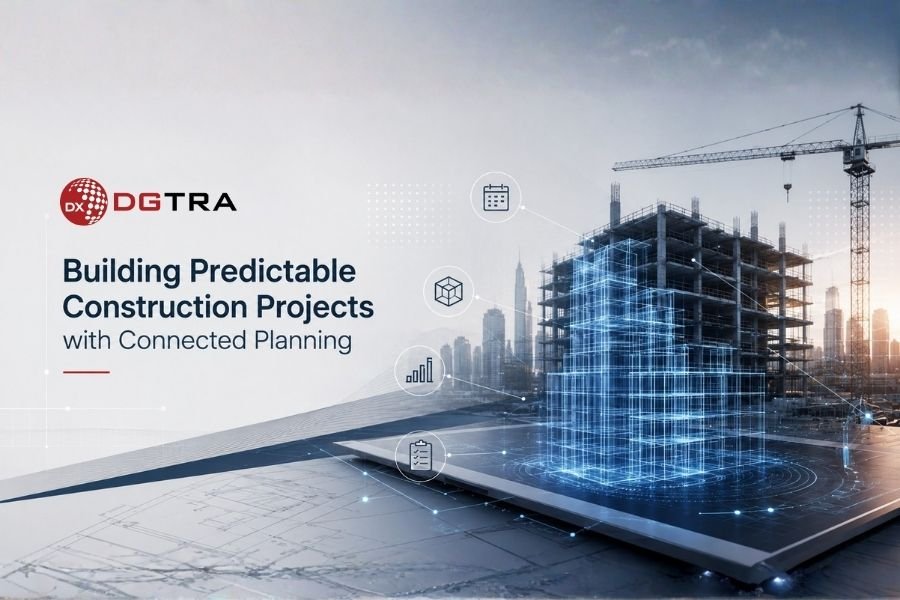
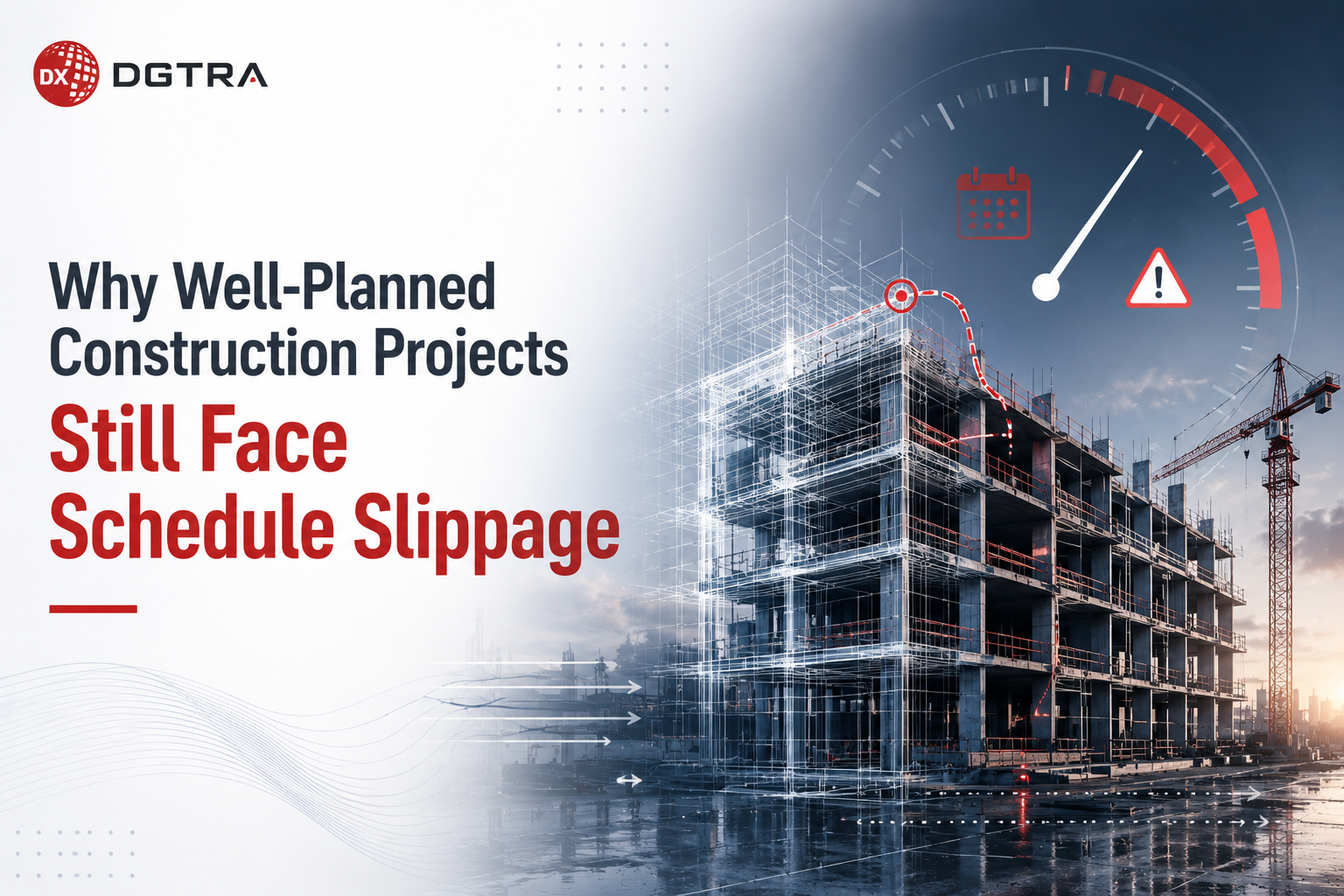
Across our ongoing analysis of capital execution failures, we unpicked the structural gaps in Why Well-Planned Construction Projects Still Face Schedule Slippage, evaluated the technical alignment mechanism in How VDC Connects Project Planning with Site Execution, and detailed the enterprise architecture in Building Predictable Construction Projects via Connected Planning.
Now, we look at the capital lifecycle from the perspective that actually governs the project: the Asset Owner.
What do capital owners actually expect from modern project delivery? It is not a list of software apps or thicker reporting packages. Owners want capital certainty, active risk mitigation, and uncompromised handover dates.
The Macroeconomic Reality Facing Capital Asset Owners
The capital projects sector operates in a high-interest, margin-sensitive landscape.
When capital was cheap, a three-month delay was an annoyance. Today, a three-month delay threatens project feasibility. It drives up debt servicing costs. It alters internal rate of return calculations immediately.
Data published by McKinsey & Company shows that mega-projects routinely exceed budgets by up to 80%. They also run 20% over schedule.
Furthermore, research by FMI Corporation and Autodesk reveals that bad data and poor communication drive $31.3 billion in preventable rework across US construction annually.
These financial losses do not stem from bad intentions. They stem from a fundamental misalignment in traditional contracting models: Contractors manage immediate trade production on site, while Owners bear the long-term financial risk of delays and defects.
Because of this gap, forward-thinking owners no longer rely on contractors to voluntarily police their own schedules. They step in to establish and enforce the digital execution framework themselves.
Unpacking the Real Priorities of Capital Owners
Stripping away industry buzzwords reveals three core shifts in owner expectations:
Lead-Indicator Control Over Post-Mortem Reporting
Managing a capital build using traditional monthly status reports is like driving by looking in the rearview mirror. By the time a milestone delay appears in a monthly binder, the opportunity to fix it at zero cost has already passed.
Owners require predictive visibility. They want to know whether upcoming work packages are 100% constraint-free before labor arrives on the jobsite floor. That means verifying design details, confirming material shipments, and ensuring clear trade access in advance.
Spatial Validation of Capital Handoffs
Before approving major funding draws or schedule extensions, owners want objective proof rather than verbal assurances.
By evaluating master schedules through 4D Virtual Design & Construction (VDC) simulations, owners visually inspect construction sequencing. They test trade density in high-risk zones. They stress-test recovery schedules digitally before signing off on field changes.
Clean Data Architecture for Long-Term Yield
A project’s data architecture is an asset in its own right.
When contractors operate in disconnected software environments, critical asset data gets lost during handover. Warranty specs, maintenance logs, and spatial coordinates disappear into unstructured folders.
Implementing structured data governance under ISO 19650 standards inside an owner-controlled Common Data Environment ensures that every drawing, submittal, and site revision remains structured, verifiable, and ready for immediate operational use.
Moving from Passive Oversight to Owner-Led Governance
Establishing predictable delivery requires owners to fundamentally change how they write contracts.
Rather than leaving digital workflows open to interpretation, progressive owners write clear Employer’s Information Requirements into prime contracts. They mandate 4D constructability reviews prior to key procurement milestones. They enforce ISO 19650 information compliance across all trade tiers, and retain ownership of the project data.
This proactive approach turns project oversight from a reactive fight over change orders into a collaborative, data-driven alignment process.
Safeguarding Owner Capital with DGTRA
Establishing owner-led digital governance requires specialized technical depth at the intersection of digital engineering, project controls, and international data standards.
This is where DGTRA acts as an essential partner for capital owners, developers, and public agencies.
DGTRA provides specialized client-side advisory and VDC management services designed to protect owner investments throughout the project lifecycle. By establishing robust ISO 19650 information frameworks, managing CDE environments, and executing rigorous 4D VDC constructability reviews, DGTRA empowers asset owners to enforce contractor accountability, eliminate avoidable rework, and achieve predictable handover timelines across their capital portfolios.
Research from Deloitte confirms that capital project organizations integrating connected digital frameworks and structured data governance achieve measurable risk mitigation, improved capital efficiency, and predictable margin defense.
Frequently Asked Questions (FAQs)
What is the difference between contractor-led VDC and owner-driven VDC?
Contractor-led VDC focuses on short-term trade coordination and resolving physical clashes on site. Owner-driven VDC establishes the overarching digital governance, ISO 19650 data structures, and 4D schedule validation from pre-construction through to digital handover. This protects the owner’s financial and operational targets long-term.
How does ISO 19650 governance protect an owner's financial investment?
ISO 19650 standardizes how project data is named, stored, approved, and shared inside a Common Data Environment. For owners, this eliminates data loss during handoffs, reduces costly RFIs, prevents unapproved field changes, and provides an audited data trail for financial and legal protection.
How can owners enforce digital delivery standards without disrupting procurement?
Owners embed standardized Employer’s Information Requirements directly into the tendering process. Making compliance with structured VDC workflows and ISO 19650 standards a core evaluation metric sets unambiguous expectations before contracts are signed.
Does implementing owner-led VDC governance add significant project overhead?
No. The investment required to establish structured VDC governance and ISO 19650 data protocols represents a minor fraction of total capital expenditure. In return, it mitigates the primary drivers of massive budget overruns—such as field rework, standing-time claims, and schedule delays.
Take Control of Your Capital Portfolio
Unpredictable handovers and surprise capital calls are not inevitable costs of doing business. By aligning procurement strategies with modern spatial intelligence and structured data governance, you engineer certainty into every stage of project delivery.
Protect Your Portfolio Capital and Handover Dates
Partner with DGTRA to establish an owner-centric digital delivery framework tailored to your financial and operational objectives.
👉 Schedule a Portfolio Strategy Session with DGTRA’s VDC Experts
👉 Register for Our Executive Webinar: “The Missing Link Between Project Schedules and Site Execution: Creating More Predictable Project Delivery Through VDC”
👉 Explore DGTRA’s Owner Advisory & VDC Services