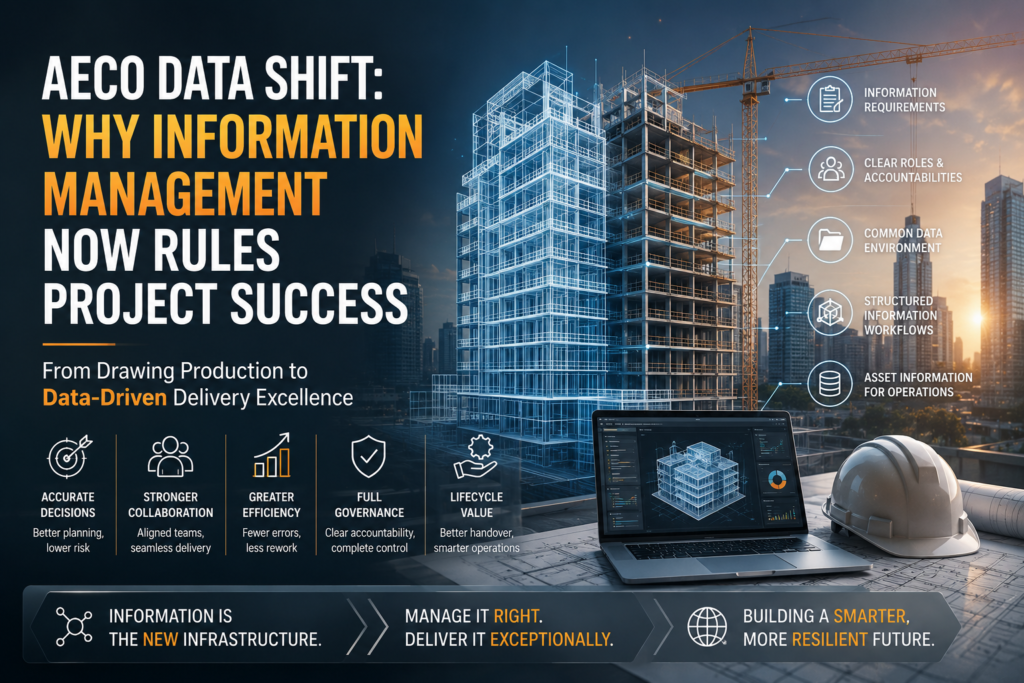
For years, the AECO industry measured progress by the volume and quality of project drawings. Today, project success is determined by how effectively organizations manage and leverage project information.
As infrastructure projects increase in scale and complexity, data has become the most valuable and often the most mismanaged asset in the built environment. Leading organizations recognize that structured information management is essential for controlling costs, ensuring governance, and maximizing long-term asset value. ISO 19650 has emerged as the global standard for delivering these outcomes.
The True Engine of Project Performance
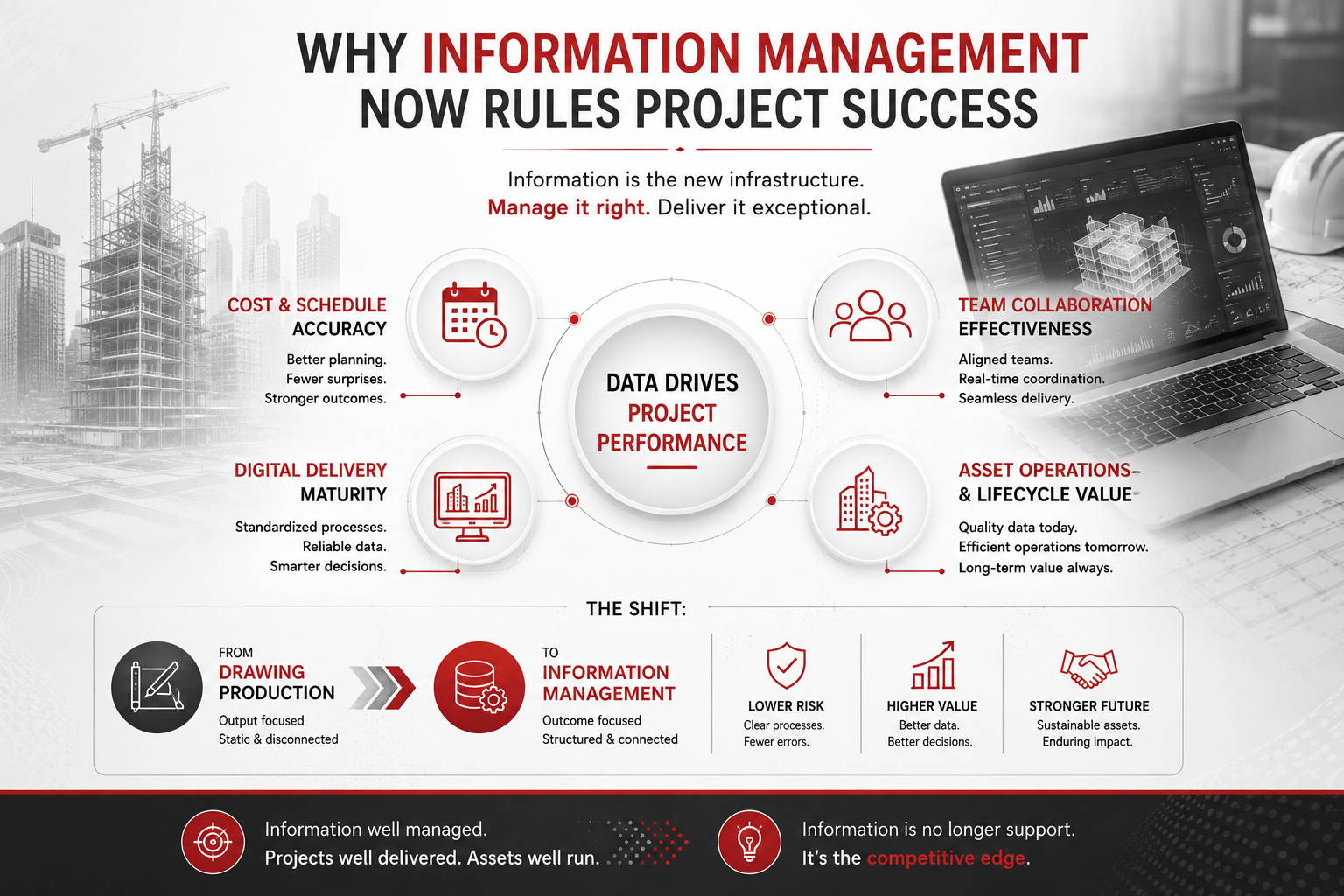
Modern construction economics demand precision. Margins are tight, supply chains are unpredictable, and stakeholders require traceable, auditable project records. In this environment, the quality of digital data drives four key areas of execution:
- Cost and schedule accuracy
- Team collaboration effectiveness
- Digital delivery maturity
- Asset operations and lifecycle value
We have reached a critical tipping point where errors in data definitions carry far heavier financial consequences than simple errors in a sketch. A single misaligned asset attribute code can cascade into widespread procurement delays, expensive on-site rework, and decades of operational headaches.
Moving your organization from basic “drawing production” to true digital information management is no longer a technical option handled by a single department. It is a core corporate strategy. ISO 19650 serves as the operational playbook that turns this strategy into a repeatable day-to-day capability.
Why ISO 19650 is a Board-Level Priority
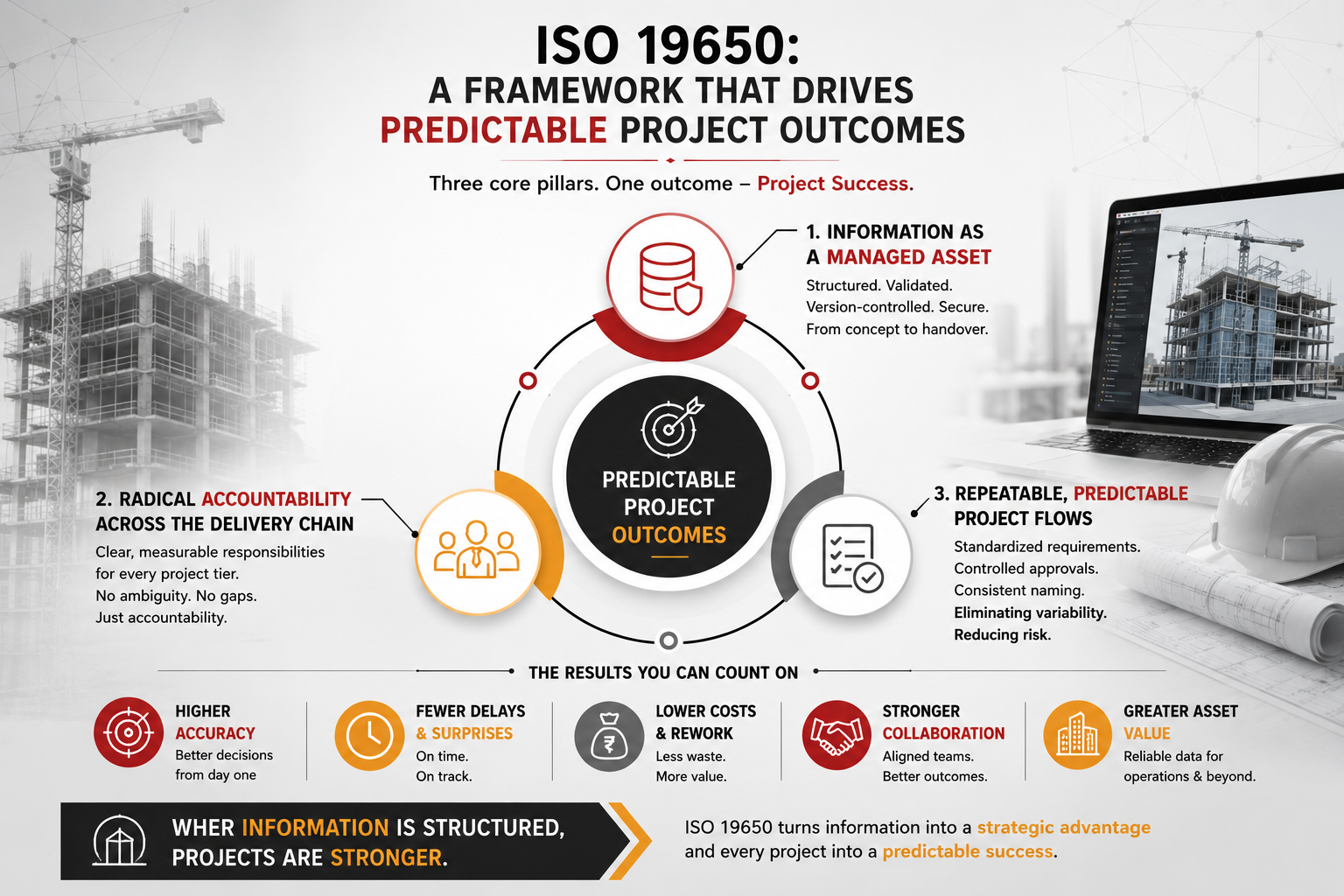
ISO 19650 has rapidly evolved from a technical framework used by digital teams into a key governance tool for high-value capital programs across India, the UK, and the Middle East. It introduces three core pillars that are reshaping modern project delivery:
- Information as a Managed Asset
Data is treated with the exact same strict discipline as physical building materials. It must be structured, thoroughly validated, strictly version-controlled, and completely secure from concept to handover.
- Radical Accountability Across the Delivery Chain
The standard eliminates room for error by defining clear, measurable responsibilities for every project tier. It explicitly outlines the boundaries between the Appointing Party (the client), the Lead Appointed Party (the tier-1 contractor or consultant), and individual Task Teams.
- Repeatable, Predictable Project Flows
By standardizing how information requirements are set, how approvals are managed, and how files are named, the framework systematically eliminates unnecessary variability—the single biggest driver of project risk.
The AECO Industry Maturity Gap
While leading global firms have fully embraced structured information governance, a significant maturity gap still splits the industry. Many project teams remain trapped in outdated, document-heavy delivery habits that actively drain profit margins.
Take a look at how lagging practices contrast against an optimized, standardized workflow:
Outdated Delivery Habits (High Risk) | ISO 19650 Governance (Predictable Outcomes) |
Designing systems without clear, documented information requirements. | Standardized EIR and AIR documents set before procurement begins. |
Creating a BIM Execution Plan (BEP) as a generic, check-the-box text document. | Living, operational BEPs tied directly to resource capacity and risk matrices. |
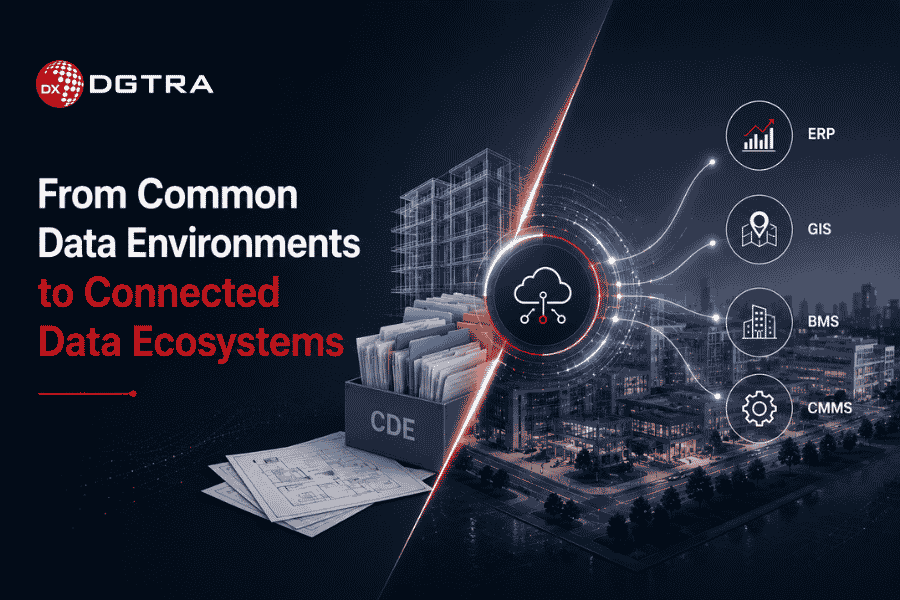
Using a Common Data Environment (CDE) as a basic, unmanaged file warehouse. | A strictly governed CDE workflow managing WIP, Shared, and Published states. |
Treating handover data as an unvetted, post-project afterthought. | Progressive data validation ensuring a lifecycle-ready Asset Information Model (AIM). |
This industry maturity gap has become a massive competitive differentiator. Organizations that master structured information management consistently outperform their peers by securing lower rework rates, higher planning accuracy, fewer contractual disputes, and far better handover data for long-term operations.
Moving Beyond Simple 3D Modelling
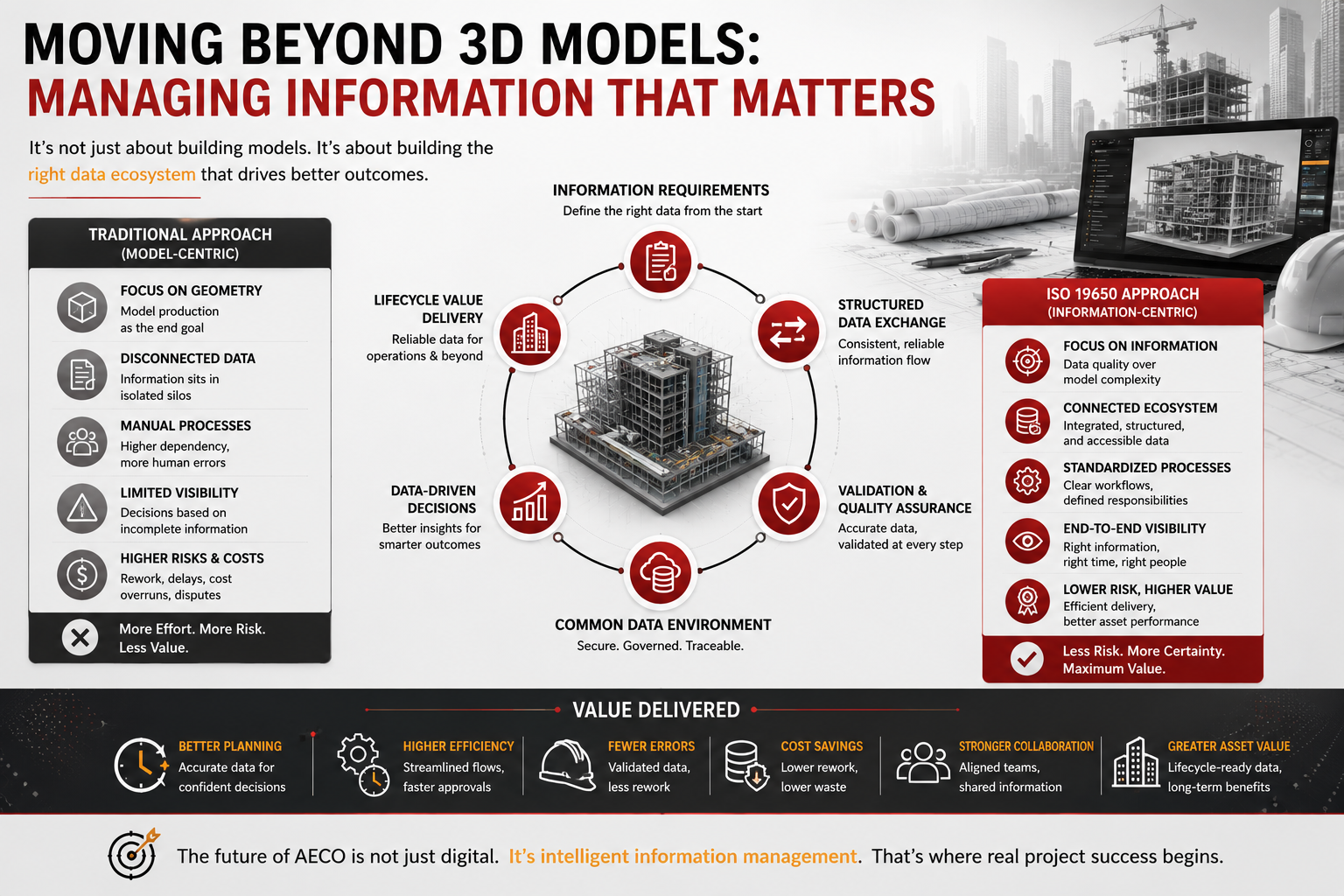
The biggest misconception in the AECO space is that digital transformation begins and ends with a 3D model. In reality, physical geometric modelling is just one small component of the overarching data ecosystem.
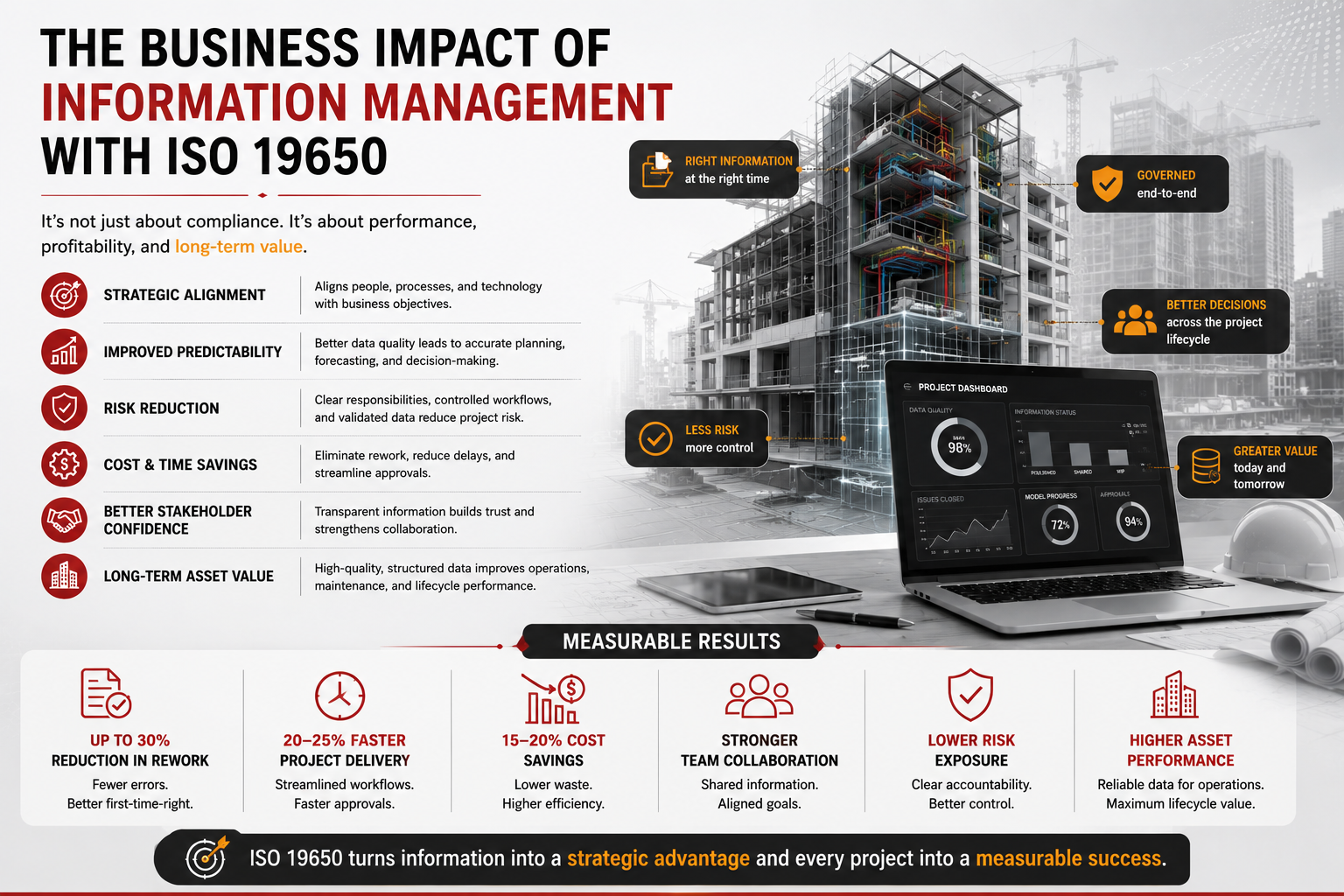
The real business value of modern digital workflows lies in establishing strict data requirements, enforcing structured data exchanges across different disciplines, and validating information inside a secure environment before it hits the field. It is not about generating more complex models; it is about producing the right data so your entire supply chain can make faster, smarter decisions.
About DGTRA
DGTRA is a digital transformation partner and process-driven consultancy operating at the absolute forefront of the global AECO industry. Backed by an elite team of over 100 specialized professionals, we bridge the gap between complex digital technology and practical, on-site execution across India, the UK, and the Middle East.
We avoid generic software solutions. Instead, we partner with asset owners, contractors, and design firms to deliver robust digital roadmaps. Our expertise covers advanced BIM, ISO 19650 advisory, customized CDE setup, and operational Digital Twins. Our focus is on engineering digital processes that deliver predictability, transparency, and financial certainty for complex construction programs.
Connect with Our Experts Today
Let’s discuss your current digital maturity level, evaluate your project workflows, and build an unshakeable information infrastructure that guarantees long-term asset value. Get your project data right, and operational excellence will inevitably follow.