Our previous article, AECO Data Shift Why Information Management Rules Project Success, demonstrated that project outcomes now depend on effective data management, not just drawings. Achieving predictability on site requires applying the same discipline to data as to physical materials.
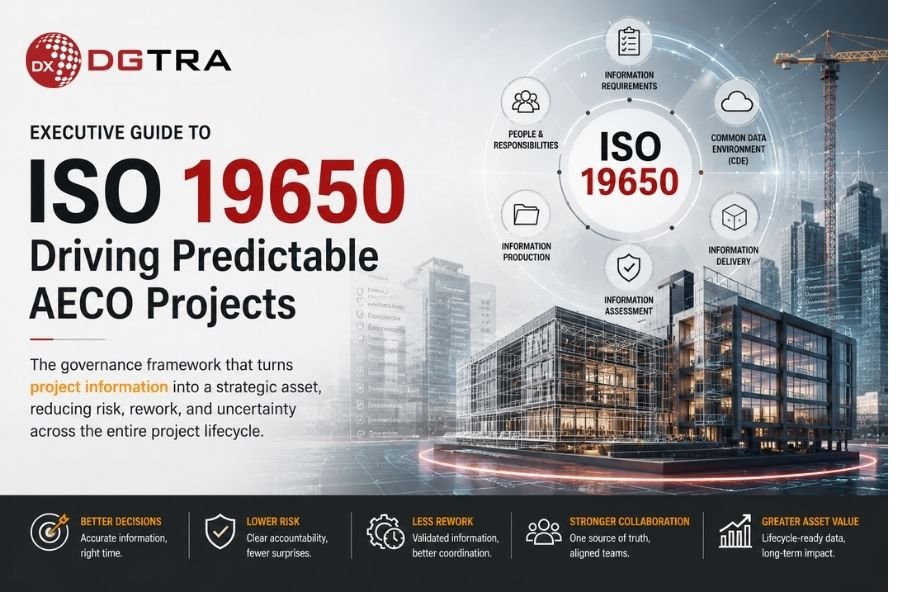
This shift makes ISO 19650 the operational standard for modern project delivery.
ISO 19650 is often labeled as a technical standard for digital modeling, but this is inaccurate. It is an executive governance framework designed to transform fragmented project data into a reliable, risk-managed business asset.
For executives managing high-capital programs, this guide explains what ISO 19650 delivers, why it is essential, and how it safeguards project outcomes and financial performance.
The Strategic Purpose: Driving Better Decisions
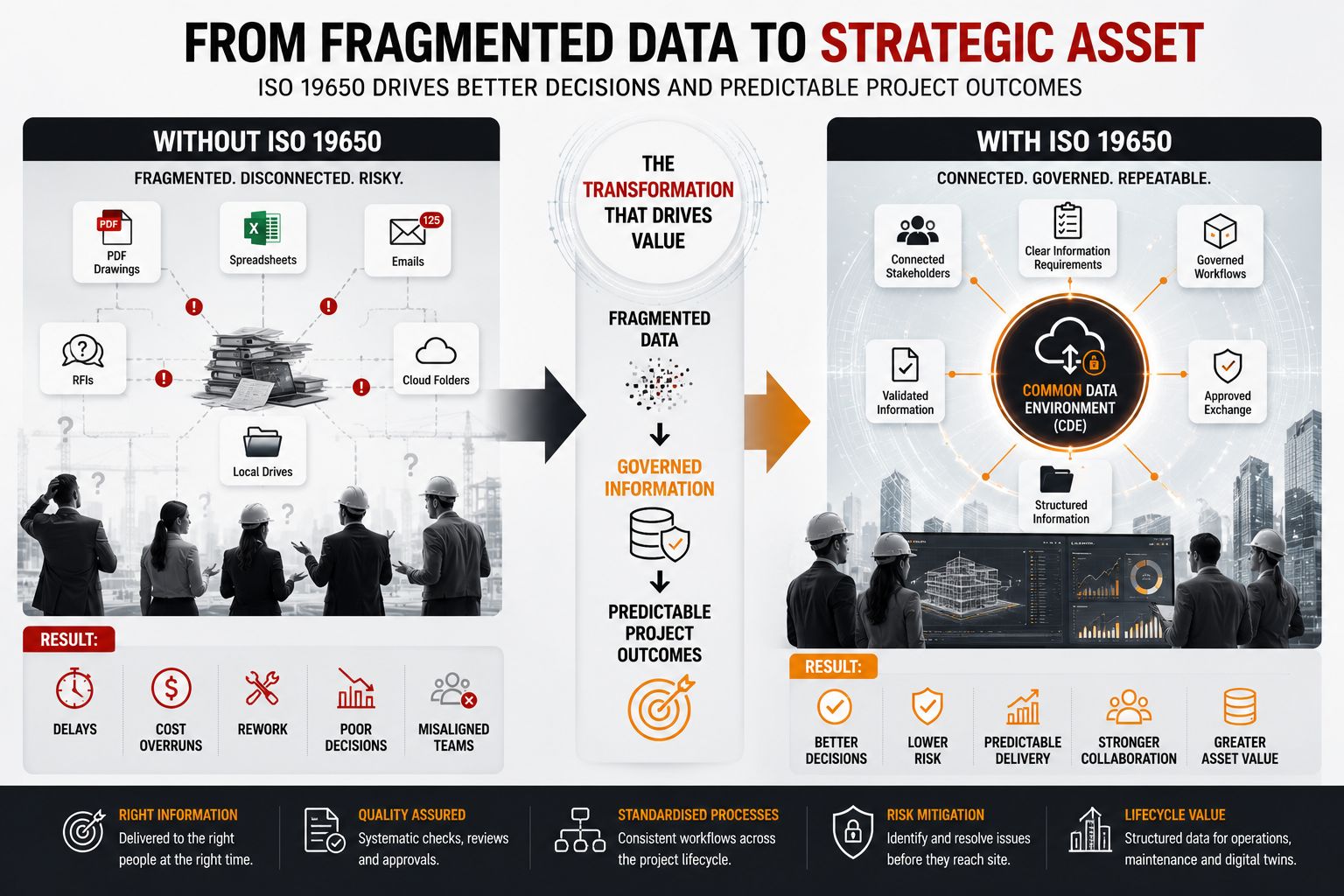
Traditional document management is breaking under the weight of modern infrastructure demands. When teams rely on disconnected spreadsheets, unvetted PDFs, and fragmented communication, project execution suffers.
ISO 19650 introduces process discipline to replace fragmented digital practices. Its core objective is to ensure that accurate information is delivered by the appropriate team, in the correct format, at the required time, enabling informed decision-making.
Applying this standard across a capital program establishes a unified approach to information management. Asset owners receive the required deliverables, contractors reduce uncertainty, and consultants operate with clear expectations.
The Core Architecture of ISO 19650
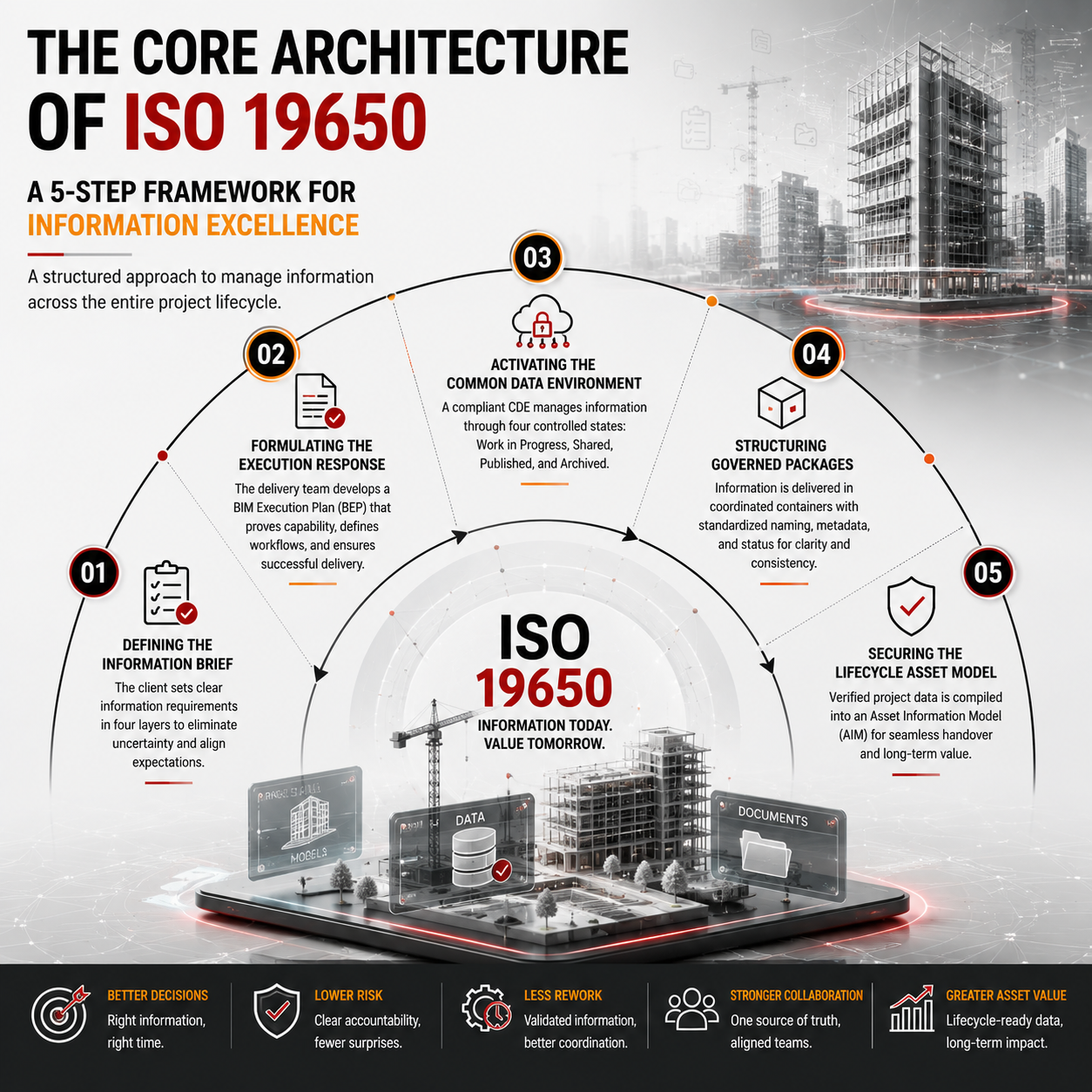
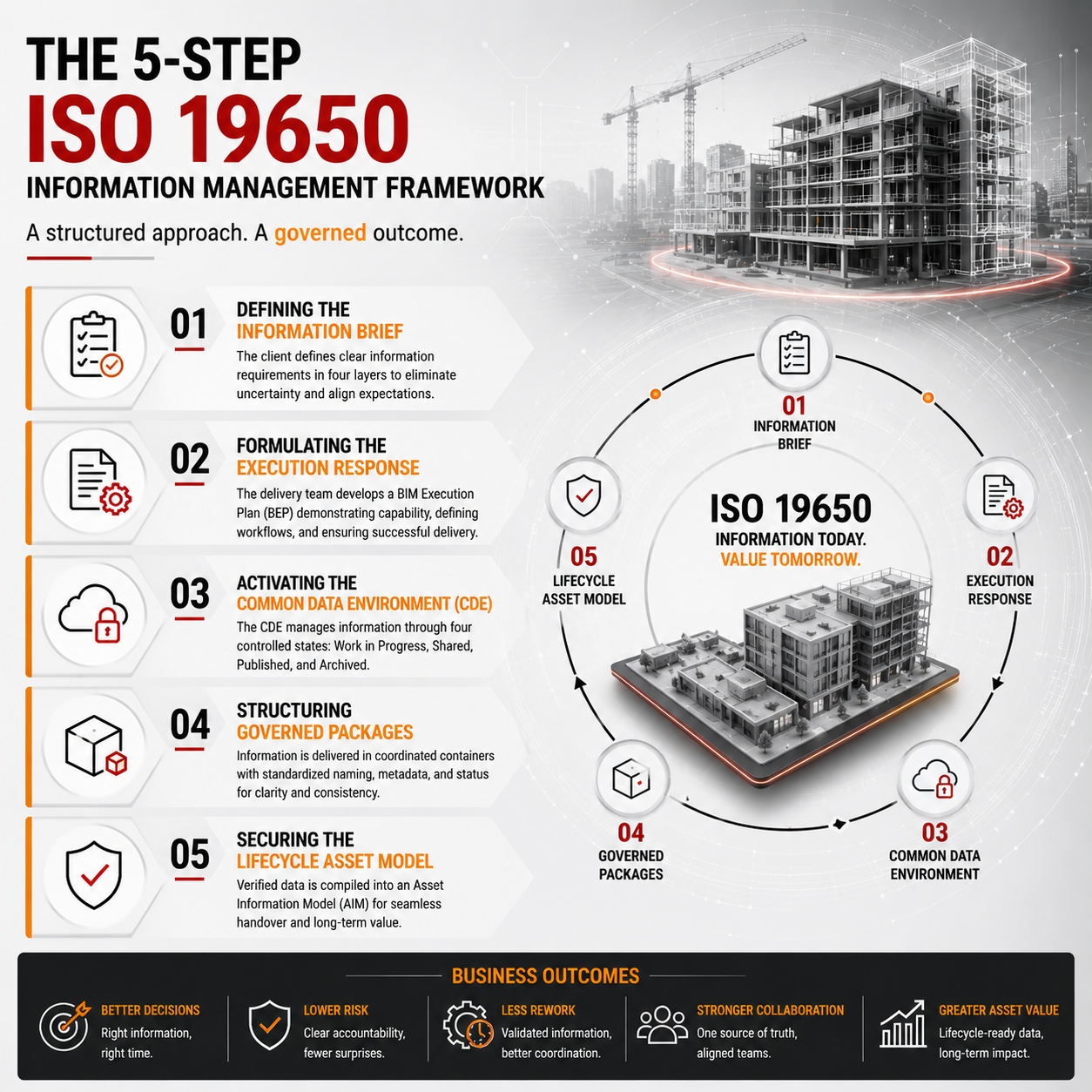
The international standard covers several components, but its logic is straightforward. It manages the digital lifecycle of a project through five operational steps:
Defining the Information Brief
The client defines project expectations by documenting clear information requirements. This foundation, structured in four layers, removes uncertainty from the supply chain before procurement starts.
Formulating the Execution Response
In response to the client’s brief, lead contractors and design partners develop a detailed BIM Execution Plan (BEP). This is not a boilerplate compliance document; it is an active operational manual proving that the delivery team has the exact resource capacity, workflows, and protocols required to execute the mandate.
Activating the Common Data Environment (CDE)
A compliant Common Data Environment (CDE) provides strict workflow control, managing how files move between four defined states: Work in Progress, Shared, Published, and Archived. Data is only used on-site after systematic checks, reviews, and approvals.
Structuring Governed Packages
Unorganized file submissions are eliminated. Information is produced and exchanged in coordinated information containers, with all models, datasets, and documents following unified naming conventions, metadata rules, and status codes.
Securing the Lifecycle Asset Model
At handover, verified project data is compiled into a structured Asset Information Model (AIM). The asset owner receives a dataset ready for integration with facility management systems and digital twin solutions.
It Is About Process, Not Software
The most common question executives ask is: “Which software platform do we need to purchase to become ISO 19650 compliant?”
The real question should be: “Do we have the process governance to manage our information effectively?”
ISO 19650 is technology-agnostic and does not prescribe specific tools or platforms. Technology enables the process, but cannot replace disciplined workflows. The standard prioritizes accountability, data validation, and risk mitigation.
Moving From Modelling to True Data Governance
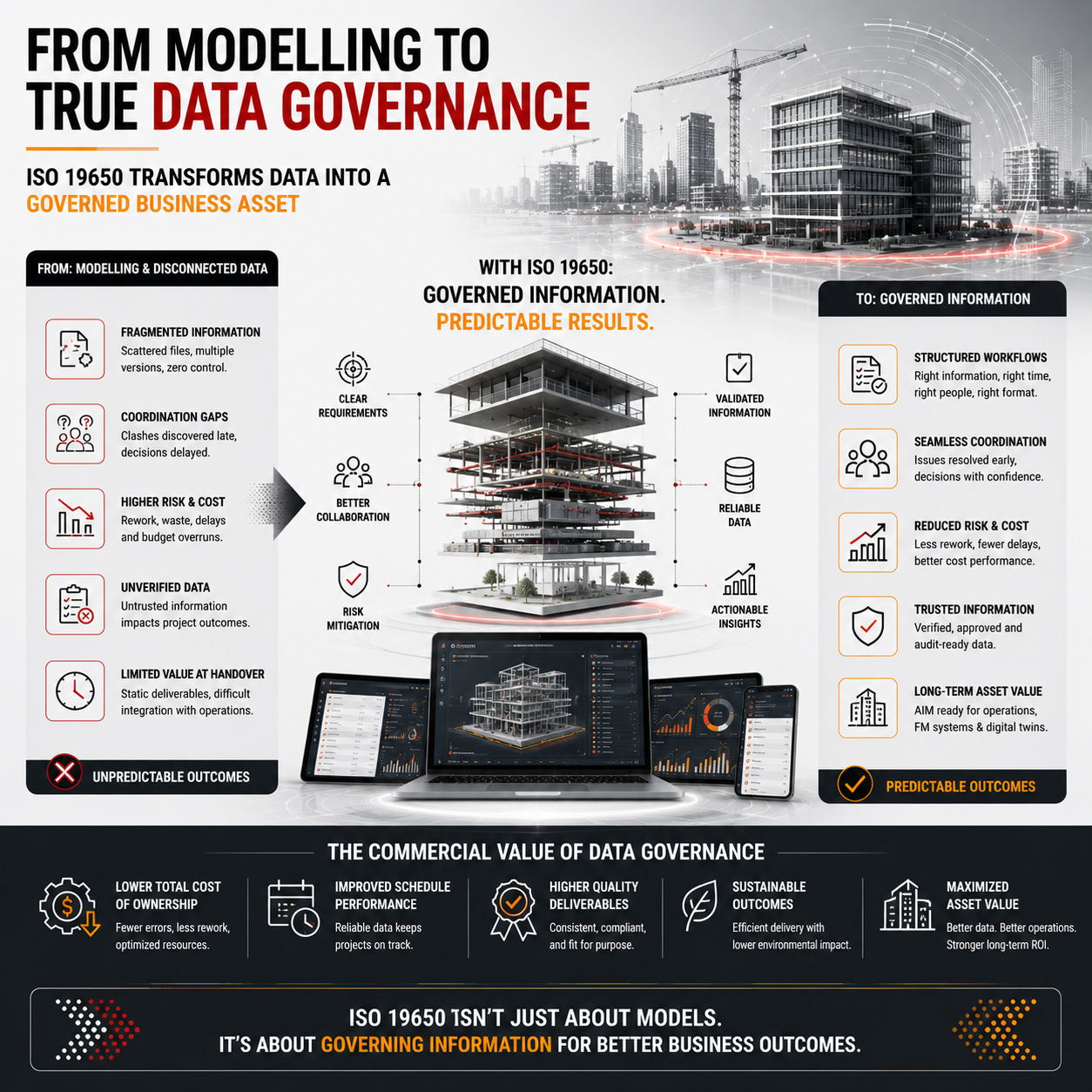
ISO 19650 is not limited to producing 3D models. The commercial value is in the data linked to the geometry and the auditable digital record of creation, verification, and approval.
A unified governance structure reduces project risk. Teams can identify and address information errors in the digital environment before they impact the job site.
About DGTRA
DGTRA is a digital transformation partner and process-driven consultancy serving the global AECO industry. With a team of over 100 specialized professionals, we connect digital technology with practical on-site execution in India, the UK, and the Middle East.
We work directly with asset owners, tier-1 contractors, and design firms to design and implement effective digital roadmaps. Our expertise includes advanced BIM implementation, ISO 19650 advisory, customized CDE setup, and development of operational Digital Twins. Our focus is on engineering digital processes that deliver predictability, transparency, and financial certainty for complex construction programs.
Connect with Our Experts Today
Transitioning to an ISO-compliant framework is a strategic business decision to reduce operational uncertainty. DGTRA provides the framework to move beyond ad-hoc digital practices and establish predictable digital delivery.
Our advisory team supports the development of information strategies for capital programs and audits of supply chain digital maturity.