
The Coordination Gap That Drives Project Costs
In complex commercial, infrastructure, and MEP-intensive projects, the highest rates of site conflict are not found in teams that skip coordination. Instead, they occur in teams that rely solely on clash detection workflows and measure success by the number of conflicts logged and closed.
That distinction matters more than most project leaders realize. According to McKinsey’s Global Construction Productivity Report, the construction industry loses an estimated $1.6 trillion annually to inefficiency, rework, and poor delivery coordination — with coordination breakdown identified as one of the leading contributors to schedule and cost overruns on complex builds.
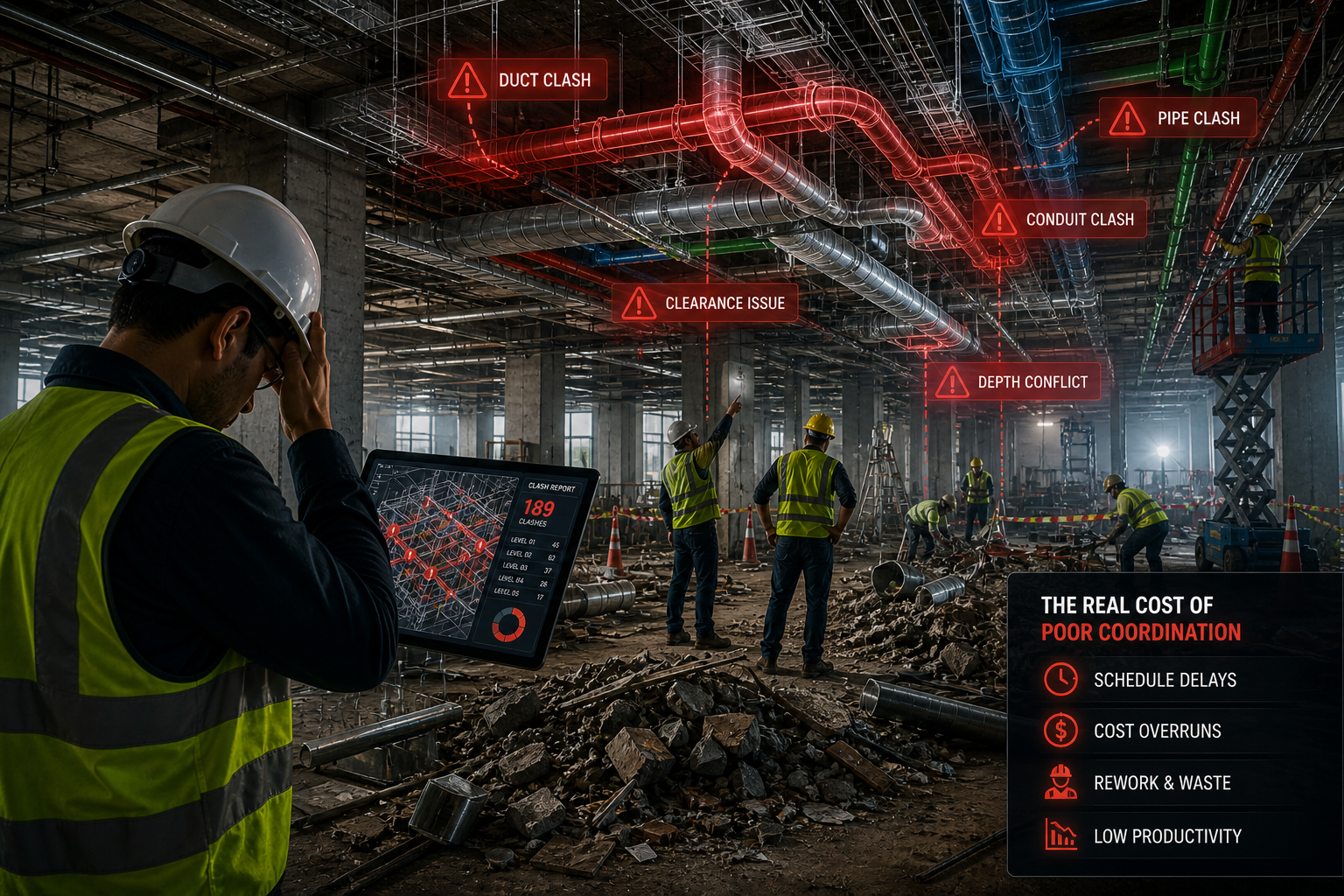
A study published in Automation in Construction found that, despite widespread BIM adoption, a significant proportion of construction rework still stems from unresolved coordination gaps — not because clash detection was absent, but because the coordination process surrounding it lacked the decision traceability and resolution accountability needed to resolve conflicts completely before construction began.
These findings point to a structural gap in BIM coordination workflows. Leading VDC teams are prioritizing investments to close this gap and drive better project outcomes.
Clash detection is a tool. Coordination is a discipline.
Decision-makers must recognize this distinction to implement effective coordination strategies that drive project success.
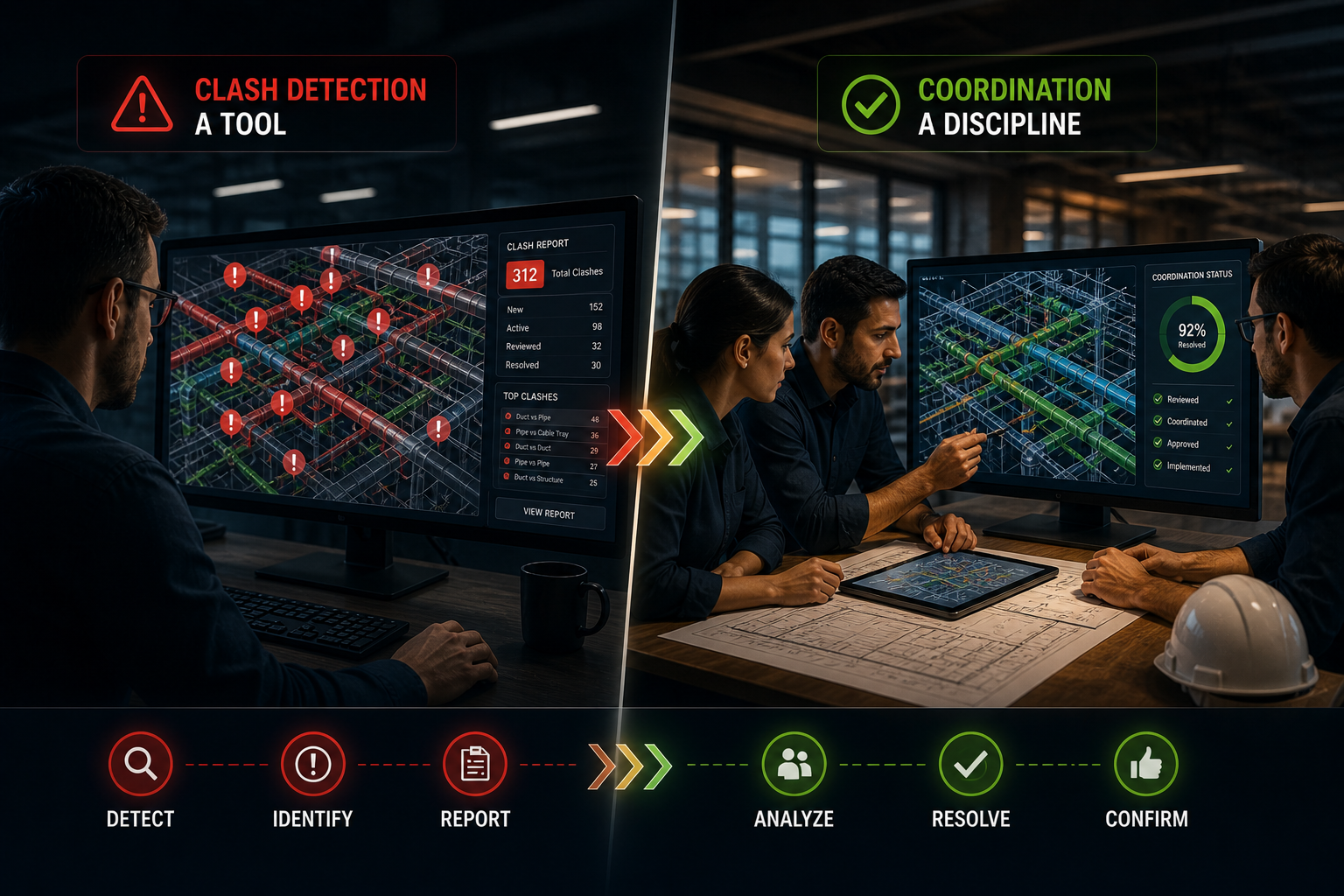
Clash detection provides a consistent geometric check of completed models, pinpointing spatial conflicts between disciplines at a given time. However, it lacks context, decision tracking, and insight into whether coordination is improving project efficiency.
BIM coordination goes beyond clash detection. It ensures interface clarity, discipline alignment, decision traceability, and model integrity, while making sure digital solutions are executed accurately on site.
Conflating clash detection with coordination shifts focuses away from preventing site conflicts. Increased detection rates and more meetings do not resolve issues if reports are not actionable. Effective coordination must prioritize outcomes that eliminate on-site problems.
Three Patterns That Signal a Coordination Gap
When coordination focuses on detection rather than outcomes, predictable issues arise. Decision-makers who recognize these patterns early can intervene and prevent delivery setbacks.
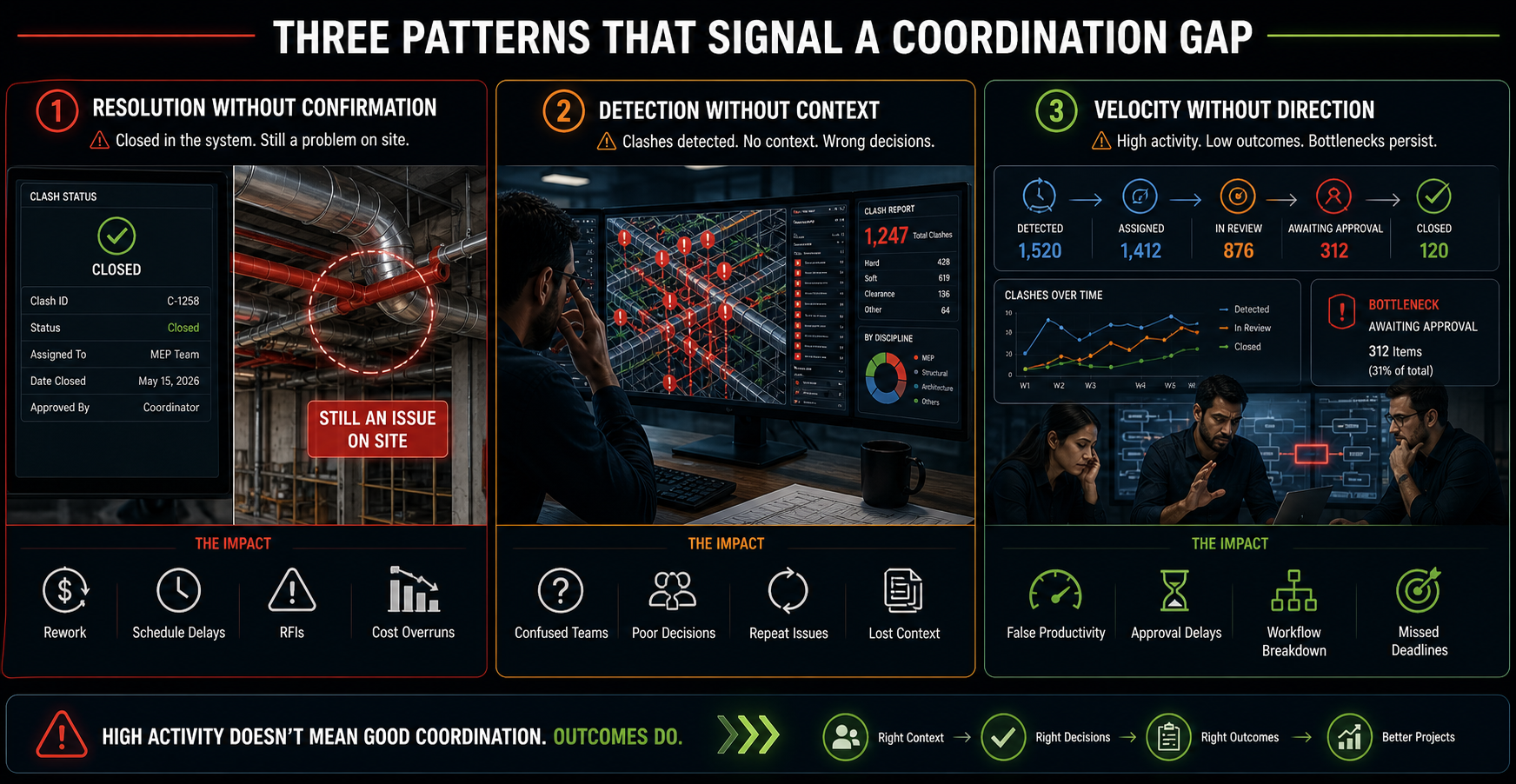
Resolution Without Confirmation
A clash may be assigned, addressed, and marked as closed in the coordination tracker. However, closure in the tracker does not guarantee resolution on site. Fixes can be temporary, models may not reflect the agreed solution, or decisions may be confirmed by someone without proper authority. The issue appears resolved but remains unresolved in the field.
Leading VDC teams now use confirmed-resolution workflows instead of simple open/closed tracking. An item is only closed after the updated model is reviewed, the decision is documented with clear accountability, and downstream impacts are verified. This process directly reduces RFI rates and site conflicts.
Detection Without Context
Clash detection identifies geometric conflicts but does not provide the reasoning, decision history, or consequences of different resolutions. When coordination relies only on reports, critical context is scattered across meeting notes, emails, and individual memory. This information is fragile, difficult to retrieve, and cannot be audited when issues arise on-site.
Top digital construction teams embed decision traceability into their workflows from the start. Each resolution documents who made the decision, the rationale, and the downstream impacts. This institutional memory prevents repeated coordination failures across zones, packages, and trades.
Velocity Without Direction
Efficient clash detection and logging workflows can process high volumes of conflicts at speed. But speed through detection means very little if the resolution process downstream is slow, contested, or structurally unclear. Teams can move quickly through coordination meetings while the decisions that matter are stalling — and the clash report gives no visibility into that dynamic.
BIM coordination KPIs, such as resolution velocity, decision cycle time, and recurring conflict rates, provide critical insights. These metrics reveal whether coordination is driving toward a construction-ready outcome or just producing documentation.
Explore how DGTRA approaches coordination performance tracking: BIM Clash Detection with Navisworks and Autodesk Construction Cloud →
What a Coordination-First Workflow Actually Looks Like
The teams consistently delivering cleaner sites and tighter RFI cycles in 2026 have built their workflows around a different sequence one where coordination strategy is established before detection begins, and where clash detection validates work already done rather than initiating work yet to start.

Why This Matters More in 2026 Than It Did Five Years Ago

The complexity of modern construction programs tighter tolerances, faster programs, greater MEP density, and increasing owner expectations around digital deliverables has raised the cost of coordination gaps significantly. A workflow that was adequate on a less complex project is now a delivery risk on the programs that matter most.
At the same time, the tools available to support coordination-first workflows have matured considerably. Platform integration between Autodesk Construction Cloud, Navisworks, and field execution environments means that the gap between coordination decisions and site-ready information can be smaller than it has ever been — provided the coordination workflow is structured to take advantage of it.
The teams that are capturing that advantage are not the ones with the most sophisticated tools. They are the ones with the clearest process built around coordination as a discipline, with clash detection in its correct supporting role.