Large-scale infrastructure projects are highly complex, requiring ongoing coordination and structured information management across transit networks, utilities, structural systems, and multidisciplinary teams. However, many teams still face a common issue: skilled engineers spend significant time on repetitive coordination tasks rather than addressing engineering challenges.
For Engineering, Procurement, and Construction (EPC) leaders, traditional coordination cycles often create operational bottlenecks. Teams may spend days or even weeks reviewing clashes, validating models, preparing reports, and managing information across stakeholders, which can delay project schedules and affect delivery performance.
According to the RICS Global Construction Productivity Report, improving productivity remains one of the industry’s biggest priorities, encouraging organizations to rethink how engineering workflows are executed rather than simply adding more resources.
Similarly, McKinsey & Company highlights that sustainable performance gains come from simplifying processes, improving organizational coordination, and strategically applying automation—not from technology alone.
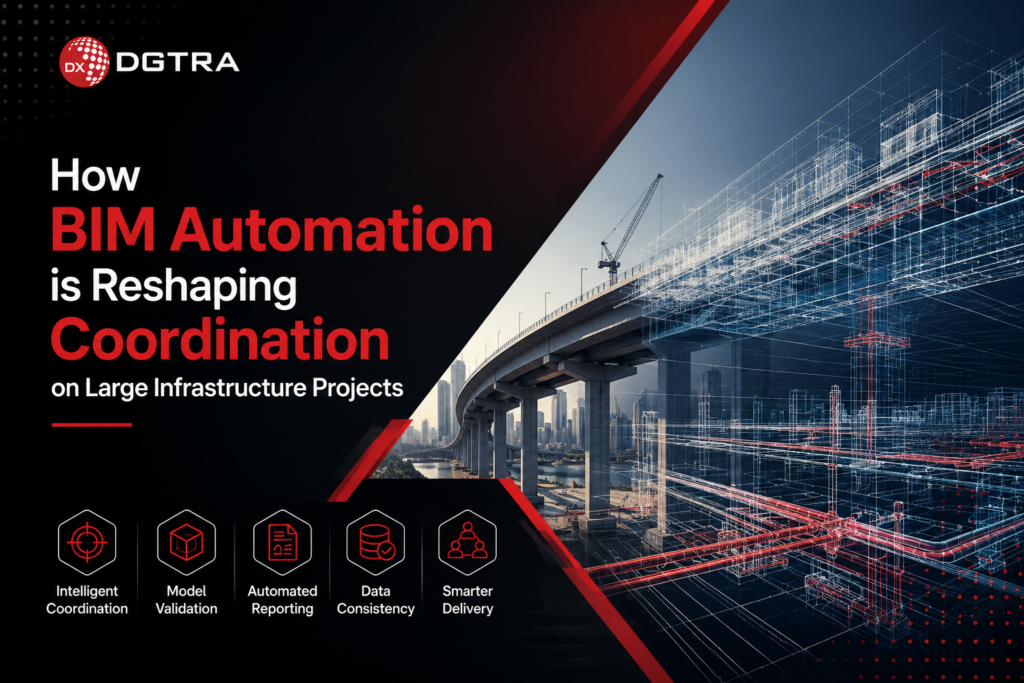
Leading infrastructure organizations are embedding BIM automation into digital delivery workflows. By using model checking, automated reporting, computational design, and intelligent coordination, teams reduce manual effort and improve consistency, information quality, and project delivery.
Moving Beyond Manual Clash Detection
Traditional clash detection is labor-intensive. Typical workflows require running a matrix in Navisworks, generating a large backlog of conflicts, and spending days manually distinguishing critical structural clashes from minor geometric overlaps, such as a small pipe intersecting a planned wall sleeve.
Automation introduces intelligent filtering within the model environment. Using custom Dynamo scripts, Python automation, or Revit APIs, teams can automatically filter false positives based on project-specific design tolerances and object attributes.
Instead of requiring coordinators to manually review and assign each conflict, custom logic groups issues by element ID, priority, or subcontractor trade, and routes actionable information directly to the relevant design teams.
The result is not only faster clash detection but also a shift in coordination meetings from data review to engineering decision-making.
Model-Checking Scripts: Guarding Data Integrity
An infrastructure model’s value depends on the quality of its underlying information. Missing Asset IDs or critical metadata for transportation assets or utilities reduce the model’s usefulness well before handover.
Manual validation of hundreds of thousands of model elements is neither efficient nor scalable.
Modern project teams use automated model-checking scripts to continuously verify model health, parameter completeness, object classification, naming conventions, and compliance with project standards.
When scripts detect missing parameters or inconsistencies, they flag them immediately in the BIM environment, enabling design teams to resolve issues before they affect downstream processes.
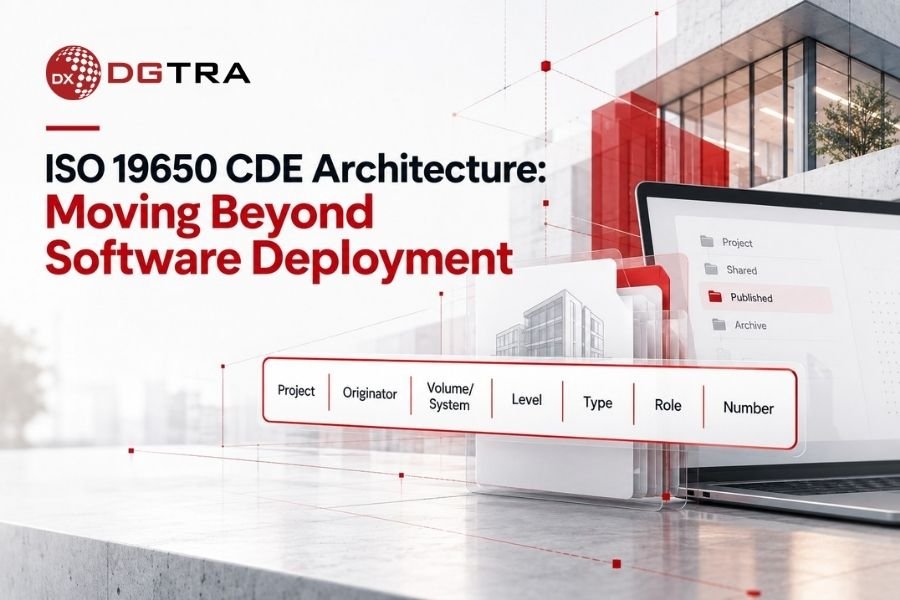
This approach aligns closely with the evolving principles of ISO 19650, where structured information management is becoming just as important as model geometry.
Learn more about our BIM Consulting & Management services:
BIM Automation Is Also Information Management
The discussion around BIM automation is evolving.
Automation now extends beyond model creation and repetitive drafting. It is increasingly used to improve information quality, standardize workflows, and support structured digital delivery throughout the project lifecycle.
This reflects the broader direction of the upcoming ISO 19650 revisions, which place greater emphasis on information management, connected workflows, and lifecycle thinking rather than BIM deliverables alone.
As organizations advance digitally, automation becomes essential for consistent information management, not just engineering efficiency.
Automated Report Generation: Closing the Communication Loop On large infrastructure projects, the main challenge is often not identifying design issues but communicating them efficiently across multiple stakeholders.
Manually capturing screenshots, updating issue logs, preparing coordination reports, and distributing updates consumes valuable engineering hours.
Automated reporting addresses this by connecting live BIM models with project management platforms using APIs and workflow automation.
A single workflow enables teams to generate structured coordination reports, assign issues automatically, update dashboards, and notify responsible disciplines.
Everyone receives the same information at the same time.
By reducing communication delays, automation strengthens project governance and supports more effective project control management throughout delivery.
Measuring the Value Beyond Automation
The success of BIM automation should not be measured by the number of scripts created.
It should be measured by business outcomes.
The greatest value lies in enabling engineering teams to focus more on design coordination, technical decision-making, and project optimization.
Engineering Time Is Too Valuable to Waste
In major infrastructure projects, each coordination cycle affects schedule, cost, and delivery certainty.
BIM automation is not about replacing engineering expertise.
It is about eliminating repetitive digital tasks so engineers can address complex project challenges, improve constructability, and deliver higher-quality outcomes. Contractors and EPC organizations implement practical BIM automation strategies through custom workflows, Revit API development, Dynamo scripting, Information Management, and BIM Consulting & Management services that align with long-term digital delivery objectives.
As infrastructure projects become more complex, organizations that automate routine processes and enable engineering teams to focus on higher-value work will gain a competitive advantage.
About DGTRA
DGTRA Consultancy Private Limited is a specialist digital engineering and BIM consulting company. We help owners, consultants, contractors, and EPC organizations improve project delivery through structured digital workflows and information management.
Our expertise includes BIM consulting and management, BIM automation, ISO 19650 information management, Common Data Environment (CDE) implementation, digital project delivery, scan-to-BIM, digital twins, and project controls.
We work across buildings, infrastructure, transportation, industrial facilities, healthcare, energy, data centres, and other complex engineering projects. Our goal is to help organizations strengthen collaboration, improve information quality, and build scalable digital delivery capabilities throughout the project lifecycle.
Are you looking to optimize your BIM workflows?
From BIM Automation to ISO 19650, DGTFrom BIM automation to ISO 19650, DGTRA helps organizations enhance digital project delivery.
Which BIM workflows should organizations automate first?
Start with repetitive, rule-based tasks such as clash detection, model validation, coordination reporting, and parameter verification. These typically deliver the quickest operational gains.
How does BIM automation improve project coordination?
Automation streamlines model reviews, standardizes reporting, and reduces manual coordination tasks, allowing project teams to focus on technical decisions rather than administrative work.
Can BIM automation support ISO 19650 implementation?
Yes. Automated workflows help maintain consistent information, validate project standards, and improve structured information management throughout the asset lifecycle.
Which technologies are commonly used for BIM automation?
Organizations commonly use Dynamo, Revit APIs, Python, Autodesk Platform Services (APS), and CDE integrations to automate engineering workflows.
Is BIM automation only valuable for large infrastructure projects?
No. While large projects benefit significantly, any organization with repetitive BIM workflows can improve efficiency, consistency, and project delivery through automation.