
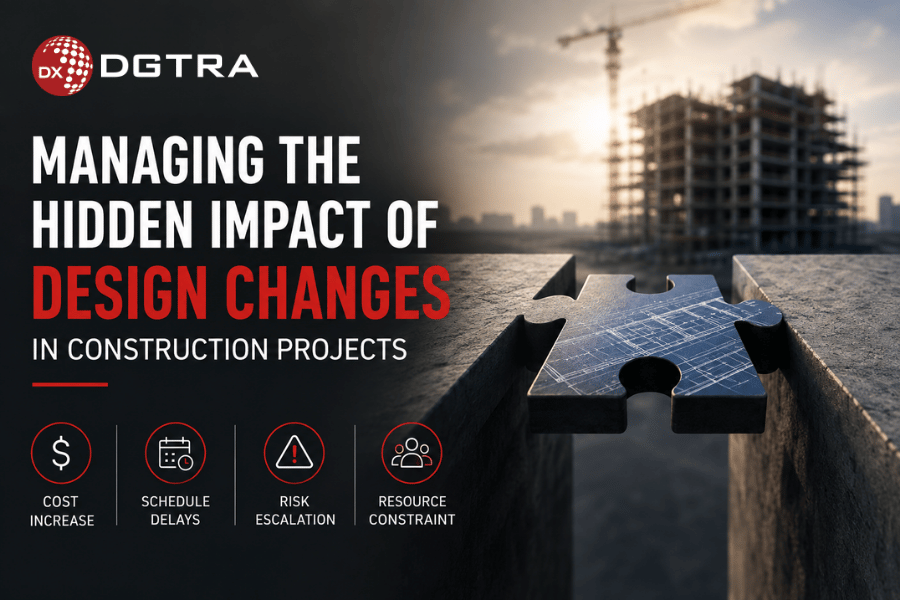
Late constructability reviews lead to costly rework. Discover how early 4D VDC and ISO 19650 reviews protect capital project budgets and schedules.
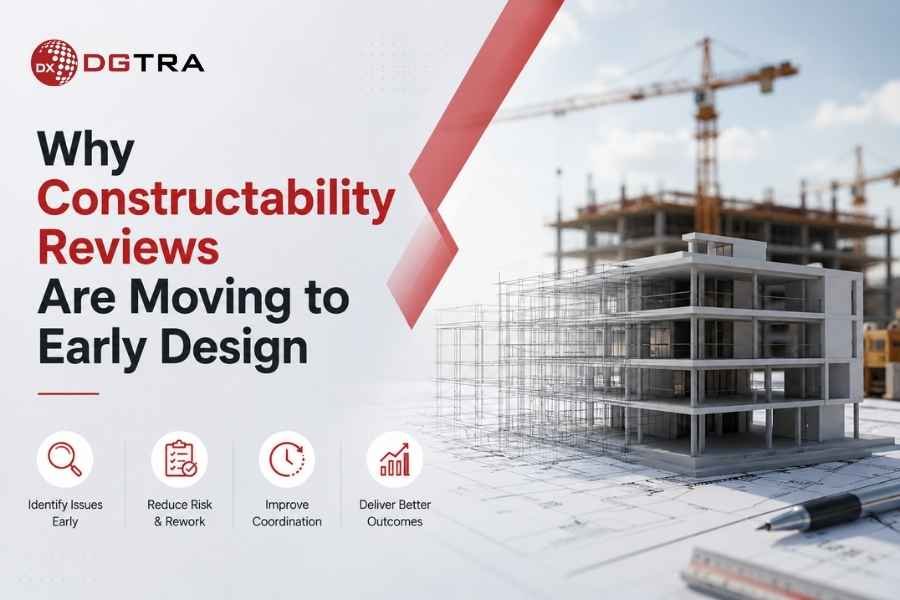
Why Constructability Reviews Are Moving to Early Design
Late constructability reviews lead to costly rework. Discover how early 4D VDC and ISO 19650 reviews protect capital project budgets and schedules.
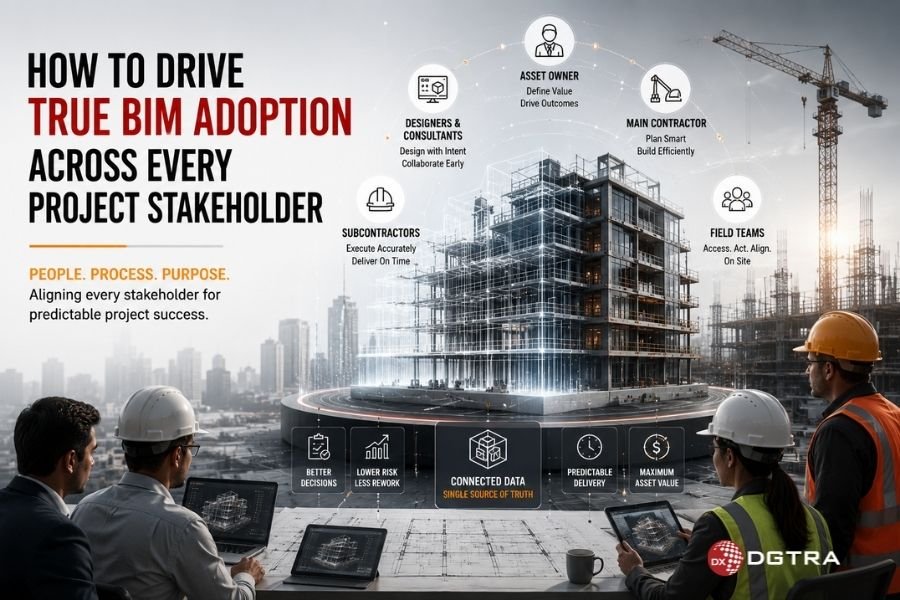
How to Drive True BIM Adoption Across Every Project Stakeholder
Every experienced leader in the AECO space knows the frustration of a flawless digital strategy that completely falls apart on the ground. We invest heavily in sophisticated Building Information Modeling (BIM) frameworks, map out meticulous data protocols, and secure enthusiastic signoffs at the project kickoff. Yet, the moment boots hit the mud, the disconnect begins design models remain isolated in corporate silos, contractors rely back on static sheets, and field crews improvise around immediate site pressures. True BIM adoption is never a software acquisition issue; it is a human alignment challenge that requires an operational bridge between digital design intent and the realities of construction execution. If our digital workflows stop at the office door, we aren’t running an integrated project—we are simply managing high-tech data silos. To unlock real lifecycle efficiency, we must pivot from imposing rigid mandates to driving a unified cultural shift across every project tier. The Root Cause: Why Stakeholder Adoption Stalls Real adoption stalls the moment a digital process feels like an administrative burden rather than an operational solution. When site teams and subcontractors are handed a complex system that doesn’t respect their daily realities, human nature takes over, and people naturally revert to the legacy methods that let them finish their shift fastest. To build an ecosystem that works, we must directly address the three biggest friction points across typical project teams: The Value Disconnect: Stakeholders often view BIM consulting and model coordination as an added compliance layer designed to benefit someone else further down the lifecycle, rather than an active tool created to solve their immediate on-site hurdles. Technical Asymmetry: Pushing advanced data environments onto field teams without providing simplified, intuitive entry points creates an unnecessary learning curve that slows down production schedules. Contractual Fragmentation: Traditional delivery methods rarely incentivize collaborative data management services. If a trade partner is not structurally rewarded for maintaining data continuity, they simply will not do it. A Strategic Framework to Drive Multi-Stakeholder Alignment Driving deep adoption across a diverse project ecosystem requires moving away from heavy-handed enforcement and shifting toward systemic enablement. Translate BIM into Local Value We must speak to our stakeholders in the currency they trade in. Instead of discussing complex data schemas or abstract clash matrices, focus on their immediate operational wins: For Main Contractors: Position the model as a strict risk-mitigation tool that directly protects their margins by preventing material overruns and keeping schedules predictable. For Subcontractors: Emphasize how pre-fabrication and precise spatial coordination eliminate wasted site trips, idle standby times, and frustrating field modifications. For Asset Owners: Demonstrate how a clean, lifecycle-ready data handover lowers long-term operational costs and builds a true foundation for smart facility management. Lower the Technical Barrier to Entry True accessibility means meeting your teams exactly where they are. Field crews do not need to navigate an entire master model on a chaotic site; they need quick, seamless access to the specific, isolated section relevant to their current task. By utilizing lightweight, mobile-friendly viewing tools, we can strip away the technical noise and put actionable insights right into the hands of the people building the project. Cultivate Shared Project Ownership Instead of treating coordinators as data police who flag errors after they occur, build an interactive ecosystem. Establish collaborative, cross-functional review sessions where project challenges are solved with input from the field teams, not just dictated to them. When trades see their real-world expertise actively shaping the digital environment, true buy-in follows naturally. Industry Insights: The True Cost of Disconnected Data Achieving complete stakeholder alignment is no longer just an internal operational preference—it is a critical requirement for modern project delivery. Fragmented information exchange remains one of the largest drains on construction productivity worldwide. According to global project delivery studies compiled by ResearchGate, poor communication, a lack of clear client demand, and disjointed training structures are consistently ranked as the top barriers preventing organizations from achieving full digital integration. When data isn’t unified across lines, projects lose the collaborative precision that modern infrastructure demands. Transform Your Implementation Strategy: Join Our Upcoming Webinar If your organization is ready to move past theoretical planning and build a digital workflow that your subcontractors, project managers, and clients actually want to engage with, let’s take the next step together. Join our upcoming live strategic session where we break down the practical playbooks leading firms use to secure genuine buy-in, simplify field data access, and drive measurable adoption across every project tier. Webinar: BIM Execution Plans That No One Follows Secure Your Spot Today: DGTRA Webinar Registration About DGTRA At DGTRA, we bridge the gap between complex technology and real-world construction delivery. We partner with forward-thinking asset owners, general contractors, and engineering leaders to design information management frameworks that drive collaboration, minimize risk, and safeguard project predictability. We don’t just help you deploy digital tools we ensure your entire ecosystem knows how to use them to deliver profitable, future-proof assets. Let’s work together to transform your project data into a powerful competitive advantage. Ready to bridge the gap between digital intent and site reality? Connect with our consulting team today to discover how we can help align your stakeholders and optimize your next project workflow. Who monitors the day-to-day enforcement of this workflow? While the framework is established contractually by the client, the day-to-day governance, CDE tracking, and information validation are championed by specialized Information Managers or BIM Implementation leads within the Lead Appointed Party. How does the CDE workflow ensure contractor alignment? Because the ISO 19650 workflow is fully embedded into contract documents via the EIR and BEP, compliance is a core project requirement. Data must successfully clear the verification gateways to reach the “Published” state, ensuring only fully authorized information is utilized for active on-site construction. Does this workflow optimize the design and construction timeline? Yes. By proactively identifying data variations, spatial clashes, and misaligned definitions early within the controlled digital environment, this workflow saves thousands of hours of field adjustments and maximizes operational efficiency on the construction site. How does the
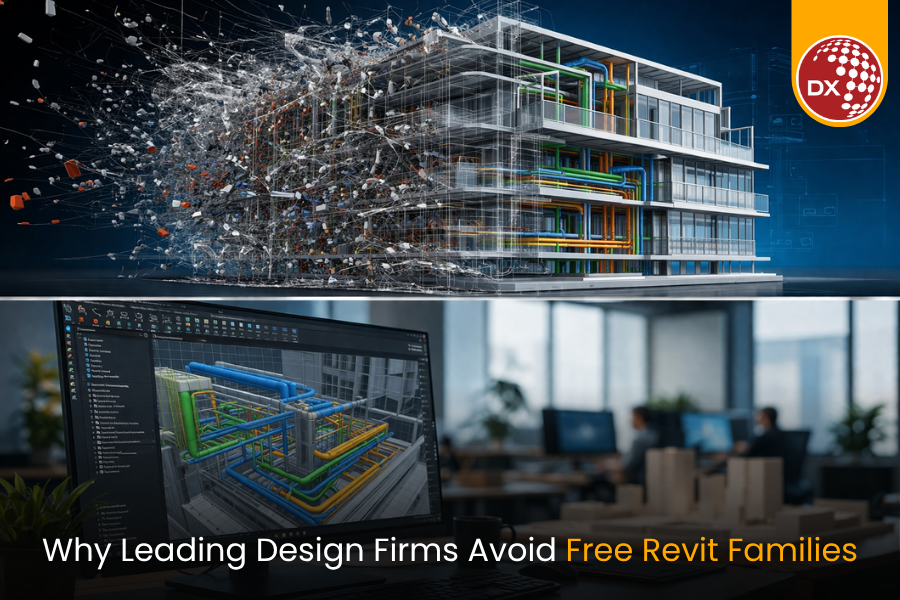
Why Leading Design Firms Avoid Free Revit Families (And What It’s Costing Your Projects)
Across global AEC projects, BIM adoption is increasing—but so are model performance issues, coordination failures, and rework costs. Surprisingly, one of the biggest hidden causes isn’t design complexity—it’s free Revit families. Most teams rely on them to save time. But what starts as a quick fix often leads to slow models, inaccurate data, and site clashes. In our recent webinar, we explored why top design firms are moving away from free content—and what they do instead. The Real Problem with Free Revit Families At first glance, free Revit families seem harmless. But the problem doesn’t show up immediately. It builds over time. Where the Issue Starts: Urgent downloads during deadlines Reuse of outdated families No standardization across teams What Happens Later: Model performance degradation Parameter inconsistency Coordination conflicts Documentation errors As highlighted in the webinar, BIM success is not determined on day one—it’s revealed during coordination and delivery. Hidden Project Impacts (That Teams Underestimate) Free Revit families introduce four critical risks: 1. Model Performance Risk (Stability Killer) Heavy geometry Over-modeled components Nested families Result: Lag, slow sync, file crashes 2. Data & Parameter Risk (Information Killer) Unstructured parameters Missing shared data Inconsistent naming Result: Scheduling errors, poor quantity take-offs 3. Coordination Risk Missing clearances Incorrect geometry Unrealistic modeling Result: Site clashes and rework 4. Documentation Risk Incorrect 2D representation Visual inconsistency Result: Drawing errors and RFIs Why Current Approaches Fail Most teams believe they are “managing” families. But reality is very different. What Teams Think vs What Actually Happens What Teams Think What Actually Happens Free families save time Time lost in cleanup and fixing More detail = better model Over-modeling slows performance Reuse is efficient Version inconsistency spreads Downloaded = ready to use Requires hours of rework As discussed in the webinar, teams often spend 2–3 hours cleaning a single family—negating any initial time savings. A Better Approach: High-Performance BIM Content Strategy Leading firms follow a structured content strategy, not ad-hoc downloads. Step-by-Step Framework Step 1: Standardization Naming conventions Parameter structure Category alignment Step 2: Controlled Parametric Design Clean reference planes Defined parameters Stable formulas Step 3: Geometry Optimization Avoid over-modeling Use detail levels (coarse/medium/fine) Replace model lines with symbolic lines Step 4: Centralized Content Library Single source of truth Version control Team-wide consistency Step 5: Continuous Audit System Monitor family size Remove redundant data Maintain performance benchmarks Mini Case Scenario Problem: A residential high-rise project used a 5–6 MB sliding door family across multiple units. Impact: Floor plans took 45 seconds to open Frequent crashes Coordination delays Approach: Reduced geometry complexity Removed unnecessary details (screws, rollers) Optimized parameters Outcome: Family reduced to ~300 KB Faster model performance Improved coordination This aligns with webinar insights: architects don’t need excessive detail—just functional accuracy. Traditional vs Optimized BIM Content Traditional Approach Optimized Approach Download & use Build & standardize Heavy geometry Lightweight models Uncontrolled parameters Structured data Reactive fixes Proactive planning Fragmented versions Centralized library Key Takeaways Free Revit families create long-term project risks Model performance issues often originate from poor content quality Standardization is more important than speed Lightweight, parametric families improve coordination and delivery BIM success depends on systems—not shortcuts FAQs 1. Why do free Revit families cause performance issues? Because they often contain heavy geometry and unstructured data, increasing file size and slowing models. 2. Are free families always bad? Not always—but they require cleanup, standardization, and validation before use. 3. What is the ideal size for a Revit family? Typically 200–500 KB for architectural use, depending on complexity. 4. How can teams manage Revit families better? By using a centralized library, standard parameters, and regular audits. Conclusion Free content isn’t the real problem—uncontrolled content is. If your team is struggling with slow models, coordination issues, or inconsistent outputs, it’s time to rethink your BIM content strategy—from quick fixes to structured systems. How DGTRA Helps At DGTRA, we work with global AEC firms to transform fragmented BIM workflows into structured, scalable content ecosystems. Our approach goes beyond family creation—we focus on building high-performance BIM systems that improve coordination, reduce rework, and enhance delivery predictability. We support teams through: BIM content audits and performance benchmarking Standardized Revit family libraries aligned with global standards Parameter structuring for data consistency across projects Centralized content management systems for multi-team collaboration Automation strategies to scale modeling efficiently Whether you’re dealing with slow models, inconsistent outputs, or coordination challenges, DGTRA helps you move from reactive fixes to proactive BIM delivery systems. Final Thoughts Watch the full webinar to see how leading design firms are eliminating content inefficiencies and building scalable BIM systems. If you’re looking to implement a similar approach, partner with DGTRA to bring structure, performance, and consistency to your BIM workflows.
Hidden Risks of Free Revit Families — Why Leading Design Firms Stay Cautious
In today’s design and construction landscape, efficiency and accuracy define competitive advantage. When deadlines are tight and projects grow increasingly complex, many design professionals look for shortcuts to accelerate modeling and documentation. One common approach is downloading free Revit families from online sources. At first glance, these families seem like a time-saver — instantly accessible, diverse, and free of charge. But for leading design firms managing multi-disciplinary BIM workflows, these “free” assets often introduce more problems than benefits. Let’s explore why firms that prioritize performance, consistency, and reliability often avoid freely available Revit families, and how your team can manage content smarter. 1. Model Instability and Performance Degradation Revit families sourced from public libraries can be poorly optimized. Many contain excessive geometry, nested elements, or unnecessary detail levels, which significantly increase file size and slow down model performance. At firm scale — where multiple users collaborate across linked models — these inefficiencies multiply, resulting in lag, crashes, or model corruption. Over time, your project teams spend more effort managing instability than producing deliverables. 2. Inconsistent Parameters and Naming Conventions Every firm has its own BIM standards and naming protocols designed to ensure interoperability across disciplines. Online families rarely align with these standards. Freely available Revit families often introduce inconsistent parameter structures, unclassified data fields, or conflicting naming systems, making schedules, tags, and filters unreliable. This inconsistency forces BIM coordinators and model managers to perform manual cleanups — a tedious task that undermines the very productivity those free assets were supposed to deliver. 3. Broken Constraints and Unreliable Data Many downloadable families are created without considering proper parametric relationships or BIM use cases. These broken constraints lead to geometry distortions when scaled or re-hosted, causing alignment and clash issues during coordination. Even worse, such families often contain incorrect or incomplete metadata, reducing the quality of asset information passed to contractors and facility managers — directly affecting project handover and lifecycle performance. 4. Late-Stage Rework and Coordination Issues When these issues remain unnoticed early in design, they surface during coordination or documentation — precisely when project timelines are most critical. Late-stage fixes for broken families can delay deliverables, require re-modelling of entire systems, and disrupt collaboration between architectural, structural, and MEP teams. The cumulative impact? Cost overruns, missed deadlines, and loss of client confidence. 5. QA/QC Failures During Documentation A firm’s quality assurance and quality control (QA/QC) processes depend on reliable family templates and standardized metadata. Using online families bypasses these controls, making it harder to maintain drawing accuracy, tag consistency, and schedule integrity. When auditors or clients request validation, non-standard or incomplete data within these families can lead to compliance issues and rejected submittals. 6. Increased Professional and Delivery Risk In the AEC industry, professional liability extends to the accuracy and reliability of design documentation. Incorporating unverified Revit families from unknown sources increases the risk of design discrepancies, inaccurate data, and misrepresented specifications. For leading design firms, such risks are unacceptable — even a single data error in a critical component can have legal, contractual, and reputational consequences. Smarter Alternatives for Firms Top-performing firms don’t reject Revit families altogether — they just manage them better.They invest in: Centralized, vetted content libraries built to firm standards. Automated QA/QC scripts for validating family geometry and parameters. Periodic reviews of family data to ensure alignment with evolving BIM protocols (like ISO 19650). Internal training to help modelers understand when and how to safely incorporate third-party content. By building controlled BIM content ecosystems, firms maintain the agility to design faster — without compromising integrity. Join Our Webinar: Building Trust in BIM Content To dive deeper into this topic, DGTRA is hosting a webinar on how leading design firms are tackling Revit content challenges at scale. Learn how to:✅ Identify unreliable Revit families before they enter your projects✅ Build content libraries aligned with ISO 19650 and firm standards✅ Streamline QA/QC for long-term BIM efficiency✅ Protect your projects from hidden risks in digital assets 📅 Webinar: Why Most Leading Design Firms Avoid Freely Available Online Revit Families🌐 Register now at: https://zma.page/revit
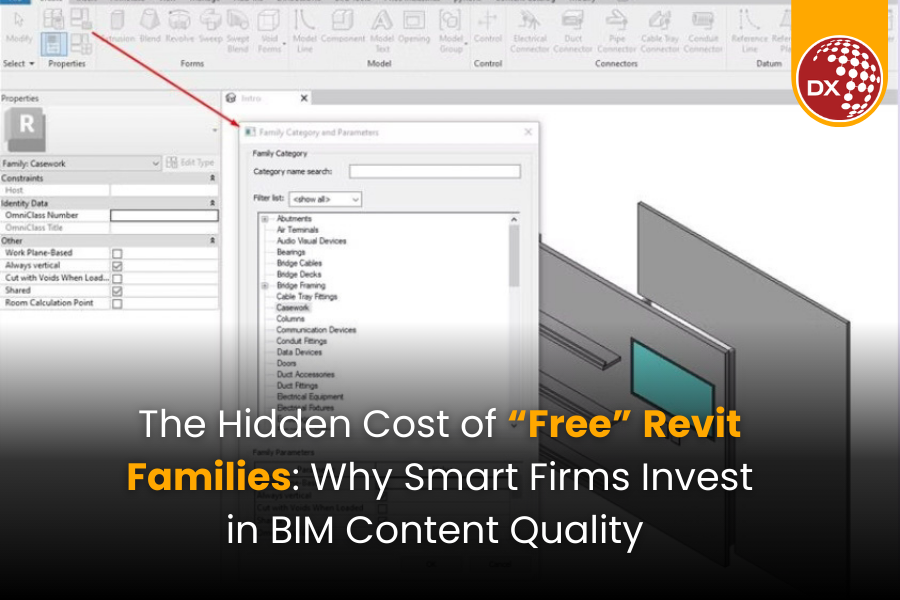
The Hidden Cost of “Free” Revit Families: Why Smart Firms Invest in BIM Content Quality
In today’s fast-paced design environment, speed and convenience often take center stage. For many design and engineering teams, downloading freely available Revit families feels like a simple way to accelerate modeling tasks. But behind that convenience lies a silent threat — one that impacts performance, consistency, and even project profitability. Forward-thinking firms have learned that the real cost of free content is hidden in the hours spent fixing, coordinating, and reworking models. Let’s explore why Free Doesn’t Mean Fit-for-Purpose Most Revit families available online are created for general use — not your firm’s specific standards, workflows, or project requirements. They might look perfect in isolation, but once integrated into your model, they often fail to align with design parameters or client deliverables. The result? Revisions, replacements, and endless coordination calls. Data Consistency Is the Foundation of BIM A well-managed BIM environment depends on reliable, standardized data. When you import families from multiple sources, you inherit their inconsistencies — mismatched parameters, naming conventions, and data fields. Over time, this disrupts schedules, quantity of take-offs, and data analytics. What begins as a few shortcuts quickly snowballs into a loss of data trust across the organization. Model Performance Suffers in the Long Run Revit families downloaded from unknown sources often carry excess geometry or unnecessary nested elements. These increase file size, slow down model performance, and lead to instability in large, multidisciplinary projects. Instead of improving productivity, they quietly reduce it — especially when multiple teams collaborate in a shared environment. Compromised Quality = Increased Risk For firms working under ISO 19650 or similar frameworks, every BIM object carries a quality responsibility. Poorly structured or unverified families introduce risk — not just in design coordination but in contractual deliverables. What may seem like a harmless symbol can later cause documentation errors or compliance failures, directly impacting client confidence. Efficiency Comes from Control, Not Convenience The most successful BIM teams don’t rely on what’s free — they rely on what’s verified. By developing a centralized BIM content library, firms can control naming, parameters, geometry, and metadata — ensuring every family performs predictably across projects. This level of consistency doesn’t just save time — it strengthens trust between teams and clients alike. The Smarter Way Forward DGTRA’s BIM Content Management Services help organizations move beyond ad-hoc Revit downloads toward structured, high-performance content ecosystems. Through standardized templates, QA validation, and metadata optimization, DGTRA enables teams to deliver faster, maintain compliance, and reduce rework — all while improving model stability. Conclusion The truth is simple: free Revit families aren’t really free. They come with hidden costs — time, errors, and lost confidence. Leading firms are redefining BIM efficiency not by cutting corners, but by building stronger foundations of data, consistency, and control. And that’s exactly where the future of intelligent design begins. Are free Revit families always bad to use? Not necessarily—but they are rarely suitable for enterprise or large-scale BIM workflows. Most free families are built for generic use, not aligned with firm-specific standards, project LOD requirements, or ISO-compliant data structures. Without validation, they often introduce inconsistencies and rework. What hidden costs do free Revit families create? The biggest costs are not financial upfront—but operational over time. Teams spend hours fixing parameters, correcting geometry, resolving coordination clashes, and troubleshooting performance issues. These hidden inefficiencies directly affect delivery timelines and profitability. How do poor-quality families impact BIM data and deliverables? Inconsistent or poorly structured families compromise schedules, quantity take-offs, and downstream data use. When BIM data can’t be trusted, it weakens decision-making, reporting accuracy, and client confidence—especially on data-driven or asset-focused projects. Why is BIM content quality critical for ISO 19650 compliance? ISO 19650 requires controlled, reliable information management. Unverified families introduce risk in naming conventions, parameters, and data integrity—potentially leading to non-compliance, documentation errors, and contractual issues. What is the advantage of investing in a managed BIM content library? A managed BIM library ensures consistency, performance, and predictability across all projects. Standardized geometry, parameters, and metadata reduce rework, improve collaboration, and enable teams to scale BIM delivery with confidence—without sacrificing quality.