
Late constructability reviews lead to costly rework. Discover how early 4D VDC and ISO 19650 reviews protect capital project budgets and schedules.
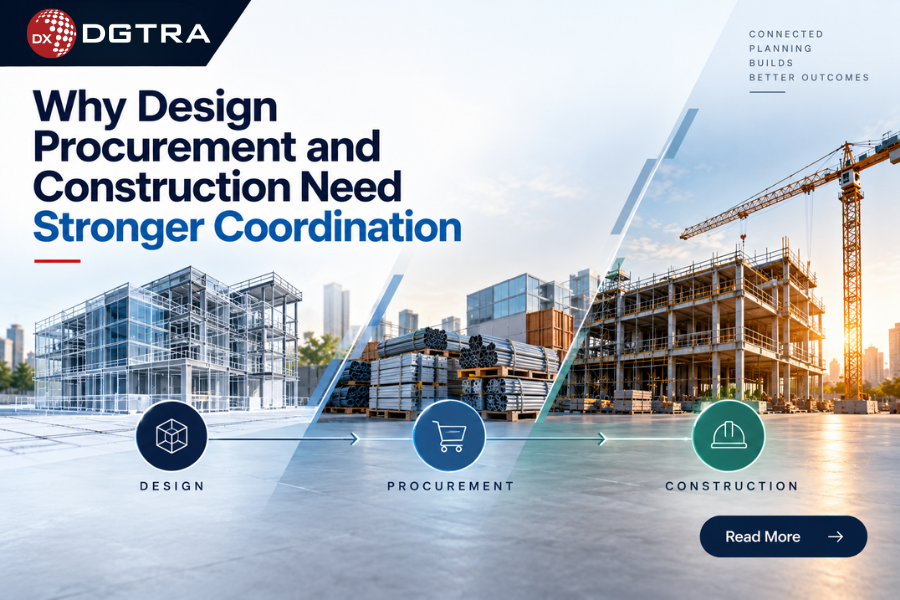
Why Design, Procurement, and Construction Need Stronger Coordination
Late constructability reviews lead to costly rework. Discover how early 4D VDC and ISO 19650 reviews protect capital project budgets and schedules.
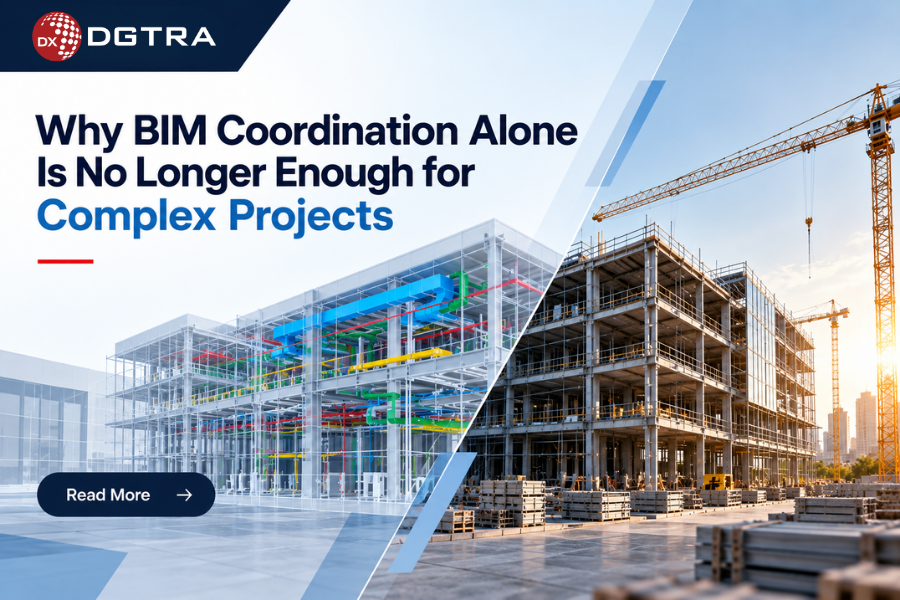
Why Traditional BIM Clash Detection Fails Complex Projects | DGTRA
Late constructability reviews lead to costly rework. Discover how early 4D VDC and ISO 19650 reviews protect capital project budgets and schedules.
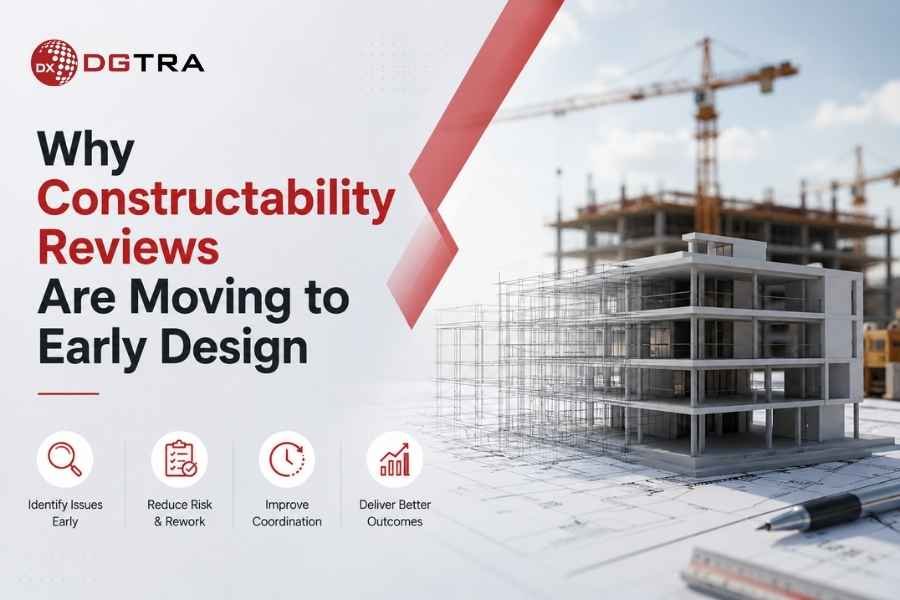
Why Constructability Reviews Are Moving to Early Design
Late constructability reviews lead to costly rework. Discover how early 4D VDC and ISO 19650 reviews protect capital project budgets and schedules.
Why Well-Planned Construction Projects Experience Schedule Slippage
Automated MEP coordination for retail stores
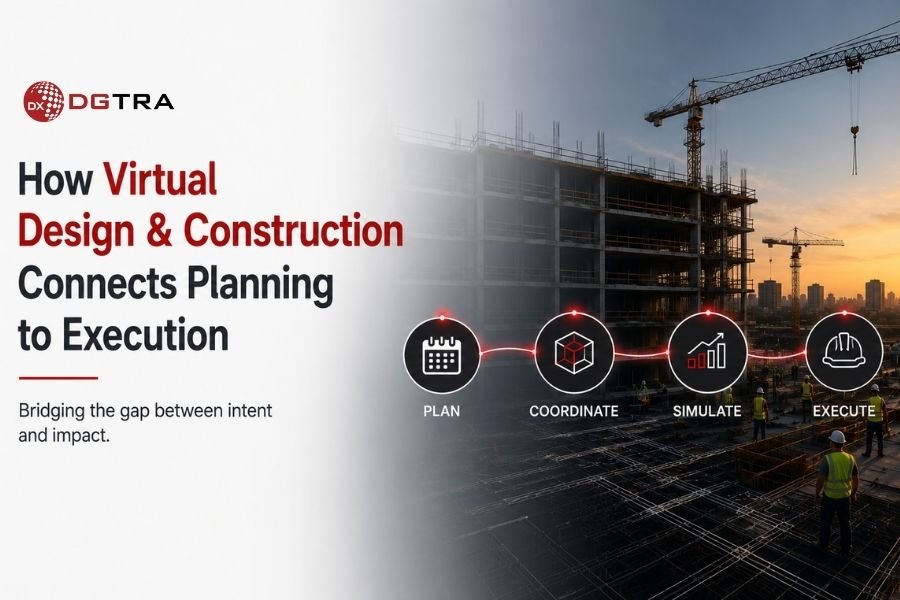
How Virtual Design & Construction Connects Planning to Execution
This brings capital project executives to the central question: If traditional timelines aren’t enough, what connects planning on paper with physical execution on-site?
The answer is not a better scheduling software or more frequent status meetings. The answer is Virtual Design & Construction (VDC).
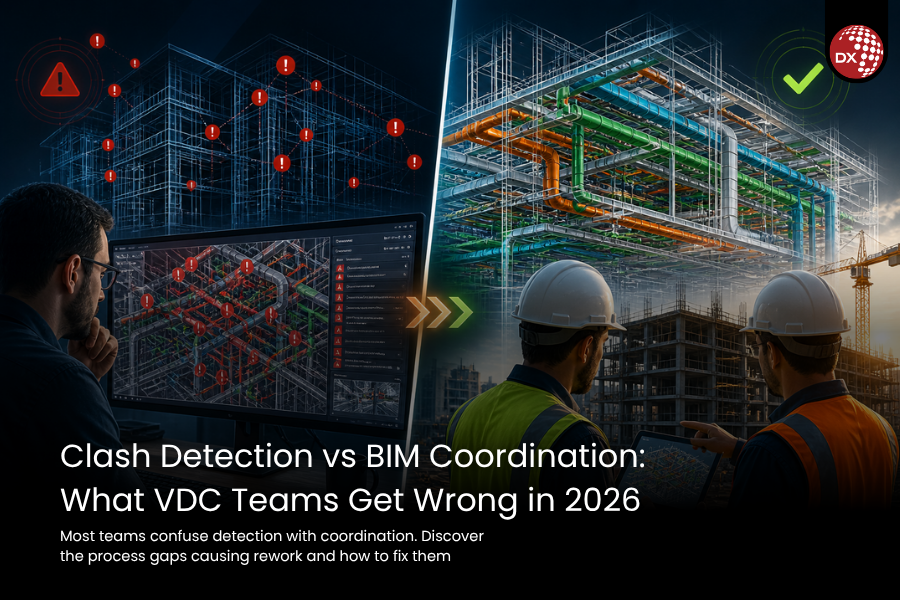
Clash Detection vs. Coordination: What Most Teams Get Wrong
Category: BIM Coordination | VDC Performance | Digital Construction | MEP Coordination | Construction Delivery The most costly errors in BIM delivery are not captured in clash reports. They become apparent on site, often weeks after teams have signed off on models they believed were construction ready. This disconnects between expectation and actual site conditions leads to lost time, increased costs, and diminished project credibility. The root cause is a persistent misalignment in how coordination is defined and executed across the industry. The Coordination Gap That Drives Project Costs In complex commercial, infrastructure, and MEP-intensive projects, the highest rates of site conflict are not found in teams that skip coordination. Instead, they occur in teams that rely solely on clash detection workflows and measure success by the number of conflicts logged and closed. That distinction matters more than most project leaders realize. According to McKinsey’s Global Construction Productivity Report, the construction industry loses an estimated $1.6 trillion annually to inefficiency, rework, and poor delivery coordination — with coordination breakdown identified as one of the leading contributors to schedule and cost overruns on complex builds. A study published in Automation in Construction found that, despite widespread BIM adoption, a significant proportion of construction rework still stems from unresolved coordination gaps — not because clash detection was absent, but because the coordination process surrounding it lacked the decision traceability and resolution accountability needed to resolve conflicts completely before construction began. These findings point to a structural gap in BIM coordination workflows. Leading VDC teams are prioritizing investments to close this gap and drive better project outcomes. Clash detection is a tool. Coordination is a discipline. Decision-makers must recognize this distinction to implement effective coordination strategies that drive project success. Clash detection provides a consistent geometric check of completed models, pinpointing spatial conflicts between disciplines at a given time. However, it lacks context, decision tracking, and insight into whether coordination is improving project efficiency. BIM coordination goes beyond clash detection. It ensures interface clarity, discipline alignment, decision traceability, and model integrity, while making sure digital solutions are executed accurately on site. Conflating clash detection with coordination shifts focuses away from preventing site conflicts. Increased detection rates and more meetings do not resolve issues if reports are not actionable. Effective coordination must prioritize outcomes that eliminate on-site problems. Three Patterns That Signal a Coordination Gap When coordination focuses on detection rather than outcomes, predictable issues arise. Decision-makers who recognize these patterns early can intervene and prevent delivery setbacks. Resolution Without Confirmation A clash may be assigned, addressed, and marked as closed in the coordination tracker. However, closure in the tracker does not guarantee resolution on site. Fixes can be temporary, models may not reflect the agreed solution, or decisions may be confirmed by someone without proper authority. The issue appears resolved but remains unresolved in the field. Leading VDC teams now use confirmed-resolution workflows instead of simple open/closed tracking. An item is only closed after the updated model is reviewed, the decision is documented with clear accountability, and downstream impacts are verified. This process directly reduces RFI rates and site conflicts. Detection Without Context Clash detection identifies geometric conflicts but does not provide the reasoning, decision history, or consequences of different resolutions. When coordination relies only on reports, critical context is scattered across meeting notes, emails, and individual memory. This information is fragile, difficult to retrieve, and cannot be audited when issues arise on-site. Top digital construction teams embed decision traceability into their workflows from the start. Each resolution documents who made the decision, the rationale, and the downstream impacts. This institutional memory prevents repeated coordination failures across zones, packages, and trades. Velocity Without Direction Efficient clash detection and logging workflows can process high volumes of conflicts at speed. But speed through detection means very little if the resolution process downstream is slow, contested, or structurally unclear. Teams can move quickly through coordination meetings while the decisions that matter are stalling — and the clash report gives no visibility into that dynamic. BIM coordination KPIs, such as resolution velocity, decision cycle time, and recurring conflict rates, provide critical insights. These metrics reveal whether coordination is driving toward a construction-ready outcome or just producing documentation. Explore how DGTRA approaches coordination performance tracking: BIM Clash Detection with Navisworks and Autodesk Construction Cloud → What a Coordination-First Workflow Actually Looks Like The teams consistently delivering cleaner sites and tighter RFI cycles in 2026 have built their workflows around a different sequence one where coordination strategy is established before detection begins, and where clash detection validates work already done rather than initiating work yet to start. Interface Definition Before Modeling Before disciplines open their first model file, the zones where systems interact, the sequencing logic governing installation order, and the ownership protocols determining resolution responsibility are agreed, documented, and distributed. This upstream investment is what makes every subsequent coordination decision faster and less contested. Without it, clash detection surfaces conflicts that have no clear resolution path — and coordination slows down precisely when the program needs it to accelerate. This is the foundation of DGTRA’s Integrated Project Delivery approach and the single highest-impact process change available to most BIM and VDC teams today. Model Integrity Between Cycles A clash detection report is only as reliable as the model it ran against. When disciplines update independently between coordination cycles, when design changes are issued without federated model updates, or when field conditions begin diverging from the coordinated model, the report loses its connection to project reality. Leading BIM coordination workflows include model integrity protocols that keep the federated model current across every cycle — so detection is always running against a model that reflects actual project state, not a version that was accurate three weeks ago. Explore how DGTRA’s Construction Quality Control services help teams define and maintain model integrity standards across the full delivery lifecycle. Outcome-Based Coordination Metrics The metrics that matter in a mature coordination workflow are not how many clashes were found or how many meetings were held. They are how quickly identified conflicts move to confirmed resolution, how often the same interface zones generate recurring conflicts, how many RFIs trace back to coordination gaps, and how closely the coordinated model tracks to field installation. These are the metrics that give VDC teams genuine visibility into whether coordination is
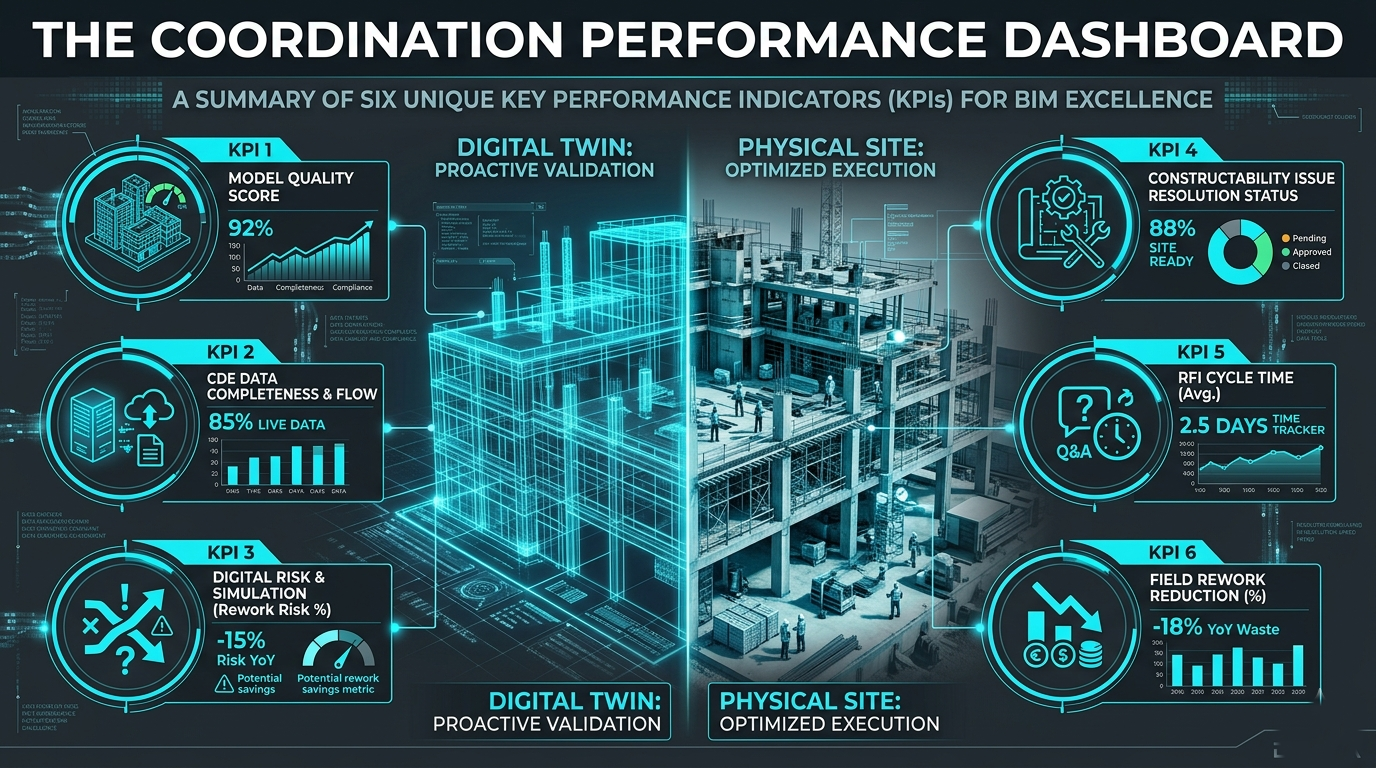
6 BIM Coordination KPIs Driving VDC Performance in 2026
The coordination metrics that predict project outcomes and what elite BIM teams are measuring instead Category: VDC Performance | BIM Coordination Metrics | Integrated Delivery | AEC Leadership Most VDC Teams Are Measuring Activity. The Best Ones Are Measuring Outcomes. In our previous blog, The Hidden Cost of Clash Report Overload in BIM, we made the case that clash detection is a QA step, not a coordination strategy. This blog takes that argument further. Most VDC directors and BIM managers already sense it you can run a textbook coordination process, hit every milestone, and still walk into a site conflict that nobody saw coming. Not because the process failed, but because the metrics being used to evaluate it were never designed to surface the right signals in the first place. Tracking clash counts tells you how many conflicts exist in the model at a given point in time. Tracking meeting frequency tells you how often teams meet in person. Tracking report volume tells you how much was found. None of these tells you whether your BIM coordination process is moving in the right direction and in high-stakes digital construction environments, that blind spot carries real cost. This is the measurement gap that DGTRA is built to close, giving VDC teams the outcome visibility they need to connect coordination activity to actual project performance. This blog breaks down exactly what those teams are tracking and why each metric has a direct line to project outcomes. Why Measurement Is the Missing Layer in Most BIM Coordination Workflows Before getting into specific KPIs, it is worth understanding why most teams coordinate at high frequency but measure at low resolution. Stanford’s Center for Integrated Facility Engineering identified metrics as one of the core tools within VDC — directly tied to continuous improvement across design quality, time, cost, and collaboration. Yet only a small number of academic papers have examined metrics specifically in VDC projects, a gap that mirrors what is happening on the ground. Research across BIM and Lean Construction frameworks confirmed that the KPIs which actually reflect coordination effectiveness are cost efficiency, time savings, stakeholder collaboration, and process automation — not model completion or clash volume. A study spanning NTNU and Stanford’s VDC Certificate Program identified 35 performance metrics across six design management control areas and found that the most valuable ones measure decision-making velocity and coordination readiness — not output volume. BIM coordination performance is measurable in ways that surface delivery risk long before the site does. The teams doing this well are not just better at coordination — they have visibility into whether it is working. Here is what they are tracking. The 6 KPIs Leading VDC Teams Are Tracking in 2026 KPI 1 — Decision Velocity What it measures: Average time from a coordination conflict being identified to a documented, approved resolution. Most teams track how many clashes are open. High-performing VDC teams track how long decisions take. A model with 50 unresolved clashes and a 48-hour decision cycle is in a far stronger position than one with 20 clashes and a 14-day resolution cycle. Research published in Scientific Reports found that structured BIM coordination workflows reduce coordination cycle time to 1–2 days — significantly faster than BIM-only approaches averaging 5–7 days — with the reduction directly tied to integrated decision-making structures and standardized data governance. KPI 2 — Coordination Readiness Score What it measures: Percentage of interface zones with confirmed ownership, agreed LOD, and documented coordination agreements — measured at the start of each milestone, not the end. This is the upstream metric most teams have never defined — and the most predictive indicator of whether a coordination phase runs proactively or reactively. Research in Frontiers in Built Environment found that design coordination ranked highest among BIM functionalities with a Significance Index of 90% — and that structured coordination ownership frameworks delivered an 80% reduction in design-related change orders. KPI 3 — Interface Resolution Rate What it measures: Percentage of coordination items reaching full resolution — documented decision, updated model, confirmed sign-off — within a single review cycle. Research published in Discover Materials found that the strongest rework reductions — 40–50% — occur specifically in projects where coordination items are tracked to full resolution within structured review cycles rather than carried across multiple meetings. United-BIM This metric tells you whether coordination is moving forward or building technical debt that lands on site. KPI 4 — LOD Alignment Index What it measures: The degree to which all disciplines are modeling at consistent, agreed LOD levels at each coordination milestone. A federated model where one discipline is at LOD 350 and another at LOD 200 produces clash reports that look clean — and fail the moment the lower-LOD discipline develops further. Research in the KSCE Journal of Civil Engineering found that increasing LOD and information integration by even one usage level produces measurable improvements in design satisfaction, cost variance, and delivery outcomes. KPI 5 — Site Trust Index What it measures: Percentage of coordination decisions requiring no revision or clarification after reaching the construction team — tracked per discipline and per zone. Sign-off rate tells you someone approved the model. Site Trust Index tells you whether it held up on site. Research in Scientific Reports found that ISO 19650-aligned BIM coordination reduced pipeline dismantling rates — systems requiring removal and reinstallation due to spatial conflicts — by 22–35% compared to traditional approaches, directly linking upstream coordination quality to site execution accuracy. KPI 6 — Coordination Cost per Resolved Item What it measures: Total coordination resource cost — time, meetings, rework cycles — divided by items reaching full resolution per review cycle. This is the metric that makes the ROI case for upstream coordination investment most clearly. A 2025 case study of a Performing Arts Center found that a structured BIM coordination workflow reduced total coordination time by 40% — with gains attributed directly to proactive digital resolution before construction began, rather than reactive on-site correction. Teams investing in Shared Modeling Intent consistently see this number improve from cycle one. How These KPIs Work Together — The Coordination Performance Dashboard The power of these six metrics is not in tracking them individually. It is in reading them as a system. Decision Velocity + Interface Resolution Rate = how fast your coordination engine is
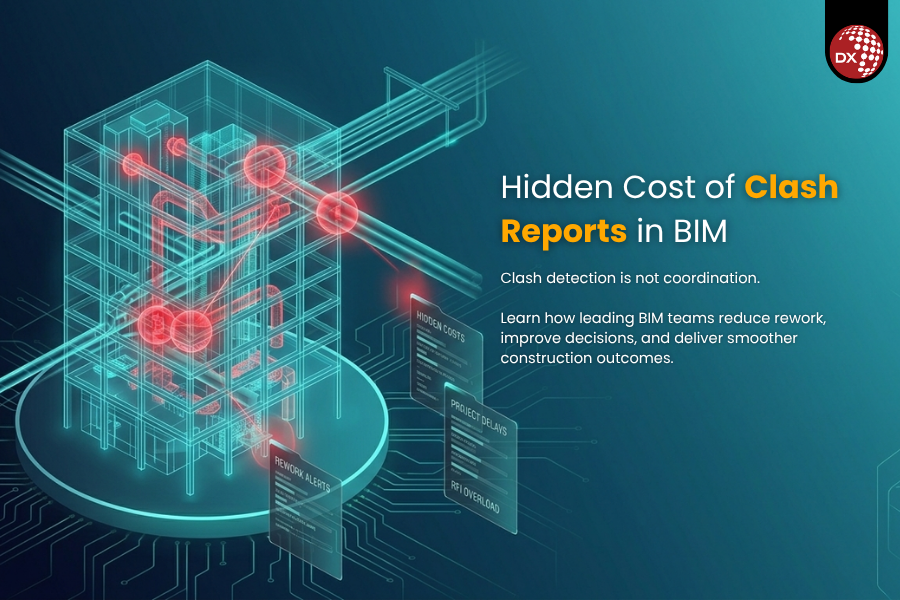
The Hidden Cost of Clash Detection Report Overload in BIM
How smarter BIM coordination unlocks the project performance your team is already capable of Category: BIM Coordination | VDC Workflows | Construction Delivery | MEP Coordination The best BIM and VDC teams in the world share one thing in common. They have built a coordination process so intentional, so well-structured from day one that the site team walks in knowing exactly what to build. Fewer surprises. Faster decisions. Cleaner installations. And a clash detection workflow that validates great coordination rather than scrambling to create it. BIM coordination performance and clash report volume are two very different things. The teams that understand that distinction and build their process around it are the ones delivering the projects everyone else wants to talk about. If your team is investing serious effort into MEP coordination, design coordination, and constructability validation, and most are, this blog will show you where the highest-value opportunity in that effort lives. What the Research Tells Us About BIM’s Real Upside The ceiling on coordination performance when the process is built well is genuinely impressive. Research published in Discover Materials found that well-implemented BIM reduces design errors by 50–60%, cuts rework costs by 40–50%, and reduces coordination RFIs by up to 80%. These are not marginal improvements. These are project-defining outcomes — the kind that show up in budgets, delivery timelines, and the confidence of every stakeholder in the room. A study published in Scientific Reports found that BIM adoption reduced rework-related time waste by 70–85% and delivered cost savings of 65–75% specifically in projects where coordination and modeling processes were aligned from the outset of delivery. The common thread across every high-performing outcome is alignment. Early, intentional, structured alignment between disciplines, between teams, and between the digital model and the physical build. That alignment is what this blog is about. And it starts with understanding what happens when the clash detection volume grows faster than the BIM coordination process behind it. When Volume Outpaces Process — What to Watch For Here is a pattern that shows up on complex BIM coordination projects more often than most teams realize. The project is moving. Clash detection workflows are running on schedule. Reports are generating data. Coordination meetings have a cadence. By week 6 or 7, the rhythm feels strong. By week 12, something shifts not dramatically, but perceptibly. The reports are longer. The meetings are fuller. And the number of decisions per meeting is getting lower. This is not a performance problem. It is a structural signal. And recognizing it early is one of the most valuable things a BIM manager or VDC lead can do for a project. Here is what those signals look like in practice. Attention Concentrates on Volume, Not Value When the clash report volume is high, teams gravitate naturally toward what is flagged as critical. That instinct is right, but only when the classification system behind it is precise, consistent, and aligned with actual constructability risk. When it is not, genuinely important coordination decisions share visual space with minor clearance adjustments. Both live in the same column of the same spreadsheet. One of them quietly carries weeks of site delay into the construction phase. The opportunity here is not to review more carefully. It is to structure the report so that what matters is unmistakably visible. Coordination Decisions Take Longer Than They Should High-volume BIM coordination reviews tend toward caution sign-offs slow, meetings extend, and project momentum flattens. The solution is not speed for its own sake. It is a process clean enough that decisions are easy to reach with confidence, because the right people are in the room with the right information in front of them. Research in the Journal of Building Engineering shows that BIM delivers its strongest coordination results when clash detection is applied early and proactively enabling trades to execute their installation sequences independently, without mid-construction conflicts disrupting the build. Early and proactive. Two words that define where the best VDC coordination workflows are built and where most teams still have significant room to grow. Ownership Gets Distributed Rather Than Defined In a BIM coordination workflow built around high volume, responsibility can spread across zones and trade codes, making resolution difficult to track. Assignment is not the same as ownership. A discipline tag is not the same as a person accountable for a decision. The teams seeing the best clash resolution rates have moved toward named individual accountability a specific person, a clear decision, a defined deadline for every open item in the coordination workflow. That shift alone changes how quickly and cleanly clashes move through the resolution process. The Biggest Coordination Opportunity Lives Upstream Here is the insight that changes everything about BIM project coordination. The quality of a coordination outcome is largely determined before the first clash detection report ever runs. It is determined by how well the project set up discipline alignment, interface agreements, and constructability thinking in the strategy phase — before a single model was opened. When architecture, structure, and MEP teams begin modeling with shared BIM Execution Plan standards, agreed interface zones, and defined ownership protocols, the federated model becomes a coordination asset from day one. Clashes that do appear are fewer, better categorized, and faster to resolve because the decision-making structure is already in place around them. This upstream investment is what separates high-performing BIM coordination teams from teams working just as hard but fighting harder battles downstream. Research on BIM-based construction readiness confirms that coordination gaps arising during pre-construction modeling from design changes, incomplete interface planning, or ambiguous discipline ownership are among the leading contributors to clashes persisting into the construction phase. The good news is that these gaps are entirely addressable — with the right process structure in place before modeling begins. This is precisely what DGTRA builds through Constructability Reviews and BIM Maturity Audits & Competency Assessments — finding exactly where the upstream coordination opportunity lives on your specific project. What High-Performing BIM Coordination Teams Do Differently The practices that separate the best VDC and BIM coordination workflows from the rest are not complicated. They are consistent, intentional, and built into the process before the pressure of
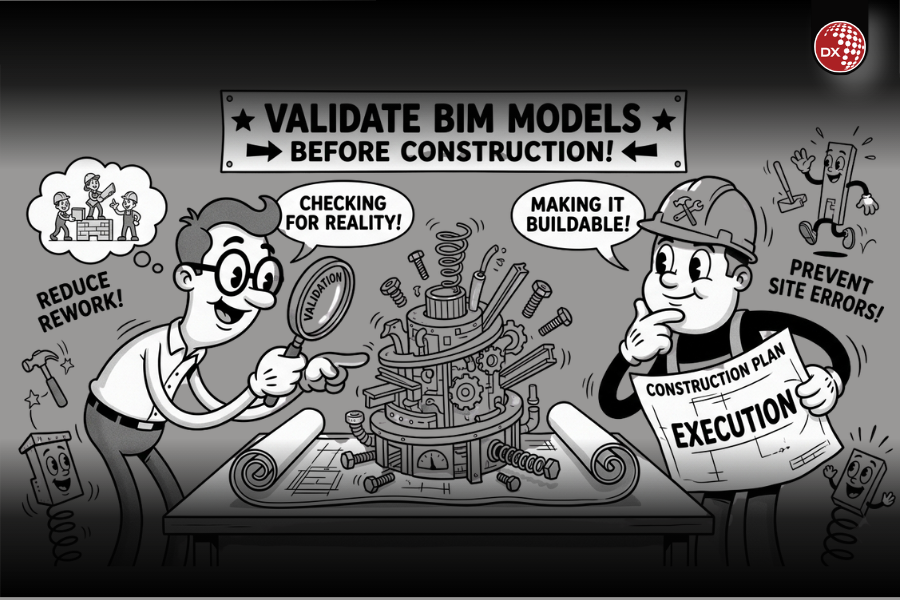
How to Validate BIM Models Before Construction Begins
The Costly Disconnect Between BIM and Site Reality You’re on-site. The structure is progressing. But suddenly, the MEP system doesn’t align with the structural opening. The BIM model showed no clash. Yet here you are—cutting, reworking, and losing time. This isn’t rare. It’s a recurring issue across projects where BIM models don’t match site conditions. The real problem isn’t BIM—it’s lack of validation before construction begins. In this article, you’ll learn: Why BIM models fail on-site What most teams miss during coordination A practical BIM validation framework How to reduce rework by up to 30% Where BIM Model Issues Actually Start Most BIM model errors during construction don’t originate on-site—they begin much earlier. Common Root Causes Incomplete or outdated inputs from consultants Poor BIM coordination between disciplines Lack of constructability validation Over-reliance on clash detection BIM tools without context No structured pre-construction planning BIM workflow Hidden Impacts on Projects Construction rework (cutting slabs, rerouting MEP systems) Delays due to redesign and approvals Increased cost and resource wastage Loss of trust between stakeholders The biggest issue? Teams assume the BIM model is “ready” when it’s only “modeled.” Why Current BIM Approaches Fail Many teams believe they are doing BIM correctly—but the reality is different. What Teams Think vs What Actually Happens What Teams Think What Actually Happens Clash detection is enough Clashes are resolved digitally, not constructively Model = Site-ready Model lacks real-world validation Coordination meetings solve issues Issues are discussed, not systematically resolved LOD 300/400 ensures accuracy Geometry is detailed, but workflows are incomplete BIM managers handle everything No accountability across disciplines The gap is not in tools—it’s in process and ownership. The Consultant’s Approach: BIM Validation Framework Before Construction To bridge the BIM model vs site reality gap, you need a structured validation workflow—not just coordination. A 5-Step BIM Model Validation Framework Model Completeness Check Are all disciplines included in the federated BIM model? Are latest revisions integrated? Are scope gaps identified? Clash Detection + Context Validation Run clash detection Validate: Is it buildable? Is there access for installation? Does it consider sequencing? Clash-free doesn’t mean construction-ready. Constructability Review Check Installation feasibility Equipment access Material handling Involve site engineers and construction managers Site Condition Alignment Compare BIM model with: Survey data As-built references Real site constraints This step reduces BIM model not matching as-built drawings issues. Approval & Sign-off Workflow Define responsibility: Who validates what? Create: Discipline-wise approval matrix Ensure: No model moves forward without validation Outcome of This Framework Reduced construction rework Improved coordination confidence Clear accountability Practical Scenario: From Clash-Free to Construction-Ready Project Situation A commercial building project had: Fully coordinated BIM model Zero major clashes reported Yet on-site: MEP ducts conflicted with beam depths Ceiling heights were compromised What Went Wrong Clash detection ignored installation tolerances No constructability validation Lack of coordination with site execution teams Corrective Approach Re-validated the BIM model using: Site constraints Installation sequencing Introduced MEP BIM coordination site error prevention checks Outcome Reduced rework by 28% Faster installation cycles Improved stakeholder confidence Traditional vs Validated BIM Workflow Traditional BIM Workflow Validated BIM Workflow Focus on modeling Focus on buildability Clash detection only Clash + constructability validation Design-driven decisions Execution-driven decisions Limited site involvement Strong site collaboration Reactive issue resolution Proactive issue prevention Before vs After BIM Validation Implementation Before Validation After Validation Frequent site conflicts Minimal discrepancies High rework cost Up to 30% cost reduction Delayed project timelines Predictable execution Poor coordination Integrated workflows Key Takeaways A clash-free model is not equal to a construction-ready model BIM model accuracy depends on validation, not just modeling Involving site teams early prevents execution errors A structured BIM validation checklist is critical Proactive validation can reduce construction rework by 30% Conclusion: BIM Success Depends on Validation, Not Just Modeling The industry doesn’t have a BIM problem—it has a validation problem. If your BIM models are not aligned with execution realities, they will fail on-site—no matter how advanced your tools are. The shift you need is simple but powerful: From modeling-focused BIM to execution-ready BIM How DGTRA Solves This — From Modeling Support to Delivery Ownership At DGTRA, we don’t just support BIM workflows—we take responsibility for making them work in the real world. Our approach is built on structured BIM validation, ensuring your models move beyond coordination and become construction-ready, reliable, and execution-aligned. We work as an embedded BIM delivery partner alongside your team—bringing clarity where models fail, and control where coordination alone falls short. Federated model validation across disciplines Deep QA/QC checks aligned with ISO 19650 workflows Site-aligned model verification to eliminate execution gaps Pre-construction BIM audits to reduce downstream risk Because in real projects, a coordinated model is not a validated model. And without validation, certainty does not exist. Move From Vendor to BIM Delivery Partner If your projects are experiencing: Model vs site discrepancies Rework due to coordination gaps Inconsistent parameters and standards Delays caused by unreliable BIM data Then the issue isn’t just BIM execution—it’s the absence of a validation-driven process. It’s time to move beyond transactional outsourcing and work with a partner accountable for outcomes—not just models. Start With Insight — Join the Webinar Before solving the problem, you need to clearly understand where it begins. In this session, we’ll break down: Why most BIM models fail during construction The hidden risks of relying on coordination alone How leading firms implement validation-driven BIM workflows What it takes to make BIM truly buildable Register webinar to learn more: https://zma.page/W3T Build With Confidence — Partner With DGTRA If your goal is not just to deliver models—but to deliver certainty on-site, let’s move beyond conversations and build a long-term BIM partnership focused on performance, accuracy, and outcomes. Let’s connect and redefine how your BIM delivers in the real world.