
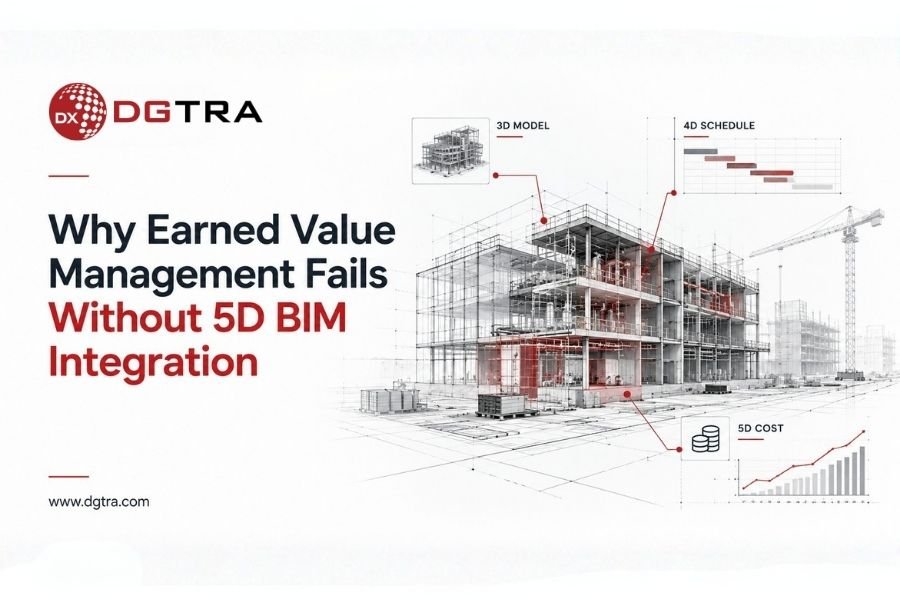
Late constructability reviews lead to costly rework. Discover how early 4D VDC and ISO 19650 reviews protect capital project budgets and schedules.
Why Project Controls Are Becoming a Competitive Advantage
Late constructability reviews lead to costly rework. Discover how early 4D VDC and ISO 19650 reviews protect capital project budgets and schedules.
Why Legacy Drawings Sabotage Modern Capital Renovation Projects
Automated MEP coordination for retail stores
What Capital Asset Owners Really Want From Modern Delivery
Automated MEP coordination for retail stores
Building Predictable Construction Projects with Connected Planning
Automated MEP coordination for retail stores
Why Well-Planned Construction Projects Experience Schedule Slippage
Automated MEP coordination for retail stores
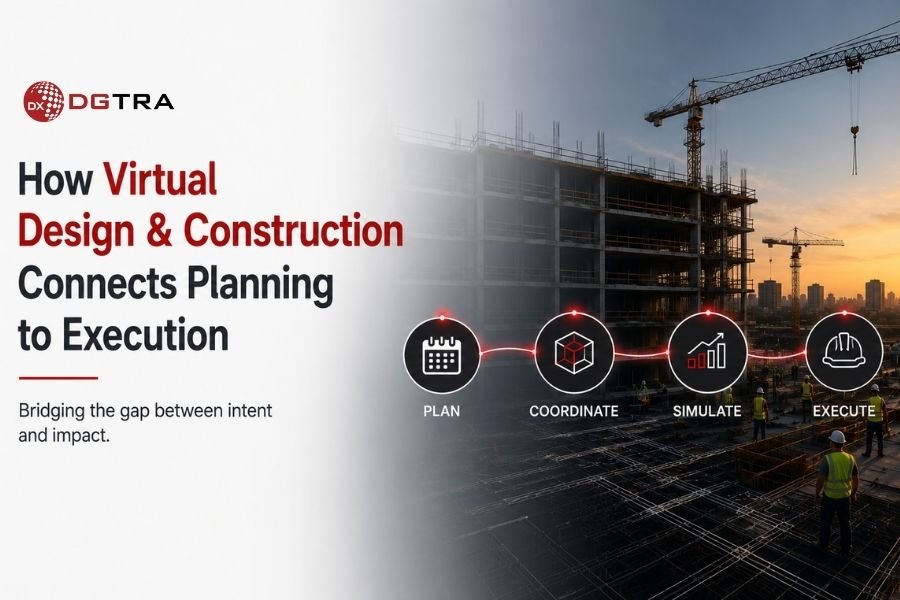
How Virtual Design & Construction Connects Planning to Execution
This brings capital project executives to the central question: If traditional timelines aren’t enough, what connects planning on paper with physical execution on-site?
The answer is not a better scheduling software or more frequent status meetings. The answer is Virtual Design & Construction (VDC).
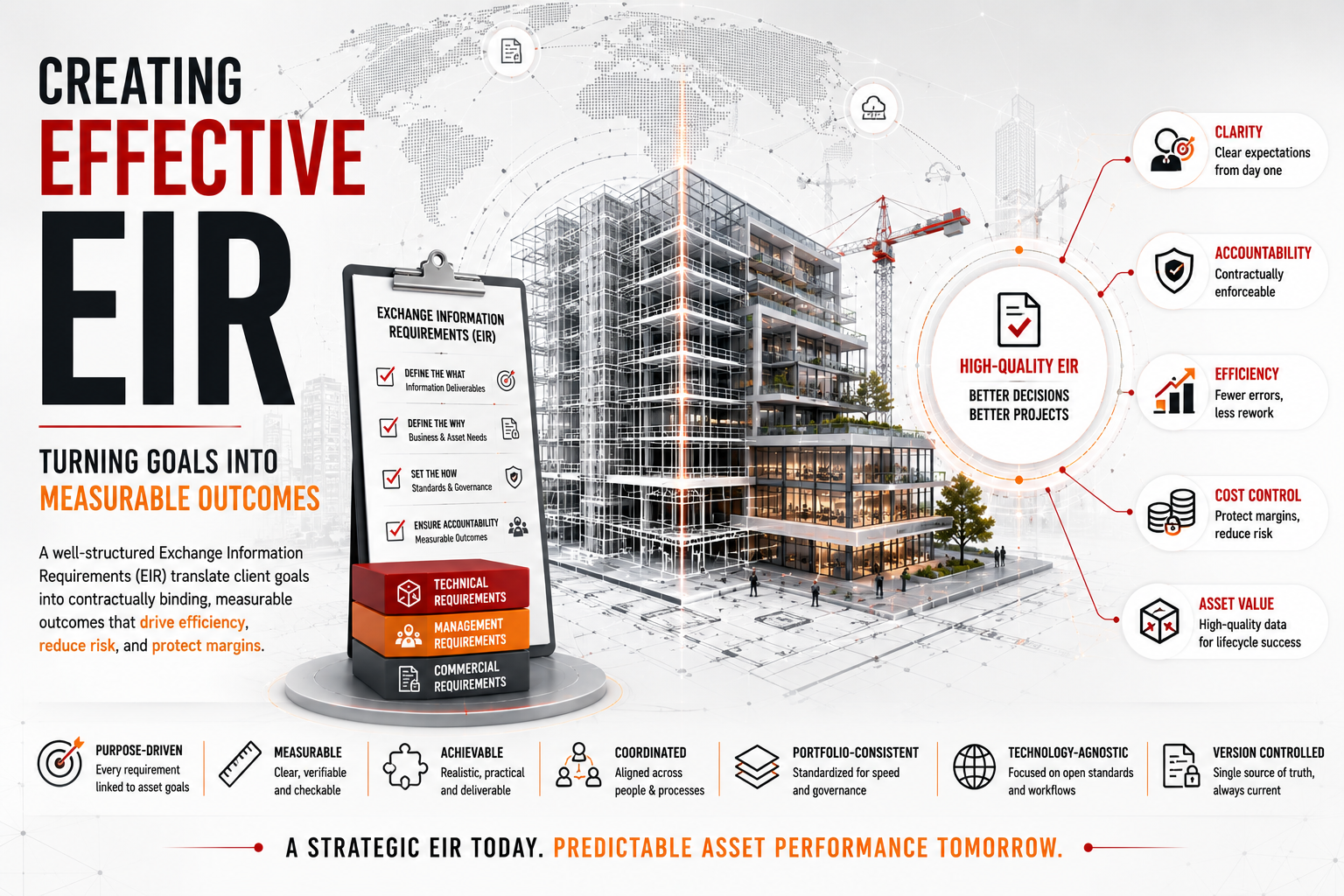
Creating Effective EIR: Turning Goals into Measurable Outcomes
Exchange Information Requirements (EIR) sit at the center of project governance. Within a modern AECO framework, the EIR is a contractually binding document. It translates high-level business goals into precise mandates for the delivery team. A well-structured EIR is a powerful risk-management tool. A poor one creates immediate ambiguity, widespread model rework, and expensive commercial disputes. Most project delivery bottlenecks do not stem from software limitations. Instead, they trace back to unclear, unmeasurable, or unrealistic information requirements. An effective EIR brings predictability and accountability to complex project environments. It defines exactly what information is required, why it is needed, and how teams must validate it. What an EIR Is Many industry teams mistakenly treat the EIR as an exhaustive technical manual. They pack it with arbitrary modeling instructions and outdated standards copied from older projects. An elite EIR is completely different. It serves as a strategic brief, a performance specification, and a legally binding compliance baseline. The EIR establishes project expectations rather than software instructions. The EIR defines the “what” and the “why.” The actual delivery strategy belongs entirely within a well-structured BIM Execution Plan. The EIR dictates final asset goals, and the supply chain responds with the execution methodology. The Three Pillars of an Effective EIR A high-quality EIR categorizes project expectations into three clear, interconnected groups: 1. Technical Requirements Technical requirements define the literal anatomy of the digital assets. They must be specific and measurable. Key elements include: Precise model deliverables across project dimensions (3D, 4D, and 5D) The exact Level of information needed for specific milestones Strict project-wide naming conventions and metadata standards Unified classification systems and required asset data attributes Comprehensive COBie or equivalent operational data compliance matrices 2. Management Requirements Management requirements outline the digital governance structure. They specify how information moves across the building lifecycle. This pillar defines approval workflows, delivery milestones, team roles, information security protocols, and independent review procedures. It ensures data remains reliable from conceptual design through construction. 3. Commercial Requirements Commercial requirements transform the EIR into an enforceable legal instrument. This section outlines tender submission formats, strict acceptance criteria, intellectual property clauses, and data ownership rights. High-performing asset owners tie vendor payment structures directly to the successful clearance of these data deliverables. This approach ensures financial accountability across the supply chain. The 7 Characteristics of a High-Quality EIR An effective EIR must exhibit seven distinct characteristics to drive genuine asset value: Characteristic Operational Impact Purpose-Driven Every data requirement maps directly back to strategic asset needs (OIR, AIR, and PIR). No data points exist without a clear operational purpose. Measurable Every parameter is programmatically verifiable. Vague phrases are eliminated and replaced with explicit, checkable data points to reduce disputes. Achievable Demands remain realistic. Setting unachievable data targets erodes supply chain trust and leads to widespread non-compliance in the field. Coordinated The document stays perfectly aligned with downstream responses. The EIR establishes expectations, while the BEP delivers the tactical response. Portfolio-Consistent Standardizing requirements across an owner’s portfolio accelerates procurement, minimizes onboarding friction, and strengthens governance. Technology-Agnostic The mandates focus strictly on information processes, open data standards, and structured workflows—never on proprietary software brands. Version Controlled Rigorous version control protects the document’s legal integrity, ensuring the entire supply chain works from a single source of truth. Why EIRs Fail: Common Mistakes in the Industry Global capital projects frequently run into identical, predictable failure points during procurement: Copying and pasting text from unrelated legacy projects Overloading documents with restrictive modeling instructions that suffocate vendor workflows Demanding dense asset data that fails to link back to a real asset management strategy Failing to outline clear, unambiguous acceptance criteria for milestone handovers Imposing unrealistic tracking schedules that exceed the digital maturity of the supply chain These systemic failures trigger a quick chain reaction. Unclear contractual expectations produce flawed digital submissions. This lack of data integrity leads to geometric clashes, project delays, and expensive on-site rework. A Proven Framework for Developing an Effective EIR Forward-thinking organizations follow a highly disciplined, repeatable framework to author and enforce their information requirements: Anchor to Core Operational Needs: Trace every requirement back to the business’s organizational and asset management goals. Isolate High-Risk Deliverables: Focus structural enforcement on critical-path information. Avoid overloading the supply chain with low-value data requirements. Define Digital Acceptance Criteria: Establish clear, binary checklists and automated status codes to remove subjective interpretation from reviews. Enforce Governance via the CDE: Move review workflows entirely into a centralized Common Data Environment. This ensures file compliance is audited at the gate. Pilot Test with Sample Deliverables: Instruct bidding teams to submit small sample digital deliverables early in the procurement phase to verify that criteria are realistic. Maintain as a Living System: Refine requirements continuously based on live project feedback loops. An effective EIR adapts to evolving project realities. The Executive Impact of a Strong EIR Investing in a robust EIR is a major commercial differentiator. For asset owners and C-suite leaders, a high-quality EIR pays immediate dividends. It slashes design rework, minimizes contractual disputes, and drives down tender ambiguity. It ensures the facility management team receives a pristine, verified Asset Information Model at handover. This rich data foundation accelerates operational readiness, powers advanced Digital Twin configurations, and enables profitable lifecycle decision-making. About DGTRA DGTRA is a premier digital transformation partner and process-driven management consultancy operating at the global forefront of the AECO industry. Backed by an elite team of over 100 specialized professionals, we bridge the gap between complex digital technology and practical, profitable execution across India, the UK, and the Middle East. We work directly with asset owners, Tier-1 contractors, and leading design firms to architect robust, forward-thinking digital roadmaps. Our deep domain expertise spans advanced open BIM implementation, strategic asset information modeling, customized CDE orchestration, and the practical deployment of operational Digital Twins. At DGTRA, our core guiding principle remains absolute: we engineer the digital processes that bring total predictability, structural transparency, and financial certainty to the world’s most ambitious construction programs. Ready to build complete predictability across your
Data Center Construction Fails Without DfMA: The Design-First Fix | UK & USA
Most modular projects fail long before reaching the factory floor, and not because of fabrication. It is because DfMA was never embedded into the design. A simple search of the internet will show data centers and critical facilities in the UK and USA are using modular construction to streamline construction time. Standard practices include using prefabricated modular MEP skids, modular electrical rooms, containerized utility plants, and modular technical spaces. Even with the use of modular data center construction in the UK and USA, many projects still face: Design rework Factory delays Site coordination clashes Extended commissioning cycles Construction is rarely the root cause of these issues. Instead, it’s the design workflows not optimized for DfMA-based construction in UK and USA projects. At DGTRA, we consistently see that construction speed is impacted by decisions made long before the project breaks ground. These decisions are made during the initial phases of design and delineate the success of manufacturing and assembly. DfMA Starts in Design — Not in the Factory While Design for Manufacture and Assembly (DfMA) is often misconstrued as simply a fabrication tactic, the abbreviation real essence of the abbreviation emanates from the design as the prime focus. In data centers and critical facilities across the UK and USA, key design choices made early on dictate: Module size and transport limitations Design and access strategies for plant rooms MEP integration scope Sequence of installation Logic of handover for commissioning and operations If design progresses while these considerations are absent, it is only a matter of time before modular execution shifts from a strategy to a reaction, and in doing so, creates risk instead of eliminating it. By the time the manufacturing process is set in motion, lost time becomes a void from which recovery is simply not possible. Developers of mission-critical facilities in the UK and USA are increasingly tasked with: Accelerating time-to-market Quickly scaling capacity Uptime and redundancy Capital risk Predictable delivery timelines Why Modular Construction Alone Doesn’t Deliver Speed Production acceleration through prefabrication occurs only when: Construction modules are designed with UK & USA manufacturing limitations in mind Standard interfaces between combined disciplines BIM models contain required construction and production intelligence Plans and strategies are constructed for logistics and lifting Design data includes construction sequences Without DfMA-driven design for UK and USA modular data centers, modular construction becomes an isolated production activity rather than an integrated delivery strategy. At DGTRA, we summarize it simply: A BIM model built only for visualization is a digital liability. A BIM model built for manufacturing and assembly is a delivery engine. Common Design & Coordination Bottlenecks Across data centers and complex facilities in the UK & USA, we observe the following recurring challenges: Lack of coordination between the architectural, structural and MEP design Absence of modular logic when developing BIM Late involvement of fabricators Team data standards that lack uniformity Layouts for Technical Rooms That Cannot Be Repeated Exclusion of Design Commissioning Requirements These are workflow and governance issues, not technological issues. What DfMA-Ready Design Workflows Look Like DfMA workflows integrate design, manufacturing, and construction from the outset. A modular approach is set at concept design. Design rules incorporate UK & USA manufacturing limitations. BIM serves as a manufacturing data backbone. Preliminary engagement with fabricators and installers. Uniform typologies for technical spaces and plant rooms. Design Logistics and Assembly planning is complemented by construction sequencing. This changes BIM from a tool for visualization into a tool for production and commissioning — essential for DfMA-based modular construction projects in the UK and USA. The Need for Integration While mission-critical data centers in the UK & USA are being built, there is a need to integrate the BIM/VDC team along with MEP and systems designers, modular fabricators, construction and installation teams, and commissioning and operations teams. When all stakeholders work together in a DfMA environment, there is minimal rework, and procurement, factory production, and site installation are all optimized and sequenced — leading to accelerated commissioning. The result is the ultimate “real speed” to commissioning and not just faster construction. The Balancing Act of Standardization When streamlining operations, a primary concern is that standardization will eliminate opportunities for flexibility. However, through systemized design, scalability is achieved. By creating repeatable module libraries, configurable design templates, and setting standards for interfaces and expandable frameworks, organizations can rapidly deploy new system designs to an operational capacity without a complete redesign — a key differentiator for DfMA-led construction in UK and USA data centers. From an executive perspective, this provides lower design costs, faster replication, decreased program risk, and predictable performance outcomes. The Business Impact Projects that utilize DfMA-based design for data centers in the UK and USA can expect shorter design-to-factory cycles, no mid-production redesigns, faster procurement, and assembly on site. This leads to early revenue realization. In environments where there is no room for downtime, DfMA becomes a strategic advantage in the UK and USA for mission-critical markets. Why This Matters Now The current global need for data centers in the UK & USA has created a surge in modular construction adoption, which is only part of the solution. To truly transform construction, design workflows must be addressed. The ability to embed DfMA from the design phase will shape the next frontier in: Delivery speed Cost efficiency Operational reliability Growth potential The design will dictate the future of mission-critical delivery, not construction sites. Join DGTRA’s Upcoming Webinar To assist industry leaders in closing the design-to-delivery gap, DGTRA will host an exclusive webinar for UK & USA Data Center professionals on Modular Strategies & Design Optimization for Data Centers & Complex Facilities. What you will learn: Why modular construction does not guarantee faster delivery. Frequent design and coordination bottlenecks. DfMA-ready, first design workflows. Synchronizing the BIM, MEP, manufacturing, and construction. Who should attend: Data Center Design Managers, BIM/VDC Leads, Construction Managers, Program Directors, Operational Managers, and Modular Delivery Teams from the UK & USA regions. 👉 Registration is now open. Reserve your spot to learn how to embed DfMA in design for predictable and accelerated commissioning. 👉 Register Now: DGTRA Webinar Final Thought The method is modular construction. The multiplier is DfMA-driven

Why Master Planning Support Services Drive High-Return Projects
Key Takeaways Master Planning Support Services accelerate smarter decision-making, protecting ROI from day one. Data-backed master plans and feasibility studies eliminate guesswork, unlocking optimal densities, yields, and phasing strategies. BIM, VDC, and GIS–enabled workflows create a connected digital ecosystem that flows seamlessly into design and construction. Coordinated site and infrastructure planning reduces redesign costs and prevents on-site surprises. DGTRA provides investor-ready planning solutions that align architecture, infrastructure, and program goals to strengthen long-term asset value. Unlocking ROI with Master Planning Support Services Real estate and infrastructure projects face increasing pressure, tight margins, cautious capital, and rising expectations for performance. In this environment, early planning decisions directly influence IRR. Master Planning Support Services transform planning from a sketch exercise into a strategic, ROI-driven engine. By combining feasibility analytics, capacity testing, infrastructure validation, and digital coordination, these services allow teams to: Test multiple scenarios Optimize land use and density Refine phasing strategies Validate infrastructure capacity Understand capital implications early A strong master plan ensures: Efficient land utilization Optimized product mix Infrastructure cost control Faster regulatory approvals Predictable long-term development For organizations managing multiple projects, this becomes a core investment strategy—helping leaders select the right projects, sequence them wisely, and make decisions backed by data, not intuition. What Are Master Planning Support Services? Master Planning Support Services bring structure, clarity, and digital intelligence to the earliest and most crucial phase of development. Instead of one static layout, teams receive coordinated, data-driven scenarios backed by feasibility logic and engineering constraints. Key components include: 1.Strategic Planning & Visioning Visioning, growth strategy, and market alignment Early feasibility and financial benchmarking 2.Site & Context Intelligence GIS-based site analysis and constraints mapping Environmental, zoning, climate, and infrastructure assessments 3.Land Use, Density & Mobility Planning Zoning, density allocation, and concept layouts Road hierarchy, mobility planning, parking strategy 4.Infrastructure & Engineering Alignment Water, sewer, stormwater, power, and ICT planning Finalizing utility routing, capacities, and levels Fixing base levels and grading strategy BIM, VDC, and GIS integration 5.Feasibility, Sustainability & Phasing Yield, FAR, and land-use feasibility Environmental and ESG alignment Phase-wise rollout tied to demand, cash flow, and infrastructure logic Benefits of Master Planning Support Services When implemented strategically, Master Planning Support Services deliver clear, measurable value across financial performance, design coordination, stakeholder alignment, and long-term project resilience. Here’s how they elevate large-scale developments: 1.Higher Financial Clarity Early FAR, density, and yield analysis strengthens revenue models. Feasibility studies validate assumptions long before they influence investment decisions. 2.Reduced Development Risks Clear visibility of site conditions, utility levels, and grading prevents costly redesigns. BIM-enabled planning identifies conflicts early and supports smoother approvals. 3.Less Rework and Redesign Integrated building and infrastructure planning minimizes late-stage changes. BIM-led coordination reduces redesign cycles and associated delays. 4.Faster Approvals and Stronger Stakeholder Buy-In 3D visuals and scenario models simplify communication with authorities and investors. Evidence-based narratives accelerate approvals. 5.Optimized Land and Infrastructure Utilization Intelligent planning prevents oversizing roads and utilities, reducing capex. Infrastructure corridors support phased development without rework. 6.High Market Viability Smart zoning, mobility planning, and product-mix strategies improve absorption and pricing. 7.Smooth Execution Across Phases Coordinated phasing strategies align demand, cash flow, and construction capacity. 8.Future-Proof and Sustainable Development Sustainability, resilience, and lifecycle thinking are embedded from the start. DGTRA’s Master Planning Support Services in Action At DGTRA, Master Planning Support is a strategic digital partnership, aligning planning, design, and delivery into a unified workflow. Every decision made at concept stage remains coordinated through construction and asset handover. 1.Data-Driven Ground-Up Understanding: Comprehensive studies—GIS, topography, utilities, hydrology, zoning, climate, market insights—set a realistic foundation. 2.Smart 3D Site Models & Scenario Planning Intelligent models linked to live data enable rapid option testing with overlays for zoning, setbacks, and environmental constraints. 3.Integrated Urban, Traffic & Infrastructure Planning Urban planning, traffic analysis, and utilities/infrastructure modeling are unified, ensuring technical buildability. 4.End-to-End Infrastructure Strategy DGTRA finalizes: Base levels and road levels Utility levels and invert levels Routing and capacity for water, sewer, stormwater, power, ICT, and reuse water 5.BIM & VDC-Enabled Coordination Planning scenarios flow directly into BIM and VDC models used for clash detection and construction sequencing. 6.QTO & Cost Impact Integration Changes in density or land use instantly update quantities and cost implications. 7.Digital Twins for Lifecycle Outcomes Digital Twins support long-term operations, maintenance, ESG tracking, and asset management. 8.Scalable Digital Staffing for High Workload Periods DGTRA supports teams during peak workloads across portfolios, not just single projects. 9.Advanced Phasing & Rollout Strategies Phasing plans balance cash flow, demand triggers, and infrastructure sequencing. Our Deliverables That Drive your Success include: Coordinated Master Plans Zoning & Land Use Plans Road Levels & Grading Logic Utilities Routing & Capacity Strategy 3D Massing Models Feasibility & Phasing Reports Investor & Authority-Ready Presentations Why Master Planning Support Services Matter Global research confirms what many in the industry already feel: preconstruction excellence directly drives profitability and reduces risk. A 2022 study by McKinsey & Company that reviewed over 500 capital projects worldwide found that, on average, cost overruns were about 79% relative to the original estimates, and schedule delays averaged 52%. McKinsey & Company For projects where stakeholders prioritized “preconstruction excellence”—strong front-end planning, value engineering, and precise scope definition—McKinsey reports a typical uplift in Net Present Value (NPV) of 20% or more compared to less-diligent counterparts. McKinsey & Company Meanwhile, research from Autodesk shows that extending building information modeling (BIM) workflows beyond just design can dramatically reduce on-site errors, rework, and delays. BIM becomes a central data backbone that helps teams stay aligned from planning through construction and operations. Autodesk What Comes Next in This Series This series will demonstrate how ISO 19650 transforms scattered project data into a structured, high-value information asset. In the next article — “ISO 19650 Explained — A Clear, Strategic Guide for Busy AECO Leaders” — we break down the standard in simple, strategic terms, clarifying how it works and why it is essential for predictable digital delivery. For teams looking to strengthen BIM maturity and governance, remember the core principle: “Get the information right, and everything else follows.” What this means for your projects: By embedding robust master planning and BIM-enabled preconstruction workflows from