Executive Summary
In our previous analyses, we explored how shifting constructability reviews to early schematic design eliminates foundational risk, and how multi-dimensional Change Management & Impact Analysis prevents incremental design creep from eroding margins during execution.
Yet, even the most sophisticated VDC models and change protocols fail if they operate inside a legacy framework that treats project controls as an administrative post-mortem.
For decades, capital delivery organizations have miscategorized project controls as a backward-looking compliance exercise—a monthly routine of compiling static spreadsheets, logging historical expenditures, and publishing executive variance reports weeks after field disruptions occur. In today’s hyper-compressed, high-risk capital environment, this reactive reporting model is a liability.
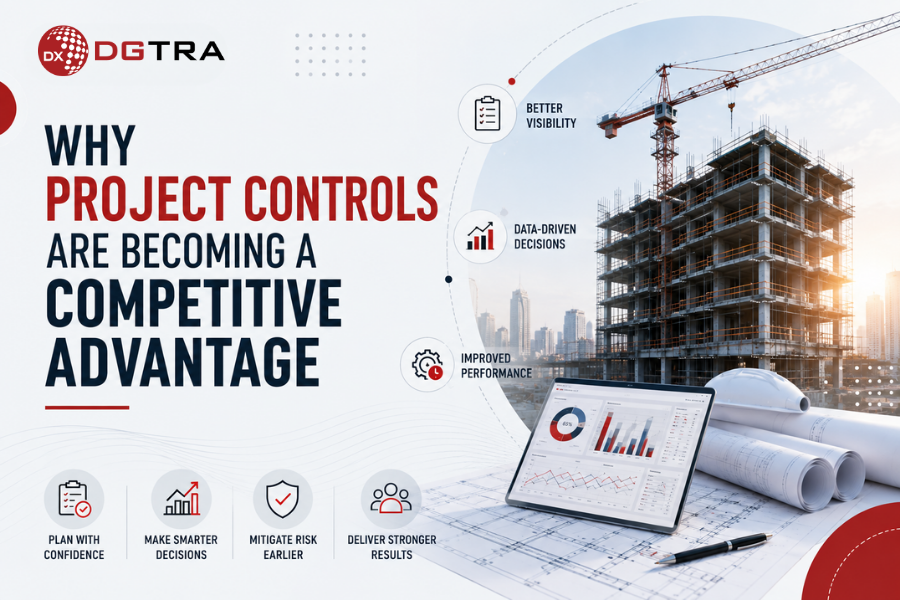
Leading engineering, procurement, and construction (EPC) firms, capital asset owners, and program management executives are fundamentally restructuring project controls. They are transforming it from a passive bookkeeping function into a predictive, data-driven engine that drives operational strategy, optimizes cash flow, and secures competitive advantage during business bidding and execution.
This paper examines the structural evolution of modern project controls, grounded in Project Controls Advisory and ISO 19650 Advisory frameworks. It outlines how enterprise leaders convert baseline project data into enterprise value.
The Failure of “Post-Mortem” Reporting
Traditional project controls rely on historical data and suffer from latency. Standard monthly progress reports compile cost data, Earned Value Analysis (EVA) metrics, and schedule progress at 30-day intervals. By the time these dashboards reach executive boardrooms or project directors:
- Variances are irreversible: Cost overruns logged in week four reflect site inefficiencies or material wastage from week one or two.
- Mitigation windows have closed: Delay trends in critical path activities have already compounded into downstream trade clashes and standing-time claims.
- Commercial exposure is locked in: Subcontractor change requests have transitioned from negotiable scope discussions into formal legal disputes.
Relying on historical reporting to manage a modern capital portfolio is the operational equivalent of driving a vehicle by looking exclusively in the rearview mirror. It tells leadership where the project was but offers no guidance on where it is heading or how to prevent upcoming collisions.
From Cost Center to Strategic Asset: The Four Pillars of Modern Control
Transitioning project controls into a value-generating core competency requires replacing disconnected spreadsheets with an integrated digital control framework. Forward-thinking organizations anchor their controls strategy across four core pillars:
- Integrated Data Governance
Data fragmentation is the single greatest barrier to predictable project delivery. When cost estimates live in independent software, schedules reside in isolated files, and field progress is tracked via manual logbooks, data silos form.
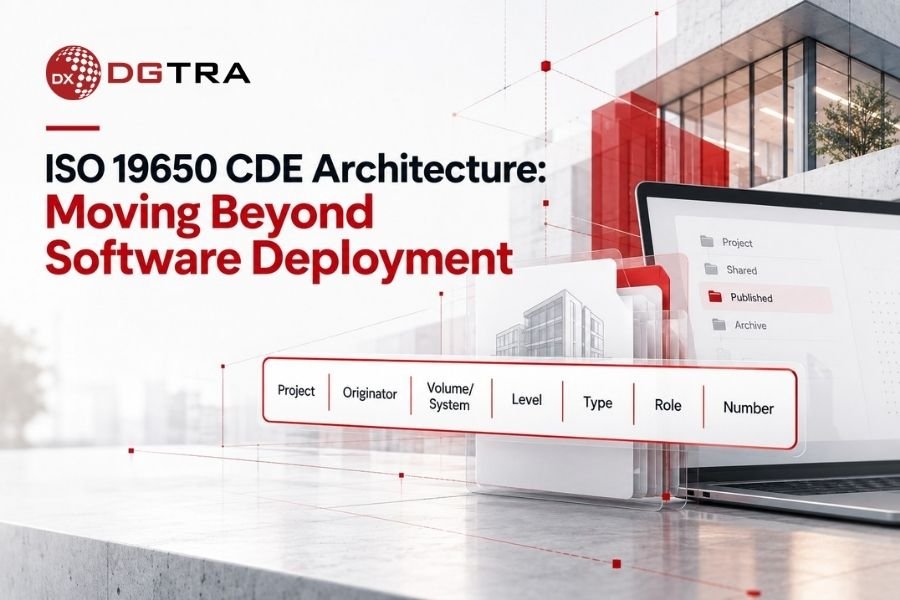
A structured Common Data Environment (CDE) standardizes file-naming conventions, information-exchange requirements, and approval workflows. This ensures that financial forecasts, design revisions, and field progress logs communicate in real time across the entire supply chain. - Multi-Dimensional Integration (3D/4D/5D Unification)
Isolated metrics create false confidence. An activity reported as “80% complete” on paper may obscure critical spatial access conflicts or pending material shortages.
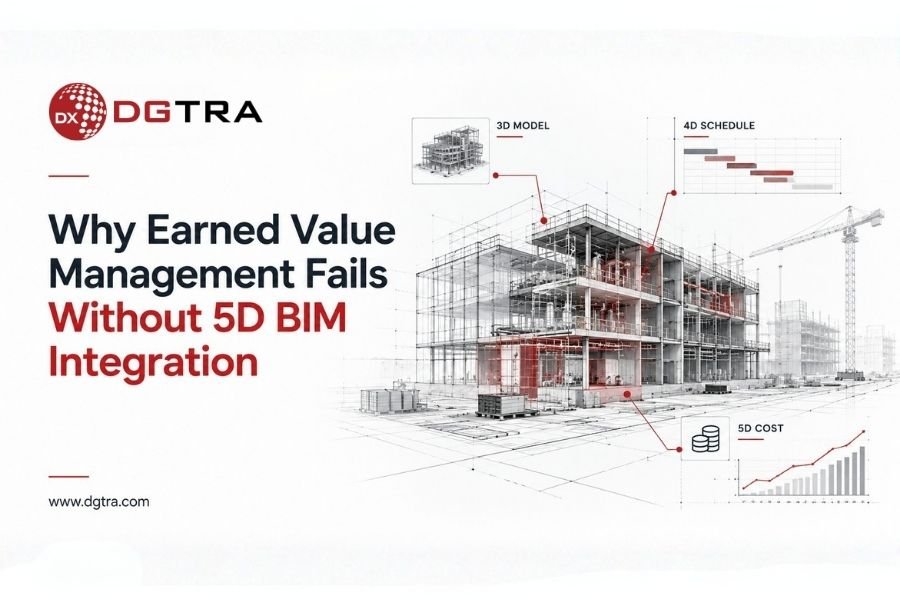
Connecting 3D BIM models directly to 4D schedule logic and 5D cost databases inside a unified environment bridges the gap between field execution and financial reporting. Project directors evaluate quantity burn rates, earned value metrics, and spatial progress simultaneously, identifying productivity bottlenecks long before they impact baseline schedules. - Predictive Forecasting Over Static Accounting
Advanced project controls shift focus from historical expenditure to Estimate at Completion (EAC) trajectory modeling. By integrating real-time site productivity rates, supply chain lead-time shifts, and pending change order logs, predictive controls algorithms calculate true completion costs and schedule completion dates under varying risk scenarios.
This capability lets project managers test corrective actions virtually—evaluating whether re-sequencing a non-critical path activity or adjusting trade density yields the best cost-to-schedule benefit—before committing capital on site. - Enterprise Programmatic Visibility
For global asset owners and major EPCs managing multi-billion-dollar portfolios, control cannot stop at the individual project boundary. Modern enterprise controls roll up granular jobsite data into macro-level executive dashboards. Portfolio directors evaluate resource allocation across multiple assets, spot systemic vendor performance trends, and balance capital expenditure across the entire enterprise pipeline.
How Project Controls Win Bids and Protect Margins
In a competitive market characterized by tight margins, supply chain volatility, and strict liquidated damages clauses, dynamic project controls directly influence both top-line growth and bottom-line stability.
Winning the Pitch: Demonstrating Delivery Certainty
Institutional owners, infrastructure authorities, and private developers are increasingly risk-averse. Bidding on complex infrastructure, healthcare, or data center projects on price alone is no longer sufficient.
Contractors who demonstrate a robust, audit-ready project controls infrastructure powered by Integrated Project Delivery methods present a fundamentally lower risk profile. Presenting a client with real-time 4D schedule simulations, automated 5D cost variance tracking, and a transparent CDE framework shows your organization can guarantee budget stability and milestone dates.
Protecting the Margin: Suppressing Claims and Contingency Burn
Unbudgeted field claims, subcontractor disputes, and contingency depletion stem from uncoordinated scope adjustments and unverified progress claims.
Structured project controls enforce rigorous impact analysis protocols before extra work is executed. Verifying contractor progress against digital models and automated quantity takeoffs prevents overbilling, eliminates speculative risk contingencies from trade bids, and protects initial project profit margins.
Sector-Specific Value Execution
The operational return on enterprise project controls is magnified across system-dense, high-speed asset sectors:
- Healthcare & Life Sciences: Medical facility builds operate under rigid regulatory, MEP density, and commissioning mandates. Integrated project controls align medical equipment procurement schedules directly with room-by-room physical readiness, eliminating costly equipment storage fees and preventing delayed facility licensing.
- Industrial & Processing Plants: In industrial retrofits and turnarounds, every hour of unplanned downtime represents lost production revenue. Predictive 4D/5D controls track long-lead piping, module delivery, and crane utilization hour by hour, ensuring turnarounds complete within tight shutdown windows.
- Data Centers & Mission-Critical Facilities: Driven by hyperscaler speed-to-market demands, data center construction leaves zero margin for schedule slip. Predictive impact tracking identifies equipment lead-time delays early, allowing project teams to re-sequence commissioning sequences and avoid heavy revenue penalties.
- Major Infrastructure & Transport Hubs: Megaprojects involving multiple funding bodies and joint-venture contractors require absolute financial transparency. Enterprise controls provide audit-ready data environments that satisfy public oversight requirements while maintaining multi-contractor operational alignment.
Operational Roadmap: Elevating Your Project Controls Capability
Transforming project controls from a passive reporting department into a competitive engine requires a deliberate organizational roadmap:
- Audit Data Maturity & Governance: Transition away from fragmented spreadsheets and ad-hoc logbooks. Establish a standardized Common Data Environment across all active project pipelines.
- Unify Project Controls and VDC: Break down the traditional wall between Virtual Design & Construction teams and Project Controls estimators. Link 3D BIM models directly with Primavera schedules and cost databases to automate 4D/5D tracking.
- Institute Predictive Impact Protocols: Mandate automated change impact analysis for all proposed scope modifications across spatial, cost, and schedule dimensions before commercial sign-off.
- Empower Executive Decision-Making: Deploy enterprise dashboarding that translates granular field data into strategic executive intelligence, enabling proactive resource optimization across your entire asset portfolio.
Key Takeaways for Executive Leaders
- Reporting is not controlling: Historical monthly variance reports document past failures; predictive project controls prevent future delays and cost overruns.
- Data governance is foundational: Without a structured data baseline, project controls remain fragmented, manual, and error prone.
- Multi-dimensional integration drives speed: Unifying 3D spatial models, 4D schedule logic, and 5D quantity takeoffs provides complete operational clarity across multi-trade builds.
- Delivery certainty wins business: Contractors and program managers who offer transparent, data-driven control frameworks differentiate themselves in high-stakes capital bidding.
Frequently Asked Questions (FAQs)
What is the difference between traditional reporting and predictive project controls?
Traditional reporting compiles historical cost and schedule data after work is executed, offering a backward-looking view of variance. Predictive project controls use live CDE data, automated quantity takeoffs, and 4D/5D simulations to forecast future completion trends and mitigate risks before costs are incurred.
How does ISO 19650 support enterprise project controls?
ISO 19650 establishes international standards for managing information across an asset lifecycle. It ensures data consistency, standardizes file naming and approval workflows, and eliminates data silos within a central Common Data Environment (CDE).
How do 4D and 5D VDC integrate with project control management?
4D VDC links 3D spatial geometry to master project schedules to simulate construction sequencing. 5D VDC integrates cost and quantity databases into that parametric model, enabling real-time cost takeoffs, earned value tracking, and automated change impact assessments.
Who should lead the transformation of an organization’s project controls framework?
Transforming project controls requires executive leadership from Project Directors, Chief Operating Officers, VDC Leads, and Project Control Heads, often supported by independent technical advisory partners to align software systems, data governance, and team workflows.
About DGTRA
DGTRA Consultancy is digital engineering and technical advisory leader specializing in BIM Consulting, Virtual Design & Construction, enterprise controls, and data governance.
DGTRA partners with global asset owners, EPC leaders, and infrastructure developers to establish predictive control frameworks, eliminate delivery blind spots, and turn digital engineering into a sustainable competitive advantage.
Conclusion & Next Steps
Treating project controls as a passive reporting function exposes capital builds to unnecessary risk, margin slippage, and schedule delays. By converting your controls infrastructure into a predictive, integrated digital engine, project leaders gain absolute delivery certainty and a distinct market advantage.
Transform Your Project Controls Strategy
Connect with DGTRA’s project controls advisory team to evaluate your data maturity and deploy predictive control frameworks across your upcoming capital pipeline.
👉 Contact DGTRA’s Advisory Team
👉 Explore DGTRA’s Project Controls Solutions
👉 Learn More About Our ISO 19650 Advisory