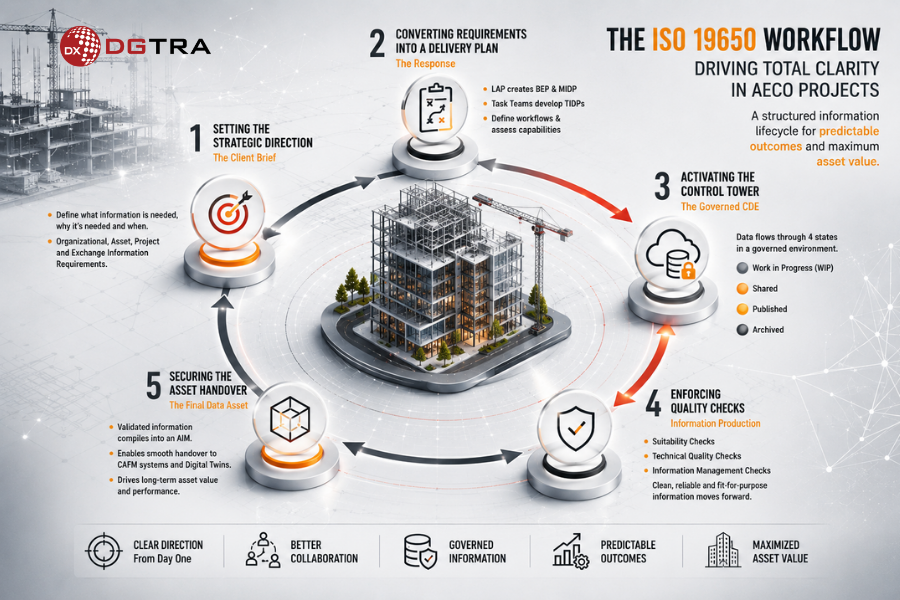
In our previous article, Executive Guide to ISO 19650 Driving Predictable AECO Projects, we established that this international standard stands as a premier business governance framework designed to maximize asset value.
Now, let’s explore exactly how this framework delivers outstanding performance on a live capital project through a highly optimized information lifecycle.
The secret to superior large-scale infrastructure delivery lies in absolute alignment of communication. Complex projects thrive when information flows seamlessly, datasets remain completely consistent, and goals are perfectly synchronized among clients, lead consultants, and trade contractors.
ISO 19650 provides this industry excellence by introducing a structured, end-to-end information workflow. This sequence functions as the advanced operating system for project data governance. For leaders managing high-value programs across India, the UK, and the Middle East, mastering this workflow serves as your primary accelerator for driving predictable asset outcomes and maximizing operational efficiency.
The Five Stages of the ISO 19650 Workflow
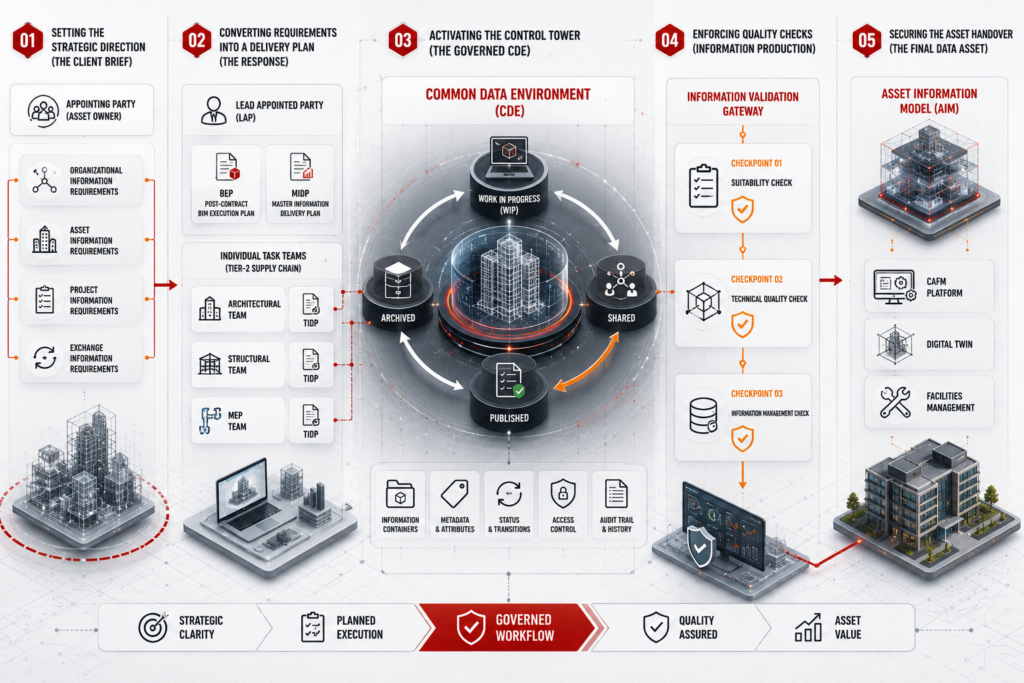
To establish a highly collaborative, productive, and reliable project environment, the standard defines a visible, repeatable lifecycle for data production.
Setting the Strategic Direction (The Client Brief)
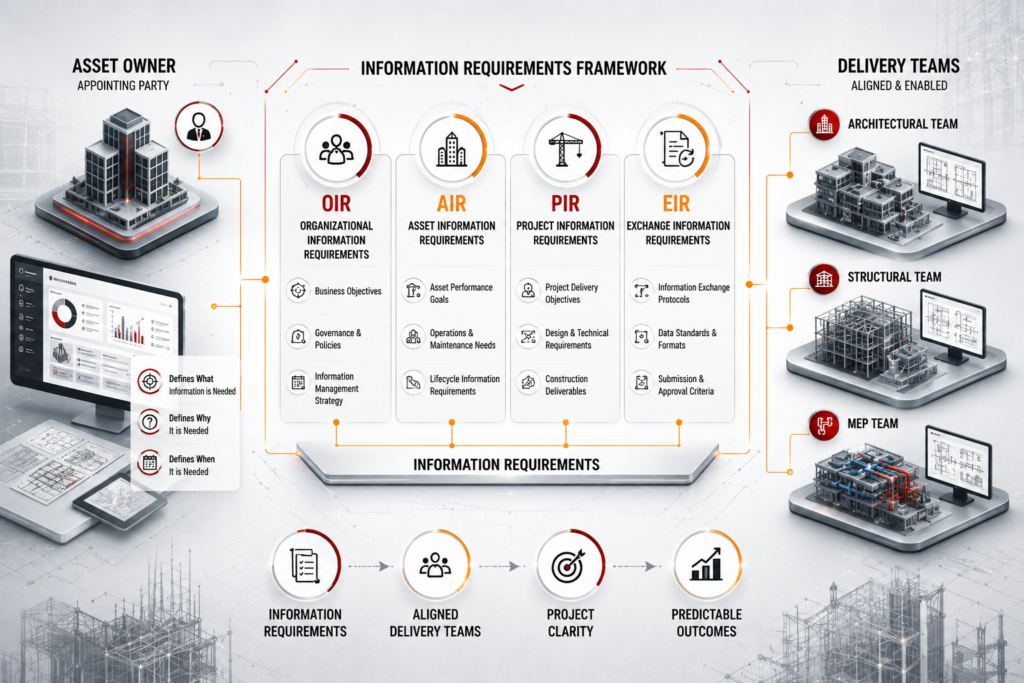
The information workflow begins with the Appointing Party (the client or asset owner). Before procurement begins, the client establishes a strong foundation by defining exactly what information is needed, why it is required, and precisely when it must be delivered.
This is accomplished by authoring clear criteria, including Organizational, Asset, Project, and Exchange Information Requirements. This strategic brief empowers delivery teams with immediate clarity, ensuring optimal deliverables and excellent handover quality from day one.
Converting Requirements into a Delivery Plan (The Response)
Once the client issues the information requirements, the supply chain outlines the exact path to successful execution:
- The Lead Appointed Party (LAP): Typically, the main contractor or lead consultant, the LAP coordinates the entire tier-2 supply chain. They author the Post-Contract BIM Execution Plan (BEP) and the Master Information Delivery Plan (MIDP).
- Individual Task Teams: Each specific discipline (architectural, structural, MEP) maps out its own Task Information Delivery Plan (TIDP), workflow procedures, and resource capability assessments.In short: The client defines the strategic goals, while the delivery teams provide the exact execution strategy.
Activating the Control Tower (The Governed CDE)
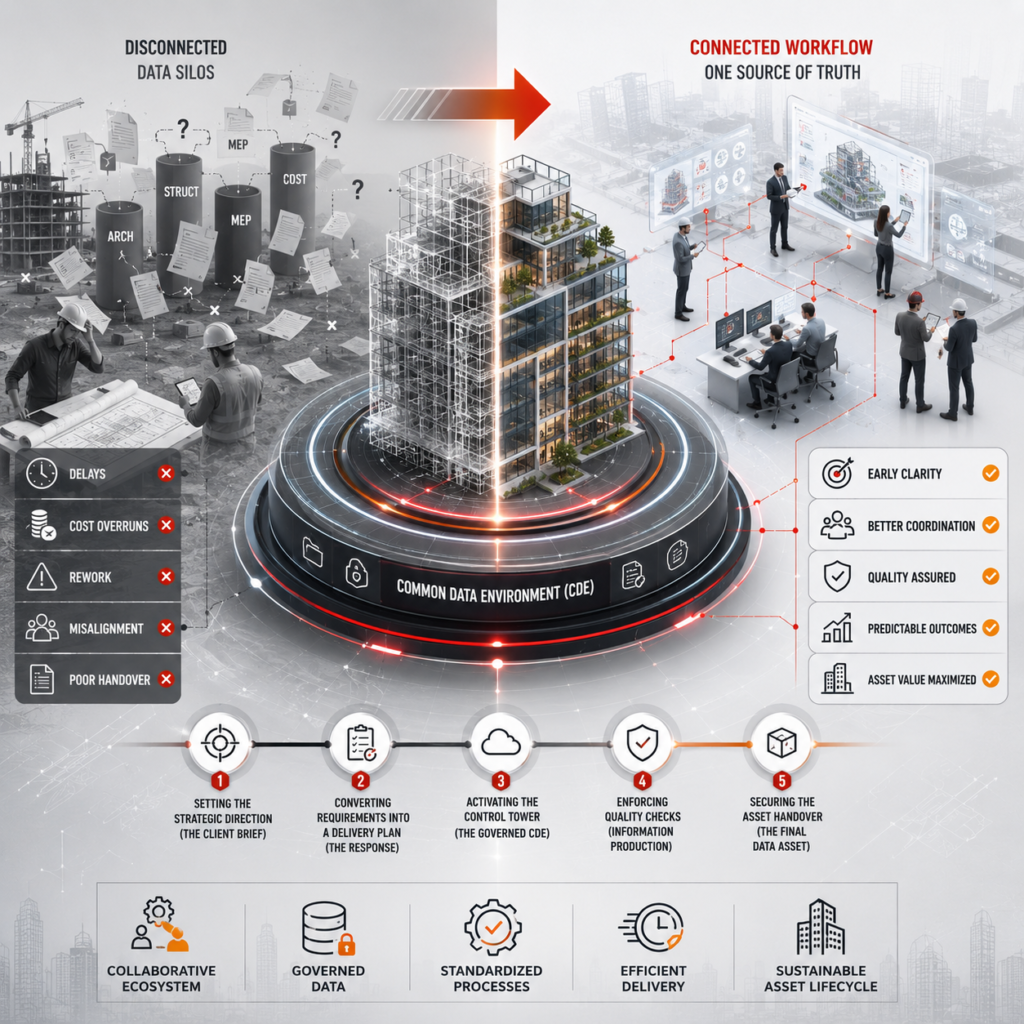
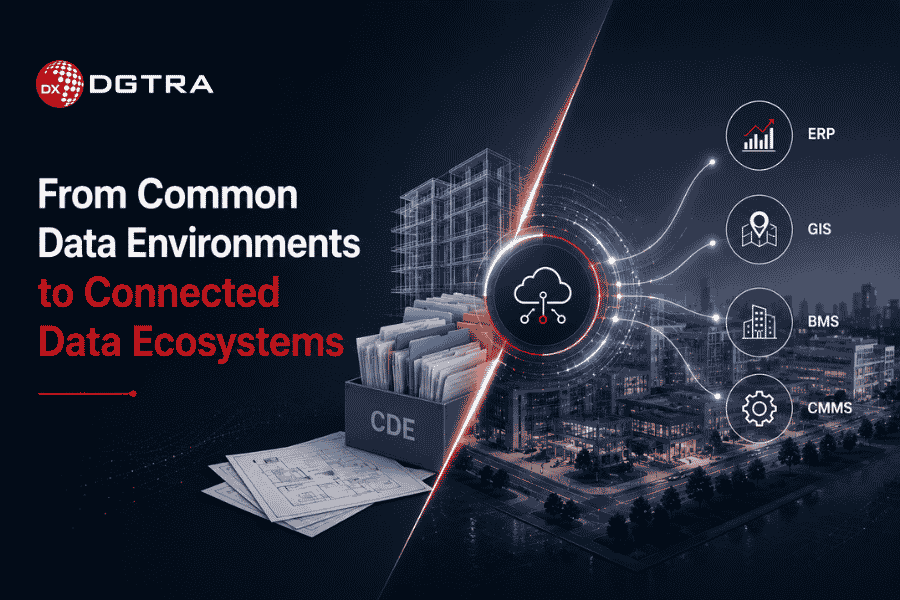
The Common Data Environment (CDE) serves as the powerhouse of the ISO 19650 workflow. A compliant CDE is a disciplined protocol that guides every single model, drawing, and dataset through four productive states:
- Work in Progress (WIP): Focused data utilized internally by a specific task team.
- Shared: Validated data released to other disciplines for collaborative coordination.
- Published: Authorized data approved for active construction or manufacturing.
- Archived: A complete, traceable digital ledger of all historical transactions.
By ensuring controlled transitions with explicit status codes and metadata, executives maintain total transparency over data maturity.
Enforcing Quality Checks (Information Production)
ISO 19650 elevates standard project delivery by introducing a highly disciplined verification process. Before any information container leaves the WIP state and enters the Shared environment, it passes through a thorough three-tier gateway:
- Suitability Checks: Confirming the data is ideal for its intended purpose.
- Technical Quality Checks: Verifying geometric accuracy and code compliance.
- Information Management Checks: Confirming perfect alignment with naming conventions and metadata rules.
This systematic validation ensures the shared environment remains completely clean, reliable, and optimized for project efficiency.
- Securing the Asset Handover (The Final Data Asset)
The ultimate value of the workflow is realized at project completion. Validated project information compiles beautifully into an Asset Information Model (AIM)—a highly structured, actionable dataset optimized for long-term operations and maintenance.
Because the data undergoes progressive validation at every milestone, the owner receives a pristine, queryable asset dataset. This clean lineage plugs directly into CAFM platforms and powers operational Digital Twins, unlocking decades of predictive maintenance capability and long-term asset value.
About DGTRA
DGTRA is a digital transformation partner and process-driven consultancy operating at the absolute forefront of the global AECO industry. Backed by an elite team of over 100 specialized professionals, we bridge the gap between complex digital technology and practical, on-site execution across India, the UK, and the Middle East.
We specialize in high-impact, tailored digital solutions. We work directly with asset owners, tier-1 contractors, and leading design firms to design and implement robust, forward-thinking digital roadmaps. Our deep domain expertise spans advanced BIM implementation, comprehensive ISO 19650 advisory services, customized CDE setup, and the strategic development of operational Digital Twins. At DGTRA, our core guiding principle remains clear: we engineer the digital processes that bring complete predictability, transparency, and financial certainty to the world’s most ambitious construction programs.
Connect with Our Experts Today
Establishing a transparent, end-to-end information workflow is the most powerful action an executive can take to protect project margins and elevate organization-wide delivery standards. Transitioning to this international standard replaces traditional data silos with a highly coordinated, profitable, and digitally mature delivery ecosystem.
DGTRA possesses the exact process engineering expertise required to embed these international standards seamlessly into your supply chain.
[Click here to schedule a strategic consultation with a DGTRA Process Specialist.]
Let’s optimize your current information pathways, establish a high-performance governance model, and turn your project delivery into a highly controlled, predictable digital asset.