Previously, we discussed how Digital Twins, AI, and VDC are reshaping project delivery by protecting capital project margins through a continuous digital thread. Establishing this thread requires a fundamental change in how the AECO sector structures its data.
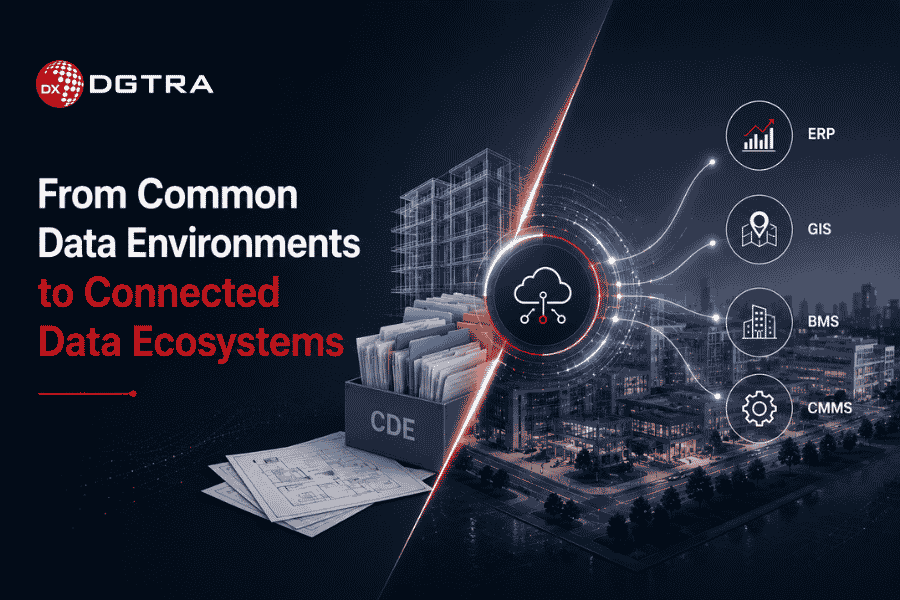
The Common Data Environment (CDE) has long served as the single source of truth for design and construction documents. However, standard CDEs often remain isolated from broader enterprise systems, limiting their effectiveness.
As asset portfolios become more complex, leading owner-operators are moving beyond static document hubs. The industry is shifting from traditional CDEs to integrated, dynamic Connected Data Ecosystems.
1. The CDE Evolution: Breaking the File-Centric Barrier
Traditional CDEs were designed to manage files such as PDFs, 3D models, and spreadsheets. While effective for design coordination, this approach creates significant information bottlenecks during construction handover.
Transitioning to a Connected Data Ecosystem shifts the focus from file management to managing individual data elements. Data is organized into structured, accessible points rather than isolated folders. This enables broader collaboration and allows the digital asset model to interact directly with external corporate software in real time.
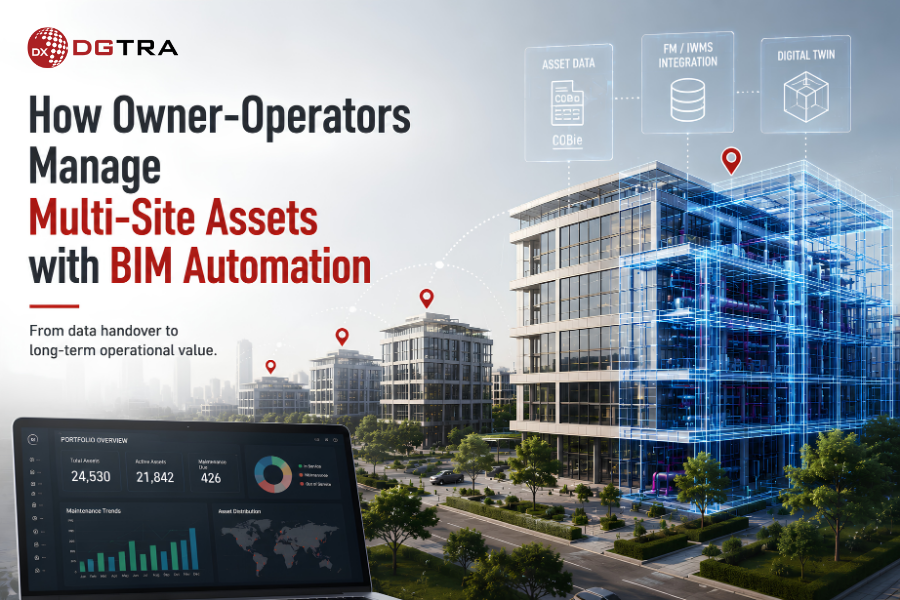
2. Platform Interoperability: ERP, GIS, BMS, and CMMS Integration
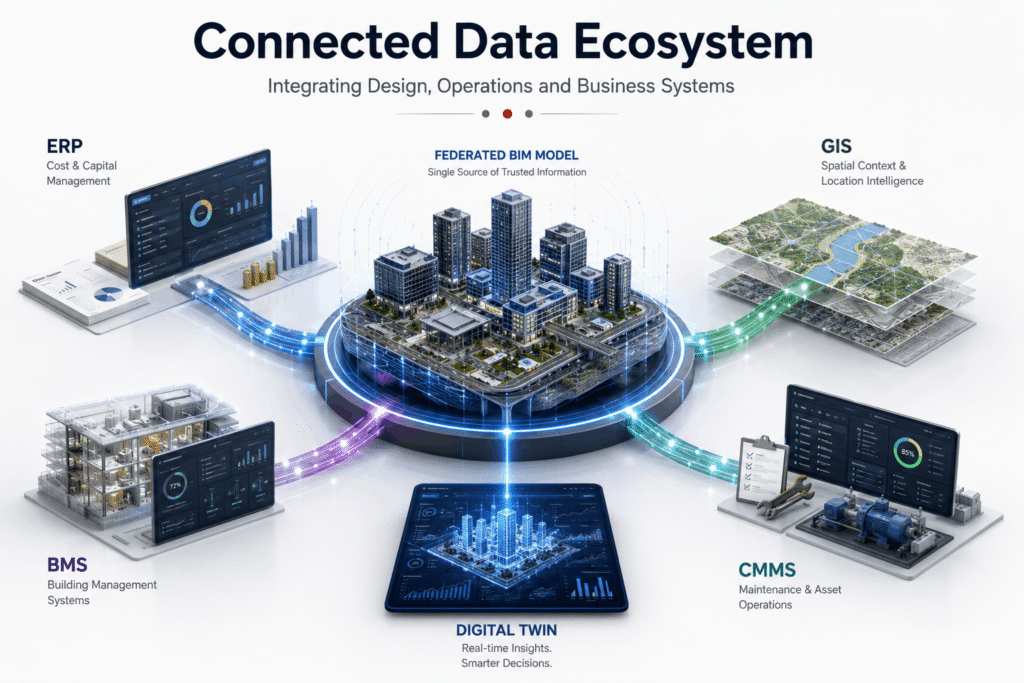
A connected data ecosystem eliminates silos between engineering data and enterprise systems. When BIM models integrate seamlessly with operational technology, the business value of digital data increases significantly.
ERP Integration (Enterprise Resource Planning):
Linking structured model components to financial tracking tools enables asset managers to compare planned lifecycle costs with real-time procurement and supply chain metrics.
GIS Integration (Geographic Information Systems):
Overlaying BIM assets onto spatial maps provides infrastructure operators with essential local context for transit, utility, and civil portfolios.
BMS & CMMS Integration:
Integrating data from Building Management Systems and Computerized Maintenance Management Systems enables facility teams to monitor real-time asset health within the 3D environment.
3. Information Governance: The Foundation of Digital Trust
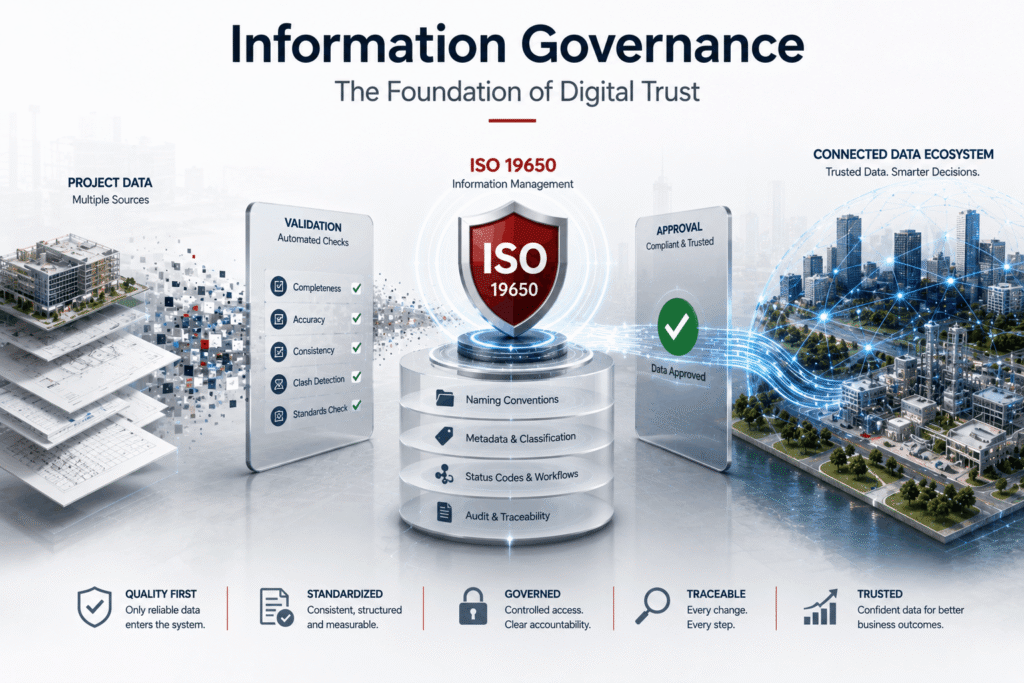
An ecosystem is only as reliable as its data. Without strict quality controls, a connected network can quickly propagate poor data. Robust information governance ensures all stakeholders follow automated data standards before information enters the ecosystem.
This discipline relies on international benchmarks such as ISO 19650. Enforcing strict naming conventions, status codes, and automated validation rules transforms your environment into a reliable data gatekeeper. This governance removes subjective interpretation from data validation, ensuring only compliant information proceeds.
4. Designing a Capital Enterprise Data Strategy
Transitioning to a modern data ecosystem means treating information as a valuable corporate asset, not just a project byproduct. A successful enterprise data strategy is built on three core principles:
Strategic Pillar | Focus Area | Expected Outcome |
Open Standards | Adopting vendor-neutral schemas like IFC and COBie | Eliminates long-term proprietary software lock-in |
Automated Validation | Deploying rule-based data checks inside the CDE | Ensures absolute model accuracy before field execution |
Lifecycle Architecture | Mapping operational needs during preconstruction | Delivers a data ecosystem ready for operations on Day 1 |
Aligning engineering metrics with long-term operational goals helps your digital infrastructure protect project delivery margins and maximize facility value over its lifecycle.
Build Your Connected Ecosystem with DGTRA
Moving from a standalone file repository to a fully integrated data ecosystem requires specialized expertise. DGTRA Consultancy supports global AECO organizations in designing and deploying enterprise-grade information pipelines.
From advanced CDE software advisory and implementation to robust data architecture for owner-operator digital solutions, we ensure your project data continuously maximizes asset predictability and value.