

Webinar on Deep dive to understand Why Most Leading Design Firms Avoid Freely Available Online Revit Families A strategic, leadership-level webinar on the hidden risks, technical debt, and delivery failures caused by “free” Revit content — and how top firms protect quality at scale. https://www.dgtra.com/wp-content/uploads/2026/02/animate.mp4 Live Zoom Webinar + Interactive Q&A (60 Minutes) 25 March 2026 2:00 PM UK | 9:00 AM US | 7:30 PM IST Why This Topic Matters at Scale Freely available Revit families look convenient. But at firm scale, they quietly introduce: Model instability and performance degradation Inconsistent parameters and naming conventions Broken constraints and unreliable data Late-stage rework and coordination issues QA/QC failures during documentation Increased professional and delivery risk Most firms only see the damage after deadlines slip and costs escalate. What You’ll Learn Why “free” Revit families fail in complex, multi-office firms The hidden cost of ad-hoc content strategies How to identify usable vs dangerous Revit families Build vs Buy vs Standardize decision framework Objective QA criteria for evaluating Revit content A roadmap from ad-hoc modeling to systemized delivery Who This Webinar Is For Principals & Partners (Architecture / Engineering) BIM & Digital Directors Practice Leaders (Architecture, Interiors, MEP, Infrastructure) QA/QC & Risk Management Leads BIM Managers, Content & Library Managers Senior Architects & Engineers If your teams struggle with slow models, rework, QA failures, or inconsistent Revit content, this session is built for you. Watch Now! Workshop Registration-2 First NameLast NameEmailCompany NameJob TitleCountrySelect CountryAfghanistanAland IslandsAlbaniaAlgeriaAmerican SamoaAndorraAngolaAnguillaAntarcticaAntigua and BarbudaArgentinaArmeniaArubaAustraliaAustriaAzerbaijanBahamasBahrainBangladeshBarbadosBelarusBelgiumBelizeBeninBermudaBhutanBoliviaBonaire, Saint Eustatius and SabaBosnia and HerzegovinaBotswanaBouvet IslandBrazilBritish Indian Ocean TerritoryBritish Virgin IslandsBruneiBulgariaBurkina FasoBurundiCabo VerdeCambodiaCameroonCanadaCayman IslandsCentral African RepublicChadChileChinaChristmas IslandCocos (Keeling) IslandsColombiaComorosCook IslandsCosta RicaCroatiaCubaCuraçaoCyprusCzech RepublicDemocratic Republic of the Congo (Kinshasa)DenmarkDjiboutiDominicaDominican RepublicEcuadorEgyptEl SalvadorEquatorial GuineaEritreaEstoniaEswatiniEthiopiaFalkland IslandsFaroe IslandsFijiFinlandFranceFrench GuianaFrench PolynesiaFrench Southern TerritoriesGabonGambiaGeorgiaGermanyGhanaGibraltarGreeceGreenlandGrenadaGuadeloupeGuamGuatemalaGuernseyGuineaGuinea-BissauGuyanaHaitiHeard Island and McDonald IslandsHondurasHong KongHungaryIcelandIndiaIndonesiaIranIraqIrelandIsle of ManIsraelItalyIvory CoastJamaicaJapanJerseyJordanKazakhstanKenyaKiribatiKosovoKuwaitKyrgyzstanLaosLatviaLebanonLesothoLiberiaLibyaLiechtensteinLithuaniaLuxembourgMacao S.A.R., ChinaMadagascarMalawiMalaysiaMaldivesMaliMaltaMarshall IslandsMartiniqueMauritaniaMauritiusMayotteMexicoMicronesiaMoldovaMonacoMongoliaMontenegroMontserratMoroccoMozambiqueMyanmarNamibiaNauruNepalNetherlandsNew CaledoniaNew ZealandNicaraguaNigerNigeriaNiueNorfolk IslandNorth KoreaNorth MacedoniaNorthern Mariana IslandsNorwayOmanPakistanPalauPalestinian TerritoryPanamaPapua New GuineaParaguayPeruPhilippinesPitcairnPolandPortugalPuerto RicoQatarRepublic of the Congo (Brazzaville)RomaniaRussiaRwandaRéunionSaint BarthélemySaint HelenaSaint Kitts and NevisSaint LuciaSaint Martin (Dutch part)Saint Martin (French part)Saint Pierre and MiquelonSaint Vincent and the GrenadinesSamoaSan MarinoSao Tome and PrincipeSaudi ArabiaSenegalSerbiaSeychellesSierra LeoneSingaporeSlovakiaSloveniaSolomon IslandsSomaliaSouth AfricaSouth Georgia/Sandwich IslandsSouth KoreaSouth SudanSpainSri LankaSudanSurinameSvalbard and Jan MayenSwedenSwitzerlandSyriaTaiwanTajikistanTanzaniaThailandTimor-LesteTogoTokelauTongaTrinidad and TobagoTunisiaTurkmenistanTurks and Caicos IslandsTuvaluTürkiyeUgandaUkraineUnited Arab EmiratesUnited Kingdom (UK)United States (US)United States (US) Minor Outlying IslandsUnited States (US) Virgin IslandsUruguayUzbekistanVanuatuVaticanVenezuelaVietnamWallis and FutunaWestern SaharaYemenZambiaZimbabweWatch Now

Data Center Construction Fails Without DfMA: The Design-First Fix | UK & USA
Most modular projects fail long before reaching the factory floor, and not because of fabrication. It is because DfMA was never embedded into the design. A simple search of the internet will show data centers and critical facilities in the UK and USA are using modular construction to streamline construction time. Standard practices include using prefabricated modular MEP skids, modular electrical rooms, containerized utility plants, and modular technical spaces. Even with the use of modular data center construction in the UK and USA, many projects still face: Design rework Factory delays Site coordination clashes Extended commissioning cycles Construction is rarely the root cause of these issues. Instead, it’s the design workflows not optimized for DfMA-based construction in UK and USA projects. At DGTRA, we consistently see that construction speed is impacted by decisions made long before the project breaks ground. These decisions are made during the initial phases of design and delineate the success of manufacturing and assembly. DfMA Starts in Design — Not in the Factory While Design for Manufacture and Assembly (DfMA) is often misconstrued as simply a fabrication tactic, the abbreviation real essence of the abbreviation emanates from the design as the prime focus. In data centers and critical facilities across the UK and USA, key design choices made early on dictate: Module size and transport limitations Design and access strategies for plant rooms MEP integration scope Sequence of installation Logic of handover for commissioning and operations If design progresses while these considerations are absent, it is only a matter of time before modular execution shifts from a strategy to a reaction, and in doing so, creates risk instead of eliminating it. By the time the manufacturing process is set in motion, lost time becomes a void from which recovery is simply not possible. Developers of mission-critical facilities in the UK and USA are increasingly tasked with: Accelerating time-to-market Quickly scaling capacity Uptime and redundancy Capital risk Predictable delivery timelines Why Modular Construction Alone Doesn’t Deliver Speed Production acceleration through prefabrication occurs only when: Construction modules are designed with UK & USA manufacturing limitations in mind Standard interfaces between combined disciplines BIM models contain required construction and production intelligence Plans and strategies are constructed for logistics and lifting Design data includes construction sequences Without DfMA-driven design for UK and USA modular data centers, modular construction becomes an isolated production activity rather than an integrated delivery strategy. At DGTRA, we summarize it simply: A BIM model built only for visualization is a digital liability. A BIM model built for manufacturing and assembly is a delivery engine. Common Design & Coordination Bottlenecks Across data centers and complex facilities in the UK & USA, we observe the following recurring challenges: Lack of coordination between the architectural, structural and MEP design Absence of modular logic when developing BIM Late involvement of fabricators Team data standards that lack uniformity Layouts for Technical Rooms That Cannot Be Repeated Exclusion of Design Commissioning Requirements These are workflow and governance issues, not technological issues. What DfMA-Ready Design Workflows Look Like DfMA workflows integrate design, manufacturing, and construction from the outset. A modular approach is set at concept design. Design rules incorporate UK & USA manufacturing limitations. BIM serves as a manufacturing data backbone. Preliminary engagement with fabricators and installers. Uniform typologies for technical spaces and plant rooms. Design Logistics and Assembly planning is complemented by construction sequencing. This changes BIM from a tool for visualization into a tool for production and commissioning — essential for DfMA-based modular construction projects in the UK and USA. The Need for Integration While mission-critical data centers in the UK & USA are being built, there is a need to integrate the BIM/VDC team along with MEP and systems designers, modular fabricators, construction and installation teams, and commissioning and operations teams. When all stakeholders work together in a DfMA environment, there is minimal rework, and procurement, factory production, and site installation are all optimized and sequenced — leading to accelerated commissioning. The result is the ultimate “real speed” to commissioning and not just faster construction. The Balancing Act of Standardization When streamlining operations, a primary concern is that standardization will eliminate opportunities for flexibility. However, through systemized design, scalability is achieved. By creating repeatable module libraries, configurable design templates, and setting standards for interfaces and expandable frameworks, organizations can rapidly deploy new system designs to an operational capacity without a complete redesign — a key differentiator for DfMA-led construction in UK and USA data centers. From an executive perspective, this provides lower design costs, faster replication, decreased program risk, and predictable performance outcomes. The Business Impact Projects that utilize DfMA-based design for data centers in the UK and USA can expect shorter design-to-factory cycles, no mid-production redesigns, faster procurement, and assembly on site. This leads to early revenue realization. In environments where there is no room for downtime, DfMA becomes a strategic advantage in the UK and USA for mission-critical markets. Why This Matters Now The current global need for data centers in the UK & USA has created a surge in modular construction adoption, which is only part of the solution. To truly transform construction, design workflows must be addressed. The ability to embed DfMA from the design phase will shape the next frontier in: Delivery speed Cost efficiency Operational reliability Growth potential The design will dictate the future of mission-critical delivery, not construction sites. Join DGTRA’s Upcoming Webinar To assist industry leaders in closing the design-to-delivery gap, DGTRA will host an exclusive webinar for UK & USA Data Center professionals on Modular Strategies & Design Optimization for Data Centers & Complex Facilities. What you will learn: Why modular construction does not guarantee faster delivery. Frequent design and coordination bottlenecks. DfMA-ready, first design workflows. Synchronizing the BIM, MEP, manufacturing, and construction. Who should attend: Data Center Design Managers, BIM/VDC Leads, Construction Managers, Program Directors, Operational Managers, and Modular Delivery Teams from the UK & USA regions. 👉 Registration is now open. Reserve your spot to learn how to embed DfMA in design for predictable and accelerated commissioning. 👉 Register Now: DGTRA Webinar Final Thought The method is modular construction. The multiplier is DfMA-driven

Case Study: Digitally Enabling Modular Data Center Delivery
Get the Data Center Delivery Framework Download the full case study to see how we digitally enabled modular prefabrication for a leading European manufacturer. Digitally Enabling Modular Data Center Delivery NameEmailCompany NameJob Function– Select –Operations/ DeliveryProject ManagementIT/ AutomationExecutive/ InvestorACCESS THE CASE STUDY → Digitally Enabling Modular Data Center Delivery Accelerate speed-to-market and mitigate MEP sequencing risks with a builder’s and operator’s lens on digital prefabrication. Visual Clarity Clear visualization of module assembly, transport, and on-site installation logic. Risk Mitigation Reduced uncertainty in sequencing for MEP-heavy, mission-critical components. Faster Alignment Validated digital workflows lead to quicker stakeholder decisions and investor confidence. Operational Readiness Ensuring digital assets support commissioning and downstream operational handover. What’s Inside the Scope: MEP-Intensive BIM Modeling Factory Fabrication Docs Centralized Cloud Workflows Digital Validation of Sequences Visualization for Investors Installation Readiness Logic
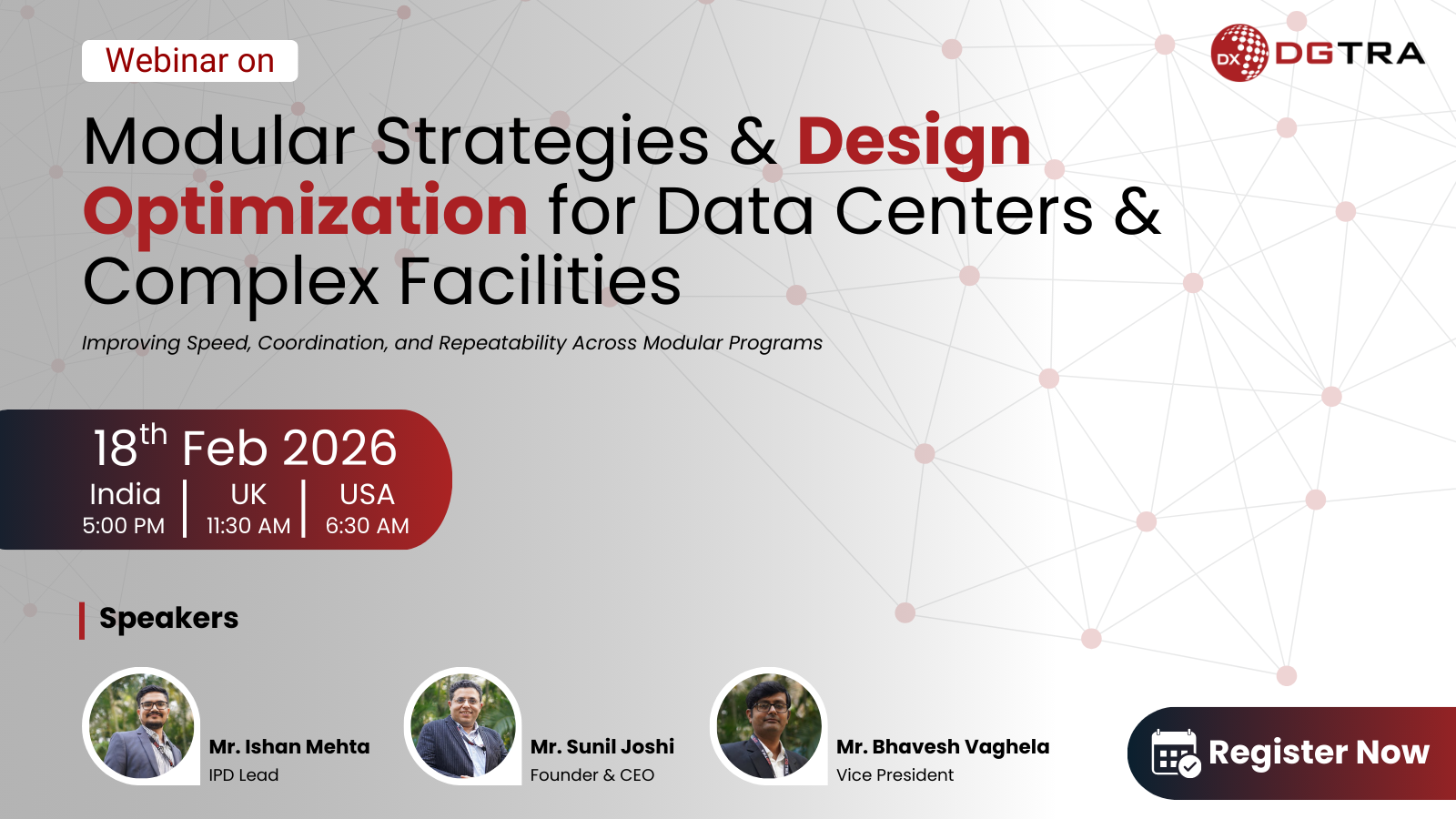
Webinar on Modular Strategies & Design Optimization for Data Centers & Complex Facilities
webinar on Modular Strategies & Design Optimization for Data Centers & Complex Facilities Design-led approaches to improve speed, coordination, and repeatability across modular and mission-critical projects. Zoom Webinar 18 February 2026 2:00 PM | GMT 9:00 AM | ET 07:30 PM | IST Register Now Why This Webinar Matters Modular construction is widely adopted to accelerate delivery—but many data center and complex facility projects still experience delays, rework, and coordination challenges. In most cases, the root cause isn’t construction. It’s design workflows that are not optimized for modular delivery. What You’ll Learn Why modular construction alone doesn’t guarantee faster delivery Common design and coordination bottlenecks DfMA-ready, s-first design workflows Aligning BIM, MEP, manufacturing, and construction teams Standardizing designs without losing flexibility Frameworks applicable to active and upcoming projects SPEAKERS Mr. Ishan Mehta Domain Head – Integrated Project Delivery ISO-Certified BIM Practitioner | Autodesk Certified Instructor Ishan specializes in design optimization, BIM-enabled coordination, and modular delivery strategies for data centers and complex facilities. He works closely with project and operations teams to align design intent, DfMA-ready workflows, and execution, helping improve delivery speed, predictability, and repeatability. Mr. Sunil Joshi Founder & CEO Digital Strategy & Modular Delivery Lead | DGTRA Sunil focuses on digital workflow alignment, BIM adoption, and modular readiness across complex facility projects. His work centers on enabling teams to standardize design processes, improve coordination, and reduce delivery risk through structured digital and modular strategies. Mr. Bhavesh Vaghela Vice President Senior BIM & VDC Specialist | Modular & Complex Facilities Bhavesh brings hands-on experience in BIM/VDC coordination and constructability-led delivery for data centers and modular projects. He supports teams in improving MEP coordination, model-based workflows, and execution readiness, reducing rework and late-stage design changes. Register Now Workshop Registration Form NameEmailCompany NameJob TitleCountrySelect CountryAfghanistanAland IslandsAlbaniaAlgeriaAmerican SamoaAndorraAngolaAnguillaAntarcticaAntigua and BarbudaArgentinaArmeniaArubaAustraliaAustriaAzerbaijanBahamasBahrainBangladeshBarbadosBelarusBelgiumBelizeBeninBermudaBhutanBoliviaBonaire, Saint Eustatius and SabaBosnia and HerzegovinaBotswanaBouvet IslandBrazilBritish Indian Ocean TerritoryBritish Virgin IslandsBruneiBulgariaBurkina FasoBurundiCabo VerdeCambodiaCameroonCanadaCayman IslandsCentral African RepublicChadChileChinaChristmas IslandCocos (Keeling) IslandsColombiaComorosCook IslandsCosta RicaCroatiaCubaCuraçaoCyprusCzech RepublicDemocratic Republic of the Congo (Kinshasa)DenmarkDjiboutiDominicaDominican RepublicEcuadorEgyptEl SalvadorEquatorial GuineaEritreaEstoniaEswatiniEthiopiaFalkland IslandsFaroe IslandsFijiFinlandFranceFrench GuianaFrench PolynesiaFrench Southern TerritoriesGabonGambiaGeorgiaGermanyGhanaGibraltarGreeceGreenlandGrenadaGuadeloupeGuamGuatemalaGuernseyGuineaGuinea-BissauGuyanaHaitiHeard Island and McDonald IslandsHondurasHong KongHungaryIcelandIndiaIndonesiaIranIraqIrelandIsle of ManIsraelItalyIvory CoastJamaicaJapanJerseyJordanKazakhstanKenyaKiribatiKosovoKuwaitKyrgyzstanLaosLatviaLebanonLesothoLiberiaLibyaLiechtensteinLithuaniaLuxembourgMacao S.A.R., ChinaMadagascarMalawiMalaysiaMaldivesMaliMaltaMarshall IslandsMartiniqueMauritaniaMauritiusMayotteMexicoMicronesiaMoldovaMonacoMongoliaMontenegroMontserratMoroccoMozambiqueMyanmarNamibiaNauruNepalNetherlandsNew CaledoniaNew ZealandNicaraguaNigerNigeriaNiueNorfolk IslandNorth KoreaNorth MacedoniaNorthern Mariana IslandsNorwayOmanPakistanPalauPalestinian TerritoryPanamaPapua New GuineaParaguayPeruPhilippinesPitcairnPolandPortugalPuerto RicoQatarRepublic of the Congo (Brazzaville)RomaniaRussiaRwandaRéunionSaint BarthélemySaint HelenaSaint Kitts and NevisSaint LuciaSaint Martin (Dutch part)Saint Martin (French part)Saint Pierre and MiquelonSaint Vincent and the GrenadinesSamoaSan MarinoSao Tome and PrincipeSaudi ArabiaSenegalSerbiaSeychellesSierra LeoneSingaporeSlovakiaSloveniaSolomon IslandsSomaliaSouth AfricaSouth Georgia/Sandwich IslandsSouth KoreaSouth SudanSpainSri LankaSudanSurinameSvalbard and Jan MayenSwedenSwitzerlandSyriaTaiwanTajikistanTanzaniaThailandTimor-LesteTogoTokelauTongaTrinidad and TobagoTunisiaTurkmenistanTurks and Caicos IslandsTuvaluTürkiyeUgandaUkraineUnited Arab EmiratesUnited Kingdom (UK)United States (US)United States (US) Minor Outlying IslandsUnited States (US) Virgin IslandsUruguayUzbekistanVanuatuVaticanVenezuelaVietnamWallis and FutunaWestern SaharaYemenZambiaZimbabweRegister Now Accelerating Data Center Projects with BIM: Meeting Critical Demands in a Fast-Paced Industry Digitally Driven Prefabrication and Sequencing for Modular Data Center Construction
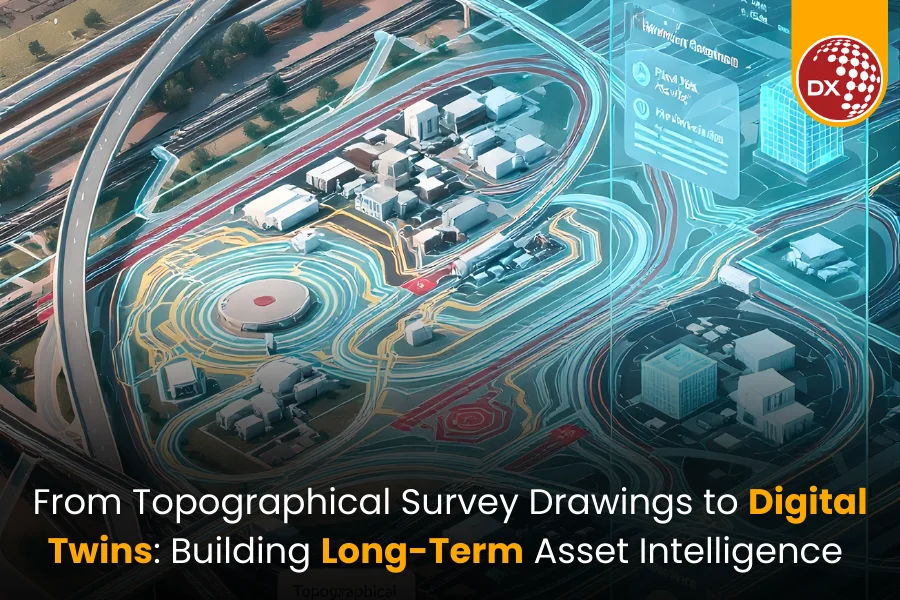
From Topographical Survey Drawings to Digital Twins: Building Long-Term Asset Intelligence
From Topographical Survey Drawings to Digital Twins: Building Long-Term Asset Intelligence Key Takeaways Topographical Survey Drawings are the first layer of a digital twin, not just a pre-design formality. When captured as BIM- and GIS-ready data, topo surveys become a reusable asset for master planning, expansion, and scenario modeling. High-quality terrain data powers flood risk, drainage, and resilience simulations, instead of sitting as static PDFs. Linking topo data with BIM and Digital Twin platforms turns it into operational intelligence for inspections, O&M, and long-term asset decisions. Standardized, portfolio-wide survey practices help owners and agencies move faster up the digital twin maturity ladder and get more value from every new project. Beyond “One-and-Done” Topo Surveys For many developers, asset owners, and public agencies, Topographical Survey Drawings are treated as a pre-design checkbox. You commission a survey, get a DWG and a PDF, design your project, and move on. But if you’re talking about digital twins, you’re already thinking longer term. You want a living digital representation of your asset that supports planning, operations, resilience, and future expansion. That digital twin doesn’t start with IoT sensors. It starts with the first time you measure the ground. The question is: are your topographical surveys captured and structured in a way that your future digital twin can actually use? Topographical Survey Drawings = Foundation Layer of the Twin A digital twin is only as good as its base geometry and coordinate framework. That base doesn’t come from design intent; it comes from the real-world terrain and assets your project sits on. Modern digital twins for infrastructure and cities depend heavily on: High-resolution topographic data Consistent coordinate systems and control Survey-grade elevation and feature mapping Integration with GIS and BIM environments If your Topographical Survey Drawings are just flat 2D linework with unclear benchmarks, they limit what you can do later. If they are BIM-ready, geospatially robust, and properly attributed, they become the foundation of: Accurate terrain models Flood and drainage simulations Utility and corridor planning City- or campus-scale digital twins Where Topo Data Adds Long-Term Value 1. Master Planning and Future Expansion High-quality site topographic mapping and contour plans allow planners to: Evaluate multiple land-use and phasing options on real terrain Test different access roads, platforms, and grading schemes Preserve future expansion zones without creating hidden earthwork problems In a digital twin, those same surfaces become the canvas for scenario modelling—what happens if you add another terminal, data hall, or warehouse block in 10 years? 2. Flood Risk and Climate Resilience Recent digital twin pilots for cities and coastal assets show strong use of terrain and hydro data for flood modelling and resilience planning. If your 2D and 3D topographical survey plans capture: Fine-level elevation changes Drainage channels and basins Shorelines, embankments, retaining systems …those details enable your digital twin to run: Flood depth and extent simulations Stormwater performance tests “What-if” scenarios under future climate projections This is impossible if the original survey is simplified, generalized, or locked away as a static PDF. 3. Operations, Inspections, and O&M Analytics Digital twins are increasingly used for asset management, inspections, and predictive maintenance. If your base terrain and as-built surveys are: Properly aligned to your asset registry Linked with building and network models Stored in a reusable BIM/GIS environment Then you can: Plan safe access routes for inspections Understand where water will pond or scour Tie defects and incidents back to specific terrain conditions Topographic data stops being “design history” and becomes part of the O&M intelligence layer. Digital Twin Maturity: Where Topo Surveys Fit Think of a simple digital twin maturity ladder: 1.Stage 0 – Isolated Files a.Topo survey lives as a one-off DWG/PDF in a project folder. 2.Stage 1 – Connected BIM / GIS Base a.BIM-ready Topographical Survey Drawings feed your BIM and GIS models. b.Terrain is consistent across design disciplines. 3.Stage 2 – Program-Level Digital Twin a.Multiple sites or corridors share common survey standards. b.You can compare risk, flood, access, and capacity across assets. 4.Stage 3 – Live Asset Twin a. Real-time or periodic monitoring (IoT, remote sensing) is layered on top of the survey-based geometry. b. You can ask “what-if” questions about operations, resilience, and investment. Your topographical survey strategy largely determines how fast you can move up that ladder. What This Means for Developers, Owners, and Public Agencies If you are commissioning surveys today, but talking about digital twins tomorrow, three action points matter: Specify BIM- and GIS-ready deliverables Ask for Topographical Survey Drawings in formats that support 3D surfaces, attributes, and coordinate metadata—not just 2D CAD. Standardize across your portfolio Use common layers, codes, and coordinate systems for every project. This turns individual surveys into a connected data asset for your entire estate or network. Choose partners who think beyond the current project Look for teams who understand both topographical survey drawing services and digital twin requirements, so every new survey strengthens your long-term asset intelligence. How DGTRA Fits into This Picture DGTRA sits at the intersection of: Topographical Survey Drawings and civil engineering BIM, VDC, and GIS integration Digital Twin support and implementation for owner-operators and infrastructure programs We help you convert raw terrain data into BIM-ready, portfolio-consistent survey models that can plug directly into your digital twin roadmap—whether you are planning a single site, a campus, or a city-scale infrastructure program. If you’re planning a digital twin initiative and want to ensure your next survey adds value for the next 30 years—not just the next 30 weeks—this is the moment to revisit how you brief, receive, and manage topographical data. Contact us to get started: https://www.dgtra.com/contact/ Are Topographical Survey Drawings really important for digital twins? Yes. High-quality topographic data forms the geometric foundation of any digital twin, enabling accurate simulations, planning, and long-term asset intelligence. What makes a topo survey “BIM- or GIS-ready”? A BIM/GIS-ready survey includes proper coordinate systems, attributed features, 3D surfaces, and structured layers that can be directly integrated into BIM, GIS, and digital twin workflows. Can existing 2D topo surveys be upgraded for digital twin use? To a certain extent, yes. DGTRA can convert legacy surveys into standardized, geospatially aligned models—but fresh, BIM-ready capture always yields the best results. How does topo data support flood resilience and climate modeling? Detailed elevation, drainage patterns, and hydro

Why Master Planning Support Services Drive High-Return Projects
Key Takeaways Master Planning Support Services accelerate smarter decision-making, protecting ROI from day one. Data-backed master plans and feasibility studies eliminate guesswork, unlocking optimal densities, yields, and phasing strategies. BIM, VDC, and GIS–enabled workflows create a connected digital ecosystem that flows seamlessly into design and construction. Coordinated site and infrastructure planning reduces redesign costs and prevents on-site surprises. DGTRA provides investor-ready planning solutions that align architecture, infrastructure, and program goals to strengthen long-term asset value. Unlocking ROI with Master Planning Support Services Real estate and infrastructure projects face increasing pressure, tight margins, cautious capital, and rising expectations for performance. In this environment, early planning decisions directly influence IRR. Master Planning Support Services transform planning from a sketch exercise into a strategic, ROI-driven engine. By combining feasibility analytics, capacity testing, infrastructure validation, and digital coordination, these services allow teams to: Test multiple scenarios Optimize land use and density Refine phasing strategies Validate infrastructure capacity Understand capital implications early A strong master plan ensures: Efficient land utilization Optimized product mix Infrastructure cost control Faster regulatory approvals Predictable long-term development For organizations managing multiple projects, this becomes a core investment strategy—helping leaders select the right projects, sequence them wisely, and make decisions backed by data, not intuition. What Are Master Planning Support Services? Master Planning Support Services bring structure, clarity, and digital intelligence to the earliest and most crucial phase of development. Instead of one static layout, teams receive coordinated, data-driven scenarios backed by feasibility logic and engineering constraints. Key components include: 1.Strategic Planning & Visioning Visioning, growth strategy, and market alignment Early feasibility and financial benchmarking 2.Site & Context Intelligence GIS-based site analysis and constraints mapping Environmental, zoning, climate, and infrastructure assessments 3.Land Use, Density & Mobility Planning Zoning, density allocation, and concept layouts Road hierarchy, mobility planning, parking strategy 4.Infrastructure & Engineering Alignment Water, sewer, stormwater, power, and ICT planning Finalizing utility routing, capacities, and levels Fixing base levels and grading strategy BIM, VDC, and GIS integration 5.Feasibility, Sustainability & Phasing Yield, FAR, and land-use feasibility Environmental and ESG alignment Phase-wise rollout tied to demand, cash flow, and infrastructure logic Benefits of Master Planning Support Services When implemented strategically, Master Planning Support Services deliver clear, measurable value across financial performance, design coordination, stakeholder alignment, and long-term project resilience. Here’s how they elevate large-scale developments: 1.Higher Financial Clarity Early FAR, density, and yield analysis strengthens revenue models. Feasibility studies validate assumptions long before they influence investment decisions. 2.Reduced Development Risks Clear visibility of site conditions, utility levels, and grading prevents costly redesigns. BIM-enabled planning identifies conflicts early and supports smoother approvals. 3.Less Rework and Redesign Integrated building and infrastructure planning minimizes late-stage changes. BIM-led coordination reduces redesign cycles and associated delays. 4.Faster Approvals and Stronger Stakeholder Buy-In 3D visuals and scenario models simplify communication with authorities and investors. Evidence-based narratives accelerate approvals. 5.Optimized Land and Infrastructure Utilization Intelligent planning prevents oversizing roads and utilities, reducing capex. Infrastructure corridors support phased development without rework. 6.High Market Viability Smart zoning, mobility planning, and product-mix strategies improve absorption and pricing. 7.Smooth Execution Across Phases Coordinated phasing strategies align demand, cash flow, and construction capacity. 8.Future-Proof and Sustainable Development Sustainability, resilience, and lifecycle thinking are embedded from the start. DGTRA’s Master Planning Support Services in Action At DGTRA, Master Planning Support is a strategic digital partnership, aligning planning, design, and delivery into a unified workflow. Every decision made at concept stage remains coordinated through construction and asset handover. 1.Data-Driven Ground-Up Understanding: Comprehensive studies—GIS, topography, utilities, hydrology, zoning, climate, market insights—set a realistic foundation. 2.Smart 3D Site Models & Scenario Planning Intelligent models linked to live data enable rapid option testing with overlays for zoning, setbacks, and environmental constraints. 3.Integrated Urban, Traffic & Infrastructure Planning Urban planning, traffic analysis, and utilities/infrastructure modeling are unified, ensuring technical buildability. 4.End-to-End Infrastructure Strategy DGTRA finalizes: Base levels and road levels Utility levels and invert levels Routing and capacity for water, sewer, stormwater, power, ICT, and reuse water 5.BIM & VDC-Enabled Coordination Planning scenarios flow directly into BIM and VDC models used for clash detection and construction sequencing. 6.QTO & Cost Impact Integration Changes in density or land use instantly update quantities and cost implications. 7.Digital Twins for Lifecycle Outcomes Digital Twins support long-term operations, maintenance, ESG tracking, and asset management. 8.Scalable Digital Staffing for High Workload Periods DGTRA supports teams during peak workloads across portfolios, not just single projects. 9.Advanced Phasing & Rollout Strategies Phasing plans balance cash flow, demand triggers, and infrastructure sequencing. Our Deliverables That Drive your Success include: Coordinated Master Plans Zoning & Land Use Plans Road Levels & Grading Logic Utilities Routing & Capacity Strategy 3D Massing Models Feasibility & Phasing Reports Investor & Authority-Ready Presentations Why Master Planning Support Services Matter Global research confirms what many in the industry already feel: preconstruction excellence directly drives profitability and reduces risk. A 2022 study by McKinsey & Company that reviewed over 500 capital projects worldwide found that, on average, cost overruns were about 79% relative to the original estimates, and schedule delays averaged 52%. McKinsey & Company For projects where stakeholders prioritized “preconstruction excellence”—strong front-end planning, value engineering, and precise scope definition—McKinsey reports a typical uplift in Net Present Value (NPV) of 20% or more compared to less-diligent counterparts. McKinsey & Company Meanwhile, research from Autodesk shows that extending building information modeling (BIM) workflows beyond just design can dramatically reduce on-site errors, rework, and delays. BIM becomes a central data backbone that helps teams stay aligned from planning through construction and operations. Autodesk What Comes Next in This Series This series will demonstrate how ISO 19650 transforms scattered project data into a structured, high-value information asset. In the next article — “ISO 19650 Explained — A Clear, Strategic Guide for Busy AECO Leaders” — we break down the standard in simple, strategic terms, clarifying how it works and why it is essential for predictable digital delivery. For teams looking to strengthen BIM maturity and governance, remember the core principle: “Get the information right, and everything else follows.” What this means for your projects: By embedding robust master planning and BIM-enabled preconstruction workflows from

The Rise of Information Management in AECO
Why Data, Not Drawings, Now Determines Project Success Why ISO 19650 Has Become the Strategic Backbone of Modern AECO Delivery In the last decade, the AECO industry has undergone a profound shift. Capital projects are no longer defined by how well teams can produce drawings—they are defined by how well organizations manage information. As global projects grow in scale, complexity, and scrutiny, information has quietly become the most valuable—yet the most mismanaged—asset in the built environment. Today, leading owners and delivery partners increasingly recognize that effective information management is the foundation of predictable outcomes, robust governance, and long-term asset value. This is the fundamental context in which ISO 19650 has emerged as the global standard for structured information delivery. Information is the New Driver of Project Performance The economics of construction have changed. Margins are tighter, supply chains are constrained, and stakeholders now demand traceable, auditable project data. In this environment, the quality of project information directly determines: Cost and schedule accuracy Collaboration effectiveness Digital delivery maturity Asset operations and lifecycle value Errors in information now carry far greater consequences than errors in drawings. A single misaligned data definition can trigger procurement delays, costly rework, and long-term asset performance issues. Organizations that rely on unstructured documents and disconnected systems inevitably absorb this risk. The industry is shifting from “drawing production” to information management as a strategic capability. ISO 19650 is the playbook that operationalizes that shift. Why ISO 19650 Is Becoming a Board-Level Priority ISO 19650 has rapidly evolved from a technical framework into a governance tool for high-capital-value programs. The standard establishes three core concepts reshaping delivery models: 1. Information as a Managed Asset Information is treated with the same discipline as physical assets—structured, validated, version-controlled, and secure. 2. Clear Accountability Across the Delivery Chain Appointing Parties, Lead Appointed Parties, and Task Teams have defined roles and measurable responsibilities. Ambiguity is replaced with accountability. 3. Repeatable, Predictable Information Flow Standardized information requirements, workflows, approvals, and naming conventions reduce variability—the single biggest contributor to project risk. For organizations delivering portfolios across India, the UK, and the Middle East, ISO 19650 provides the governance framework needed to align diverse contractors, technologies, and processes under one unified strategy. The Growing Maturity Gap in the Industry While leading firms have embraced structured information management, many project teams remain trapped in outdated delivery practices: Designs developed without clear Information Requirements BEPs created only as check-the-box documents CDEs used as file warehouses instead of workflow engines Data inconsistently structured across disciplines Asset information treated as an afterthought This maturity gap is now a competitive differentiator. Organizations with strong information management capabilities consistently deliver: Lower rework Higher planning accuracy Fewer disputes Stronger compliance Better handover data Higher-performing assets ISO 19650 provides the methodology; execution of excellence determines the value. The Strategic Case for Information Management Leadership In an industry under pressure to deliver more with less, governing information effectively is not optional—it is a strategic mandate. Executives increasingly expect BIM Implementation teams to: Establish robust information governance models Define and enforce Information Requirements Build scalable CDE ecosystems Align delivery methods with digital strategy Convert project data into lifecycle-ready Asset Information Models Enable Digital Twins and future AI/ML use cases This is the leadership paradigm of modern AECO delivery. Information is no longer a by-product of design; it is the infrastructure on which every design, construction, and operations decision depends. What Comes Next in This Series This series will demonstrate how ISO 19650 transforms scattered project data into a structured, high-value information asset. In the next article — “ISO 19650 Explained — A Clear, Strategic Guide for Busy AECO Leaders” — we break down the standard in simple, strategic terms, clarifying how it works and why it is essential for predictable digital delivery. For teams looking to strengthen BIM maturity and governance, remember the core principle: “Get the information right, and everything else follows.” Partner with Experts Who Accelerate Your ISO 19650 Journey DGTRA supports organizations in transforming digital project delivery through: Strategic BIM Roadmaps ISO 19650 Advisory Services CDE Setup & Information Governance BIM Execution & Implementation Support Whether you’re just beginning or scaling across projects and regions, our team helps ensure your information flows, governance, data structure, and delivery models align with global best practices and real-world outcomes. 📩 If you’re ready to strengthen digital delivery and build ISO 19650-aligned workflows that work—not just on paper, but in practice—reach out. Happy to guide you forward. Why is information becoming more important than drawings in AECO projects? Because modern delivery relies on accurate, consistent, and accessible data. While drawings show what will be built, information determines how well teams collaborate, govern workflows, avoid errors, and support lifecycle asset management. What problem does ISO 19650 solve in construction delivery? ISO 19650 provides a unified framework for structured information management across projects, teams, software, and regions. It reduces ambiguity, enforces accountability, and ensures organizations produce information that is complete, consistent, and usable across the asset lifecycle. Who benefits the most from adopting ISO 19650? Owners, contractors, consultants, and facility management teams benefit — but the owners see the greatest long-term value because ISO 19650 ensures data is structured, maintained, and ready for handover, operations, and future digital assets like Digital Twins. What are the most common industry mistakes when working without structured information management? Typical issues include unclear requirements, inconsistent data, duplicated file naming, poor approval workflows, CDE misuse, and uncoordinated teams — all leading to delays, rework, disputes, and low-quality handover information. Is ISO 19650 only for organizations already using BIM? No — ISO 19650 is a methodology for managing information, not just a BIM compliance requirement. Even organizations early in digital adoption can use it to create clarity, accountability, and repeatable workflows.

Construction site Logistics Planning and Simulation with BIM
Key Takeaways Construction logistics planning and simulation helps project teams model how materials, workers, and equipment move through a project before work begins. Digital twin construction logistics frameworks like ConLogTwin integrate BIM, schedules, and live site data to offer real-time visibility of deliveries, crane usage, and storage capacity. Research from MDPI and Frontiers shows how digital logistics twins reduce manual planning effort, optimize site layout, and improve material availability. DGTRA applies BIM, VDC, Digital Twin, and simulation workflows to cut congestion, reduce waiting time, and de-risk modular/offsite construction logistics. This niche—construction-specific logistics planning with BIM and digital twins—is underserved by traditional logistics blogs, giving DGTRA a clear competitive advantage. Construction Logistics Planning: Turning Chaos into Predictable Flows Construction sites operate like constantly changing ecosystems. Materials arrive early or late. Cranes become bottlenecks. Storage zones fill up faster than expected. As a result, teams lose time, efficiency, and cost visibility. However, new research and industry adoption are reshaping project logistics. Digital twin frameworks such as ConLogTwin integrate BIM, delivery data, and real-time site conditions to create a true digital representation of construction logistics. At the same time, the digital construction logistics twin model, explored in Frontiers research, combines BIM, technical specifications, and supplier catalog data to streamline and automate planning. Therefore, construction logistics planning and simulation has become a critical capability for modern AEC organizations—especially those working with modular, large-scale, or high-density projects. What Is Construction Logistics Planning and Simulation? Construction logistics planning and simulation is the process of digitally modeling how materials, equipment, and personnel move from suppliers to site and through the construction environment. It uses BIM, scheduling data, and digital twins to simulate: Delivery flows Crane and hoist demand Laydown areas Storage capacity Pathways and access routes Installation sequencing Digital twin construction logistics enhances this by connecting planning data with real-time updates from sensors, delivery systems, and site teams. As a result, planners replace assumptions with verified data and dynamic simulations. Key Benefits / Importance 1. Reduced Delays and Fewer Site Conflicts Simulations highlight crane clashes, access blockages, and material overloads long before execution. 2. Lower Congestion and Rehandling Digital twins streamline delivery timing and storage allocation so materials reach the right zone at the right time. 3. Stronger Support for Modular Construction MDPI research confirms digital twins improve predictability for module transport, sequencing, and on‑site cranage. 4. Improved Safety Scenario testing uncovers unsafe traffic routes, high-risk lifting operations, and congested worker pathways. 5. Better Collaboration Logistics simulations create a shared visual plan across architects, engineers, contractors, and suppliers. DGTRA’s End-to-End Construction Logistics Solutions DGTRA delivers end‑to‑end construction logistics planning and simulation using BIM, VDC, Digital Twins, QTO, and scalable digital staffing. BIM & 4D/5D Foundations We develop BIM models enriched with temporary works, access zones, and logistics attributes. Digital Twin Construction Logistics DGTRA builds logistics-centric digital twins that sync BIM, schedules, storage areas, and real-time data. Simulation & Scenario Analysis We use discrete-event simulation to test: Crane capacity Hoist queues Truck arrivals Site traffic Weather and delay scenarios Modular Construction Logistics We integrate plant/factory simulations with site logistics to optimize the full module workflow. Digital Staffing Support Our teams maintain twins, run simulations, and update logistics models throughout the project lifecycle. Why It Matters Digital twins are rapidly transforming construction. Autodesk reports that digital twin adoption is accelerating due to rising expectations for transparency, predictability, and data-driven decision-making. Why this topic is critical now: Supply chain variability is increasing. Projects are more constrained in space and time. Offsite and modular construction demand synchronized logistics. Real-time data is now readily available through IoT and delivery management tools. Competitors such as Anchanto focus on general logistics for e‑commerce and warehousing. However, few address construction-specific logistics planning and simulation with BIM and digital twins, creating a strong differentiation for DGTRA. Take Control of Construction Logistics with DGTRA – Predict, Optimize, Deliver Construction logistics planning and simulation gives AEC teams the power to predict, optimize, and control the flow of materials and resources across any project. By combining BIM, VDC, Digital Twins, and simulation workflows, DGTRA helps organizations eliminate delays, reduce congestion, and standardize logistics planning for projects of any scale. DGTRA is a global digital engineering partner offering BIM, VDC, Digital Twin, QTO, and scalable production support for AEC organizations. Ready to transform your construction logistics? Partner with DGTRA to implement digital twins, simulation, and BIM-driven logistics planning that keep your projects on time and on budget. Contact DGTRA Today. How does construction logistics planning and simulation reduce delays? DGTRA uses simulations to identify crane clashes, access blockages, and sequencing issues early, preventing delays. Can this approach work with modular construction? Yes. Our digital twins support module transport planning, staging, and cranage optimization. What data is required to start? A federated BIM model, basic schedule, and preliminary site layout are enough. DGTRA enriches the rest. Does DGTRA maintain the logistics twin during construction? Yes. We offer digital staffing to update twins, run simulations, and manage live logistics data. How does this integrate with project controls? Simulation outputs feed into schedules, dashboards, and cost models for real-time decision-making. Is this suitable for small or medium-sized projects? Absolutely. Logistics twins scale to any project size, reducing risk and improving coordination. Can owners use the logistics twin after construction? Yes. The twin supports fit-out, handover, and operations planning.

BIM Clash Detection with Navisworks and Autodesk Construction Cloud
Introduction On most complex projects, clash meetings still feel like firefighting. One team runs Navisworks locally. Another uploads models to Autodesk Construction Cloud. Stakeholders join from different countries, time zones, and project standards. As a result, BIM clash detection becomes a weekly crisis instead of a smooth, repeatable workflow. However, when you connect Navisworks with Autodesk Construction Cloud (ACC) Model Coordination, you get a single, cloud-backed source of truth for clashes, issues, and decisions. Models aggregate in ACC, while Navisworks handles deep technical clash tests. Issues then sync back to Revit and the field. This blog shows how mid-to-large BIM and VDC teams can build a modern BIM clash detection workflow for distributed teams, and how DGTRA can help you implement it at scale. What Is BIM Clash Detection? BIM clash detection is the process of using 3D models to identify physical conflicts between building systems, such as ducts cutting through beams or pipes crossing cable trays. Navisworks Clash Detective lets you aggregate multi-format models, run automated clash tests, classify issues, and export structured reports. Autodesk Construction Cloud Model Coordination extends this by providing a cloud space where design teams upload discipline models, automatically detect clashes, and manage them as issues. Together, they move clash detection in construction from manual, file-based checking to a connected system where every clash becomes a trackable, assignable workflow item. Benefits / Importance of BIM Clash Detection with Navisworks and ACC One federated truth for clashes ACC coordination spaces automatically aggregate published models and generate views, so every team reviews the same updated model set. Faster, deeper clash analysis Navisworks Clash Detective supports complex clash matrices, rules, and grouping, which helps VDC teams focus on high-risk clashes instead of noise. Closed-loop issue management Issues raised in ACC or Navisworks can sync back to Revit using issue add-ins, helping designers fix clashes in their authoring environment. Better coordination for distributed teams Cloud-based BIM clash detection lets global project teams coordinate without sending heavy models by email or file servers. Measured impact on rework and productivity According to McKinsey, construction productivity lags behind other industries, yet digital tools like BIM can unlock large efficiency gains across projects. DGTRA Solutions for BIM Clash Detection Workflows DGTRA helps AEC organizations design and run BIM clash detection workflows that combine Navisworks, ACC Model Coordination, and project-specific BIM standards. Key capabilities include: Federated model setup and standards DGTRA configures coordination spaces, file structures, and naming conventions so teams can append ACC models into Navisworks reliably. Navisworks clash strategy and automation We build clash matrices, rules, search sets, and grouping strategies that align with your BIM Execution Plan, reducing “junk” clashes and focusing on constructability. ACC-based issue and model coordination DGTRA sets up issue types, responsibilities, and workflows in ACC so clashes flow as actionable items to the right people at the right time. Scalable production support Our BIM and VDC teams act as an extended digital coordination cell, running regular clash detection in construction for complex, MEP-heavy projects. Why BIM Clash Detection in Construction Matters Now The construction sector still struggles with low productivity and high rework. McKinsey estimates that improving construction productivity could unlock up to $1.6 trillion of additional value globally each year. BIM clash detection with Navisworks and ACC directly targets two root causes: poor coordination and late detection of design conflicts. Most competitor blogs stop at “what is clash detection” or show only Navisworks screenshots. They rarely explain how to: Coordinate distributed BIM teams across offices. Standardize issue types, responsibilities, and due dates in ACC. Close the loop from ACC → Navisworks → Revit → site. By focusing on the integrated Navisworks–ACC workflow, this approach closes that gap and gives BIM and VDC managers a practical roadmap they can deploy on live projects today. Streamline Your BIM Clash Detection A connected BIM clash detection workflow using Navisworks and Autodesk Construction Cloud empowers your teams to detect, prioritize, and resolve conflicts before they become costly on-site issues. By standardizing how models are aggregated, clashes are tested, and issues are tracked, your organization benefits from clearer accountability, fewer RFIs, and more predictable project delivery across offices and regions. DGTRA partners with BIM and VDC leaders to design these workflows, configure Navisworks and ACC, and provide scalable production support—allowing your teams to focus on decision-making instead of file management. Take the next step: Let DGTRA help you implement a modern BIM clash detection workflow that reduces rework, enhances coordination, and drives efficiency on your projects. Contact us today to get started! About DGTRA: DGTRA is a global digital engineering partner with expertise in BIM, VDC, Digital Twins, QTO, and scalable delivery models for AEC firms, helping organizations unlock efficiency, collaboration, and data-driven decision-making. Frequently Ask Questions (FAQs) How does BIM clash detection with Navisworks and ACC reduce rework? DGTRA sets up Navisworks tests and ACC issue workflows so clashes are caught before construction, assigned to the right team, and resolved in Revit. This reduces late discoveries on site and lowers rework rates across projects. We already use Navisworks. Why do we need Autodesk Construction Cloud? Navisworks is excellent for deep technical analysis, but ACC adds cloud aggregation, automatic clash detection, and standardized issues for distributed teams. DGTRA helps you combine both so Navisworks remains your specialist tool while ACC manages collaboration and accountability. Can DGTRA align BIM clash detection with our BIM Execution Plan and ISO-style requirements? Yes. DGTRA maps clash tests, issue types, and reporting formats to your BIM Execution Plan and client requirements, including ISO 19650-style information delivery expectations. This keeps clash detection in construction fully aligned with your contractual standards. How does DGTRA support large, MEP-heavy or industrial projects? For complex projects, DGTRA provides a dedicated BIM/VDC cell that manages federated models, runs regular BIM clash detection cycles, and leads coordination meetings. Our team handles Navisworks and ACC setup so your engineers can focus on design decisions. Can we integrate clash detection data with Digital Twins or asset management later? Absolutely. Clash-free, well-coordinated BIM models become better inputs for Digital Twins and asset information models. DGTRA helps structure your models and data during clash detection so they can support downstream facility management, analytics, and AI in construction. What if we don’t have in-house VDC resources to run regular clash tests? DGTRA offers scalable production support. We can act as your extended VDC team, running scheduled BIM clash detection, preparing reports, and driving coordination actions, while your core team focuses

ISO 19650 as a Business Strategy: Managing Information for Maximum Impact
The Hidden Cost of Poor Information Management In construction, engineering, and infrastructure, poor information management is more than an inconvenience — it’s a major drain on profits. A 2020 study by Autodesk and FMI found that faulty or incomplete data accounted for 14% of avoidable rework, totaling US $88 billion globally. Across the industry, fragmented data, versioning errors, inconsistent formats, and missing records were estimated to cost over US $1.8 trillion globally in the same year. In practical terms, poor data management leads to: Project delays and missed deadlines Wasted effort reconciling conflicting documents Costly field rework Poor decision-making Contractual disputes These hidden costs quietly erode margins and client trust, often going unnoticed in standard accounting reports. Why ISO 19650 Matters ISO 19650 is the global standard for information management in the built environment. It provides a structured framework for how information is created, shared, stored, and managed throughout an asset’s lifecycle. By defining: Roles and responsibilities Naming conventions and metadata A common data environment (CDE) ISO 19650 ensures that the right information reaches the right people at the right time. Beyond compliance, it reduces ambiguity and risk, enabling teams — from designers to operators — to work with shared, trustworthy data. How ISO 19650 Provides Strategic Advantage in Information Management ISO 19650 isn’t just about compliance. Its real value lies in strategic differentiation. Key benefits include: Efficiency & cost reduction: Teams spend less time wrestling with data and more time delivering value. Risk mitigation: Miscommunication, omissions, and version conflicts are minimized through clarity and traceability. Better decision-making: Accurate, timely data empowers smarter leadership decisions on design, change orders, and delivery. Competitive positioning: Clients increasingly prefer suppliers who follow recognized information standards. Future readiness & scalability: Firms aligned with ISO 19650 can adopt BIM, IoT, and digital twin technologies faster. Lifecycle value: Handover data is reliable and usable, reducing downstream operational costs and risks. Conclusion: How We Can Help At DGTRA, we help firms adopt ISO 19650 practically and strategically. Our services include: Gap assessments and roadmap design CDE setup and governance support Training and audit compliance Continuous improvement coaching We don’t just aim for certification — we aim for measurable business outcomes: Reduced rework Clearer collaboration Faster project delivery Stronger client confidence If you’re ready to transform information management from a hidden cost into a strategic asset, DGTRA can partner with you every step of the way. Why is ISO 19650 important for construction and infrastructure projects? It provides a structured framework for creating, sharing, and managing project information, reducing errors and inefficiencies. How does poor information management impact project outcomes? Fragmented or inconsistent data leads to delays, rework, increased costs, and weakened client trust. How can DGTRA help firms implement ISO 19650 effectively? DGTRA supports CDE setup, governance, gap assessments, and training to align teams with global information standards. What business benefits does ISO 19650 offer beyond compliance? It enhances decision-making, reduces risks, improves efficiency, and positions firms competitively in the market. How does DGTRA ensure ISO 19650 adoption delivers measurable results? By focusing on practical implementation, DGTRA helps firms minimize rework, improve collaboration, and accelerate project delivery.